
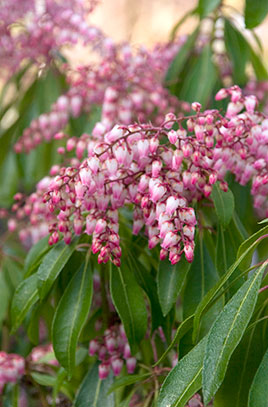
Pieris jap. Valley Rose
€20.00
Frequently Bought Together

Description
Quick Facts
- Common Name: Lily-of-the-Valley Shrub, Pieris
- Botanical Name: Pieris japonica ‘Valley Rose’
- Plant Type: Evergreen shrub
- Mature Height: 1–1.5m
- Mature Spread: 1–1.5m
- Flowering Period: March to May
- Flower Colour: Soft rose-pink, lily-of-the-valley style flower clusters
- Foliage: Glossy evergreen leaves; new growth often emerges bronze-red before turning green
- Hardiness: RHS H5 (hardy in most of UK & Ireland)
- Soil Requirements: Acidic, moist but well-drained soil (ericaceous)
- Aspect: Partial shade (tolerates sun with moisture and shelter)
- Maintenance: Low
Description
Pieris japonica ‘Valley Rose’ is a beautifully refined evergreen shrub, loved for its soft pink spring flowers and its elegant, glossy foliage that looks polished all year. In early spring, it produces generous clusters of rose-pink, bell-shaped blooms that hang like little chandeliers—delicate, detailed, and quietly luxurious.
As the flowers fade, fresh new growth appears, often flushed with bronze-red tones before settling into deep green. That changing colour gives you a second season of interest, and because the shrub stays evergreen, it continues to provide structure and presence through winter too. It’s a wonderful plant for adding year-round shape to borders, particularly in shaded or woodland-style gardens where you want something that feels lush and dependable.
‘Valley Rose’ thrives in ericaceous conditions and is ideal for pairing with rhododendrons, azaleas, camellias, skimmias, and heathers. It also works beautifully in containers, where you can control the soil conditions and enjoy the flowers up close near a doorway or seating area.
Caragh Garden Notebook
Planting:
Space plants 1–1.2m apart for a full, balanced shrub. Plant container-grown specimens in spring (March–May) or early autumn (September) for best establishment. Choose a position in partial shade—morning sun with afternoon shade is ideal. Shelter from cold, drying winds helps protect flower buds and new growth. Dig a generous hole and plant into ericaceous compost, or improve the planting area with plenty of ericaceous material if your soil is not naturally acidic. Plant at the same depth as in the pot, firm in gently, water well, and mulch with an ericaceous mulch such as pine bark.
Space plants 1–1.2m apart for a full, balanced shrub. Plant container-grown specimens in spring (March–May) or early autumn (September) for best establishment. Choose a position in partial shade—morning sun with afternoon shade is ideal. Shelter from cold, drying winds helps protect flower buds and new growth. Dig a generous hole and plant into ericaceous compost, or improve the planting area with plenty of ericaceous material if your soil is not naturally acidic. Plant at the same depth as in the pot, firm in gently, water well, and mulch with an ericaceous mulch such as pine bark.
Soil Preparation:
Acidic soil is essential (aim for pH 4.5–6.0). Needs moist but well-drained conditions—avoid waterlogging, especially in winter. Improve drainage with grit if needed, and enrich with ericaceous compost to maintain acidity. Mulch annually with pine bark or leaf mould to conserve moisture and keep roots cool.
Acidic soil is essential (aim for pH 4.5–6.0). Needs moist but well-drained conditions—avoid waterlogging, especially in winter. Improve drainage with grit if needed, and enrich with ericaceous compost to maintain acidity. Mulch annually with pine bark or leaf mould to conserve moisture and keep roots cool.
Container Growing:
Excellent in pots. Use a container with good drainage holes and fill with ericaceous compost. Water with rainwater if possible, particularly in hard-water areas, to help maintain the correct soil pH. Keep compost evenly moist but never waterlogged. Feed in spring with an ericaceous fertiliser to support flowering and healthy foliage.
Excellent in pots. Use a container with good drainage holes and fill with ericaceous compost. Water with rainwater if possible, particularly in hard-water areas, to help maintain the correct soil pH. Keep compost evenly moist but never waterlogged. Feed in spring with an ericaceous fertiliser to support flowering and healthy foliage.
Seasonal Care:
Low maintenance. Deadhead spent flower clusters after flowering for a tidier look and to encourage strong new growth. Lightly prune only if needed to shape, immediately after flowering. Avoid heavy pruning. Protect young plants and new growth from late frosts in exposed gardens. Mulch annually and keep watered during dry spells, especially in summer and for container plants.
Low maintenance. Deadhead spent flower clusters after flowering for a tidier look and to encourage strong new growth. Lightly prune only if needed to shape, immediately after flowering. Avoid heavy pruning. Protect young plants and new growth from late frosts in exposed gardens. Mulch annually and keep watered during dry spells, especially in summer and for container plants.
Pests & Problems:
Watch for pieris leaf spot and vine weevil (especially in containers). Good airflow, clean-up of fallen leaves, and using vine weevil controls where needed will help. Yellowing leaves can indicate alkaline soil or hard-water watering—switch to rainwater and ericaceous feed.
Watch for pieris leaf spot and vine weevil (especially in containers). Good airflow, clean-up of fallen leaves, and using vine weevil controls where needed will help. Yellowing leaves can indicate alkaline soil or hard-water watering—switch to rainwater and ericaceous feed.
Related products
-
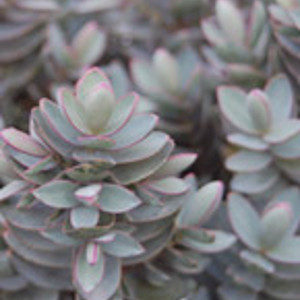
Hebe Red Edge
€8.50 Select options This product has multiple variants. The options may be chosen on the product page -

Aucuba japonica Crotonifolia
Price range: €15.00 through €160.00 Select options This product has multiple variants. The options may be chosen on the product page -
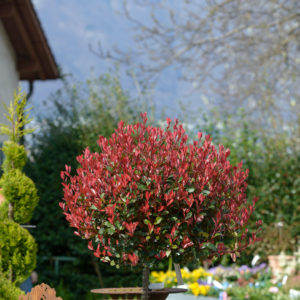
Photinia Red Robin – 1/2 Standards
Price range: €175.00 through €380.00 Select options This product has multiple variants. The options may be chosen on the product page -
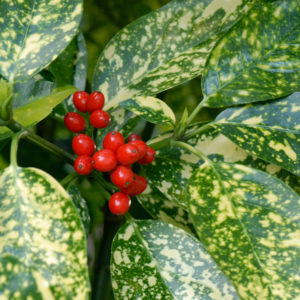
Aucuba japonica variegata
€15.00 Select options This product has multiple variants. The options may be chosen on the product page