

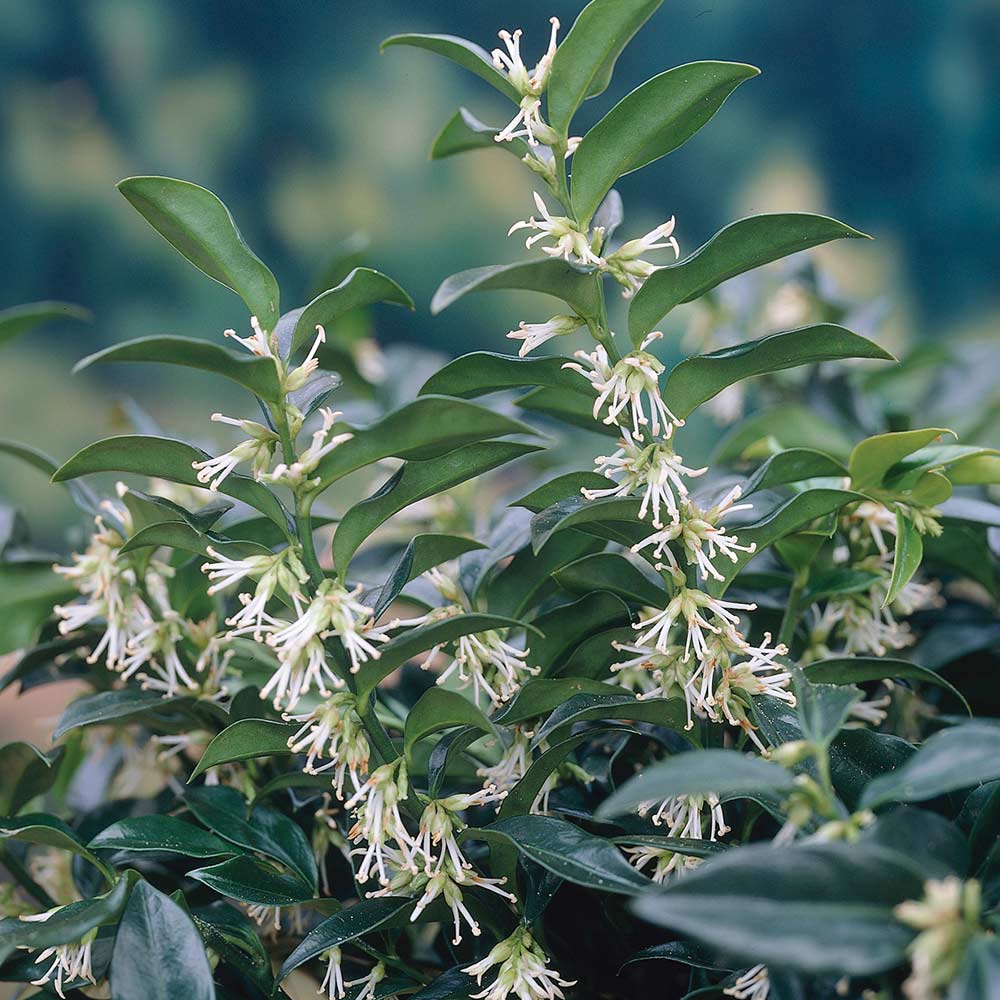
Sarcococca confusa – Sweet Box
Price range: €20.00 through €25.00
Frequently Bought Together

Description
Quick Facts
– Botanical Name: Sarcococca confusa
– Common Name: Sweet Box / Christmas Box
– Plant Type: Small to medium, slow-growing evergreen shrub
– Mature Height: 1–1.5m
– Mature Spread: 1–1.5m
– Flowering Period: January to March — the heart of winter
– Flower Colour: Tiny, white, highly fragrant flowers clustered along the stems
– Fruit: Glossy dark reddish-black berries follow the flowers
– Foliage: Small, shiny, dark green leaves — somewhat resembling boxwood
– Habit: Dense, bushy, rounded
– Aspect: Shade to partial shade — one of the best scented plants for shade
– Soil: Moist, humus-rich, well-drained; tolerant of most soils including chalk
– Hardiness: Very hardy in Ireland & the UK
– Awards: RHS Award of Garden Merit (AGM)
– Maintenance: Very low
Description
Sarcococca confusa is the shrub that makes winter scented — and it does it from the deepest shade, where most plants offer nothing at all. Through most of the year it is a quiet, dense evergreen of small glossy dark-green leaves resembling boxwood — neat, reliable, and entirely unremarkable. Then, precisely when the garden needs it most, from January to March, it lights up: the stems carry clusters of tiny, white, astonishingly fragrant flowers whose scent carries across the whole garden on the cold winter air. The fragrance is the point — sweet, heady, and unmistakable — which is why it has earned the name sweet box.
Glossy dark reddish-black berries follow the flowers, adding a further, quieter interest through the year. Slow-growing, shade-loving, and entirely undemanding, it is one of the most genuinely useful and rewarding shrubs for the darkest, shadiest corners of the garden — a plant that turns a barren, neglected spot into the place everyone stops to breathe in during the depths of winter.
Caragh Garden Notebook
Planting:
Plant in autumn or early spring into moist, humus-rich, well-drained soil. Sarcococca confusa is one of the few genuinely good scented shrubs for shade and is happiest in a shaded or partially shaded position — beneath trees, along a north-facing wall, in the shadow of a building, or in a dark corner of the border where so many other plants would struggle. It is tolerant of most soils, including chalk, provided it is not waterlogged. Plant it where its winter scent will be caught as people pass — close to a path, doorway, or seating area — and where the flowers’ fragrance can drift across the garden on the still winter air. Water in thoroughly after planting and mulch around the base.
Watering:
Water consistently through the first growing season while roots establish. Once settled, Sarcococca confusa is tolerant of a reasonable range of conditions and is fairly self-sufficient in most garden soils, though it performs best with consistent moisture through the growing season. In dry shade beneath shallow-rooting trees, supplementary watering during dry spells will support healthy growth. Avoid waterlogged conditions, which the plant dislikes.
Feeding:
An annual mulch of well-rotted leafmould or compost applied around the base in spring is the most natural and effective approach to feeding — it feeds gently, retains moisture, and improves the soil over time, suiting a shrub that naturally grows in humus-rich woodland conditions. In poorer soils, a light balanced slow-release fertiliser in spring will support healthy growth. The shrub is not demanding and performs well with minimal feeding.
Pruning:
Sarcococca confusa requires very little pruning and is best left to develop its naturally dense, rounded habit. In late spring, once the flowers have finished, a light trim will keep the shrub shapely and tidy if desired; simply remove any wayward or out-of-place stems. Avoid hard cutting back, which would sacrifice flowering and disrupt the natural form. The dense evergreen habit makes it valuable where a low-maintenance, self-contained shrub is wanted.
Propagation:
If you wish to propagate, established plants produce suckers and layers that can be lifted and rooted in spring or autumn, providing an easy route to new plants to extend the scent through the garden. Alternatively, cuttings taken in early summer root readily in a sheltered position or cold frame.
Pests & Problems:
Generally very trouble-free and one of the more dependable shade shrubs available. Plants are occasionally affected by phytophthora root rot in very wet, poorly drained soil; good drainage at planting is the most reliable preventative. Scale insects can occasionally appear and are managed with a horticultural oil if they cause concern. Otherwise, it is one of the least demanding and most rewarding shrubs you can grow.
Design Notes:
The value of Sarcococca confusa lies almost entirely in its winter performance — a shrub that turns the darkest, least promising part of the garden into the most memorable spot on a January or February walk. Position it where its scent can be appreciated: close to a path, beside a doorway, near a bench, or along the route to the front door, where its fragrance will greet arrivals through the coldest months. In the shade beneath deciduous trees it is especially valuable, providing dense evergreen structure where little else will grow and delivering its scented surprise just as the garden wakes from winter. Combine it with other winter luminaries — Mahonia, Hamamelis, hellebores, and snowdrops — for a shaded planting that is full of scent and life from midwinter through to spring. Cut a few stems in January and the intense fragrance will fill a room indoors for a week. A small, unassuming, and quietly extraordinary shrub.
Additional information
| Pot Size |
|---|
Related products
-

Pittosporum tenuifolium Silver Ball
Price range: €12.50 through €30.00 Select options This product has multiple variants. The options may be chosen on the product page -
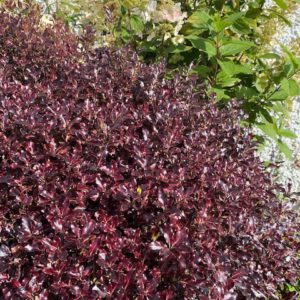
Pittosporum Tom Thumb
€12.50 Select options This product has multiple variants. The options may be chosen on the product page -
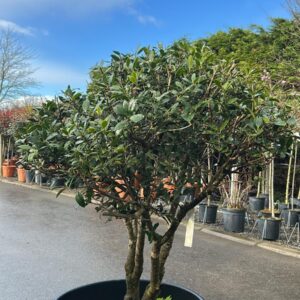
Osmanthus Heterophyllus Parachute Form
Price range: €570.00 through €900.00 Select options This product has multiple variants. The options may be chosen on the product page -
Photinia Pink Marble Parachute
Price range: €150.00 through €350.00 Select options This product has multiple variants. The options may be chosen on the product page