
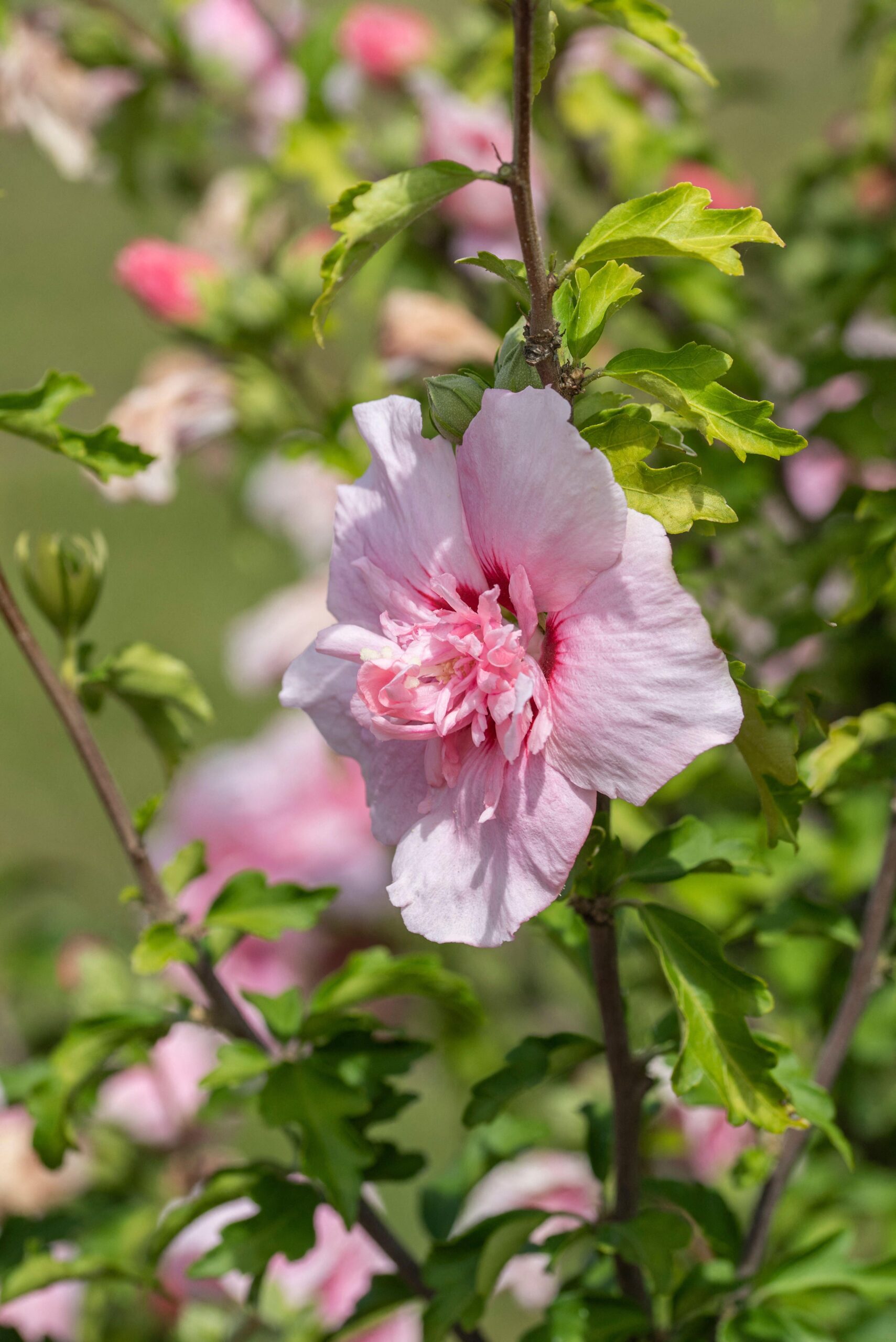
Hibiscus syr. ‘pink chiffon’
€55.00
Description
Quick Facts
- Common Name: Rose of Sharon ‘Pink Chiffon’, Shrub Hibiscus
- Botanical Name: Hibiscus syriacus ‘Pink Chiffon’
- Plant Type: Deciduous flowering shrub
- Mature Height: 2–3m
- Mature Spread: 1.2–2m
- Flowering Period: July to September (often into early autumn)
- Flower Colour: Soft pink, semi-double “chiffon” blooms with a deeper pink centre
- Foliage: Mid-green, lobed leaves
- Hardiness: RHS H5–H6 (hardy in most UK & Ireland gardens; best in a sheltered, sunny spot)
- Soil Requirements: Moist, well-drained soil; tolerant once established
- Aspect: Full sun (best flowering) to light shade
- Maintenance: Low
Description
Hibiscus syriacus ‘Pink Chiffon’ is late-summer magic in shrub form—just when so many borders begin to soften, it steps in with a long, generous run of soft pink, semi-double flowers that look like they’ve been made from layers of tissue-thin silk.
Each bloom has that signature “chiffon” look: delicate, ruffled petals with a deeper pink eye, opening day after day from mid-summer into early autumn. It’s a brilliant shrub for bringing colour to the garden when you need it most, and it has a calm, elegant presence that works beautifully in both modern and cottage-style planting.
‘Pink Chiffon’ is hardy, easy to grow, and surprisingly unfussy once established. Give it sun, a reasonably free-draining soil, and a little patience in spring (hibiscus can be slow to leaf up), and it will reward you with years of reliable late-season flowering.
Caragh Garden Notebook
Planting:
Plant in spring or autumn. Choose a warm, sunny, sheltered spot for best flowering—against a wall or fence is ideal in cooler or exposed gardens. Dig a generous hole and improve the soil with compost. Plant at the same depth as in the pot, firm in gently, water well, and mulch to conserve moisture.
Plant in spring or autumn. Choose a warm, sunny, sheltered spot for best flowering—against a wall or fence is ideal in cooler or exposed gardens. Dig a generous hole and improve the soil with compost. Plant at the same depth as in the pot, firm in gently, water well, and mulch to conserve moisture.
Soil Preparation:
Prefers moist, well-drained soil, but it’s adaptable once established. Improve heavy clay with compost (and a little grit if needed) to prevent winter wet. In very light soils, add organic matter to hold moisture.
Prefers moist, well-drained soil, but it’s adaptable once established. Improve heavy clay with compost (and a little grit if needed) to prevent winter wet. In very light soils, add organic matter to hold moisture.
Watering:
Water regularly in the first year, especially during dry spells. Once established, it’s fairly drought-tolerant, but it will flower more generously if it doesn’t dry out completely in summer.
Water regularly in the first year, especially during dry spells. Once established, it’s fairly drought-tolerant, but it will flower more generously if it doesn’t dry out completely in summer.
Pruning:
Flowers are produced on new growth, so prune in late winter/early spring.
Flowers are produced on new growth, so prune in late winter/early spring.
- Remove dead or weak stems.
- Shorten last year’s growth to 2–3 buds to encourage strong flowering shoots.
Don’t worry if it’s slow to start in spring—hibiscus often wakes up later than other shrubs.
Pests & Problems:
Generally trouble-free. Aphids can appear on soft new growth; usually managed with a gentle hose-down or by encouraging garden predators. In very exposed spots, buds can drop if the plant is stressed—sun, shelter, and steady moisture help.
Generally trouble-free. Aphids can appear on soft new growth; usually managed with a gentle hose-down or by encouraging garden predators. In very exposed spots, buds can drop if the plant is stressed—sun, shelter, and steady moisture help.
Design Notes:
Perfect for late-summer colour in mixed borders, as a flowering screen, or as a specimen shrub. Looks beautiful with ornamental grasses, lavender, perovskia, salvias, echinacea, and other sun-lovers. Great for pollinators too.
Perfect for late-summer colour in mixed borders, as a flowering screen, or as a specimen shrub. Looks beautiful with ornamental grasses, lavender, perovskia, salvias, echinacea, and other sun-lovers. Great for pollinators too.
Related products
-
Tilia platyphyllos / Large leaved Lime
Price range: €245.00 through €600.00 Select options This product has multiple variants. The options may be chosen on the product page -
Acer Crimson King / Red Norway Maple
Price range: €225.00 through €950.00 Select options This product has multiple variants. The options may be chosen on the product page -
Aucuba japonica variegata
€15.00 Select options This product has multiple variants. The options may be chosen on the product page -
Sorbus aria Lutescens / Whitebeam
€520.00 Select options This product has multiple variants. The options may be chosen on the product page