

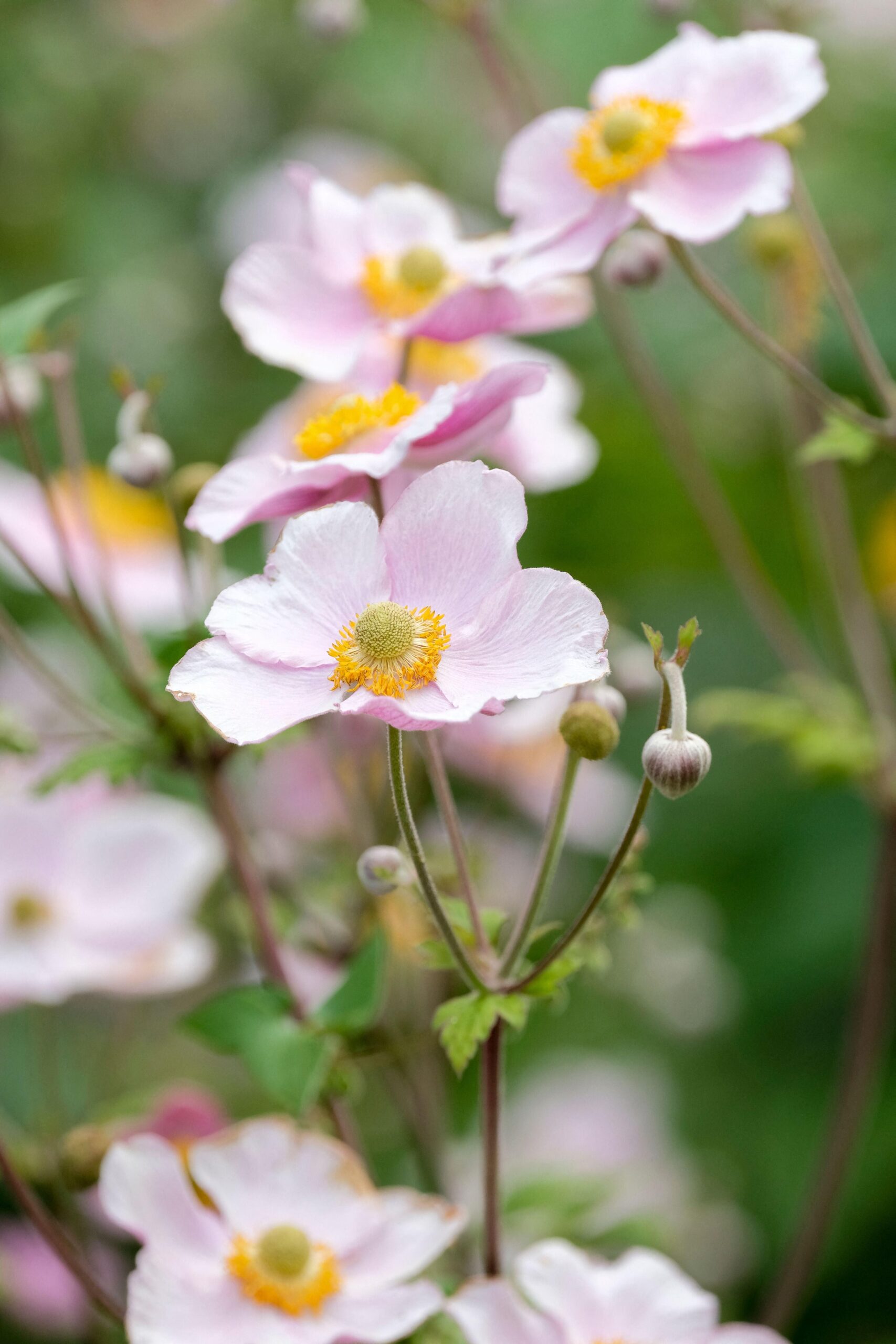
Anemone ‘September Charm’
€9.50
Frequently Bought Together

Description
Quick Facts
Botanical Name: Anemone hupehensis ‘September Charm’
Common Name: Japanese Anemone ‘September Charm’
Plant Type: Herbaceous perennial
Mature Height: 60–90cm
Mature Spread: 45–60cm (spreads slowly over time)
Flowering Period: Late summer to autumn (August–October)
Flower Colour: Soft pink, single flowers with pale yellow stamens
Foliage Colour: Dark green, deeply lobed
Hardiness: Very hardy in Ireland & the UK
Soil Requirements: Moist, well-drained, humus-rich soil
Aspect: Part shade to full sun (prefers part shade)
Maintenance: Low
Description
Anemone ‘September Charm’ is one of the best plants for carrying a border through late summer and into autumn when a lot of other things are starting to wind down. It produces a long succession of simple, elegant pink flowers — single petals around a neat yellow centre — held on tall, branching stems that move well in a breeze. The dark green foliage is handsome from spring onwards, and the plant builds steadily into a good-sized clump over time. It’s reliable, long-lived, and asks very little once established. A quiet workhorse for the second half of the season.
Caragh Garden Notebook
Planting:
Plant in spring or autumn into moisture-retentive, reasonably fertile soil. It prefers a position with some shelter from strong winds — the tall stems can be caught in exposed spots. Allow enough space for clumps to develop over a few seasons, as plants take a year or two to really hit their stride.
Watering:
Keep well watered through the first season, particularly in dry spells. Once established it manages reasonably well, but it performs best with consistent moisture — avoid very dry, drought-prone positions where flower production can suffer.
Feeding:
A mulch of well-rotted compost in spring is ideal — it feeds the plant, retains moisture, and keeps the root zone cool through summer. A light balanced feed in early spring can also help in poorer soils.
Seasonal Care & Tidy-Up:
Leave stems and seedheads standing through winter — they add structure and offer some crown protection. Cut back to the base in late winter or early spring before new growth emerges. Plants can take a season or two to establish before flowering freely, so patience pays off.
Division (to keep plants vigorous):
Divide every 4–5 years in spring to maintain vigour and manage spread. Japanese anemones spread slowly by underground runners, so division is also a straightforward way to move or multiply plants through the garden.
Pests & Problems:
Generally trouble-free. Slugs can target new spring growth, so keep an eye on emerging shoots. In very dry summers, plants may struggle — consistent moisture through the growing season is the best preventative. Powdery mildew can occasionally appear in hot, dry conditions but rarely causes serious harm.
Design Notes:
A classic for late-season colour in part shade borders. Combines beautifully with grasses, rudbeckias, and sedums for an autumn planting scheme, and it works particularly well underplanting shrubs or at the edge of a woodland-style border. The soft pink flowers sit well alongside purples, whites, and deep reds. Plant in groups of three or more for the best effect — repeated through a border it creates a lovely, cohesive rhythm in late summer.
Additional information
| Pot Size |
|---|
Related products
-
Betula Jacquemontii / Himalayan Birch
Price range: €575.00 through €600.00 Select options This product has multiple variants. The options may be chosen on the product page -
Acer Crimson King / Red Norway Maple
Price range: €350.00 through €950.00 Select options This product has multiple variants. The options may be chosen on the product page -

Ilex Nellie Stevens Standard Espalier
€1,150.00 Select options This product has multiple variants. The options may be chosen on the product page -
Geum ‘totally tangerine’
€8.50 Select options This product has multiple variants. The options may be chosen on the product page