

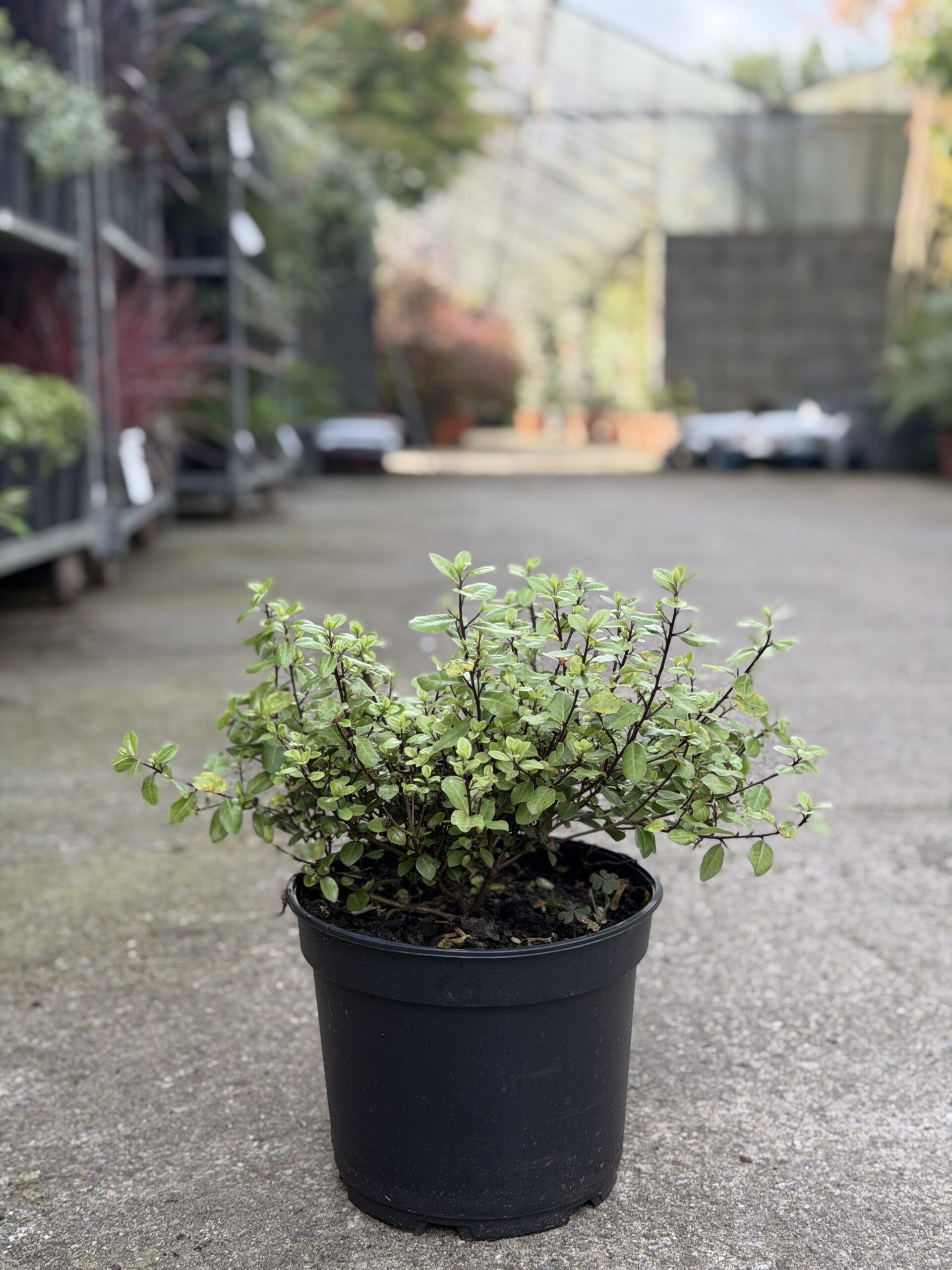
Pittosporum tenuifolium ‘Pom Pom’
€20.00
Description
Quick Facts
– Botanical Name: Pittosporum tenuifolium ‘Pom Pom’
– Common Name: Pom Pom is the name of this Pittosporum, not a description — it isn’t actually a pom-pom, just a charming, characterful evergreen
– Plant Type: Evergreen shrub
– Mature Size: Typically 1–1.5m over time; sizes vary with the individual plant and how it’s grown
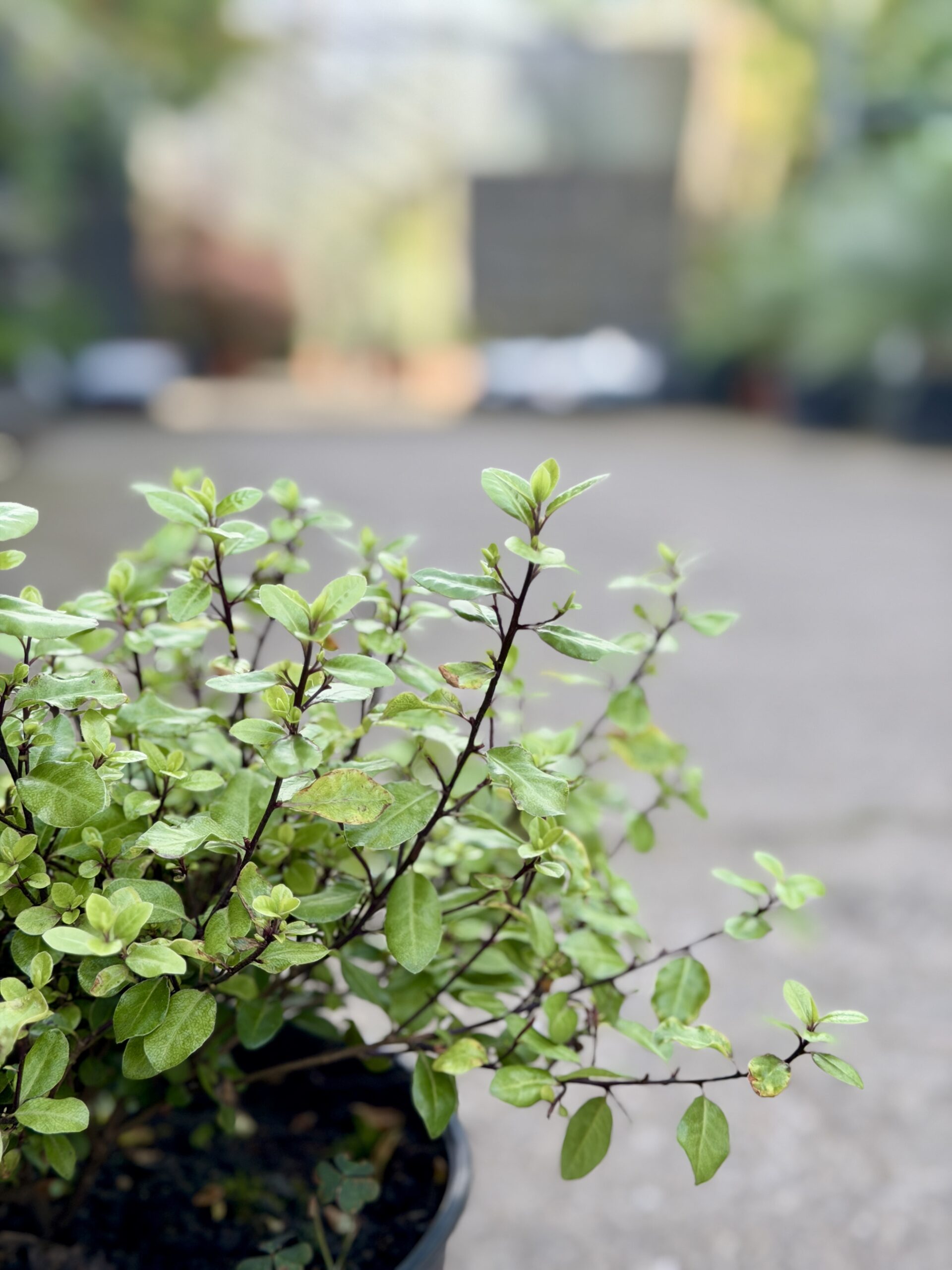
– Foliage: Small, glossy, grey-green leaves with dark to near-black stems — a distinctive and refined combination
– Flowers: Tiny, dark red to almost black, honey-scented flowers in late spring; a subtle delight
– Habit: Naturally neat and upright, with a rounded, relaxed head that responds beautifully to shaping
– Aspect: Full sun to partial shade; shelter from cold, drying winds
– Soil: Well-drained, fertile; tolerant of most soils once established
– Hardiness: Hardy in mild and coastal areas; benefits from a sheltered position and frost protection in exposed gardens
– Maintenance: Low — one or two light trims a year keeps it tidy and shaped
Description
First, a gentle clarification — the name Pom Pom tends to make people assume this plant arrives as a perfectly round ball, dripping with flowers. It doesn’t. Pom Pom is simply the name of this particular Pittosporum, and that’s exactly the kind of thing we love about it: it doesn’t try to be anything other than a very good, very charming evergreen.
Quietly refined and genuinely easy to love, Pom Pom brings a considered, polished quality to the garden without ever feeling stiff or formal. A neat, upright shrub with a rounded, relaxed head, it’s clothed in small glossy grey-green leaves, framed by the plant’s signature dark to near-black stems — a combination of soft and dark that works in almost any scheme. It is the garden equivalent of a well-dressed detail: understated in isolation, quietly indispensable in design.
Its charm is in its calm. It holds its shape with minimal attention, reads beautifully against walls, paving, and planting alike, and brings a touch of Mediterranean or contemporary elegance to terraces, entrances, and borders. In mild, sheltered coastal gardens it is entirely at home — the grey-green leaves and dark stems look as though they were made for the light. In late spring, look closely and you may catch the tiny, near-black, honey-scented flowers deep within the foliage. A small plant with a great deal of presence.
Caragh Garden Notebook
Planting:
Plant in spring or autumn into well-drained, fertile soil, incorporating a little compost at planting. A position in full sun to partial shade suits it well; the plant is best appreciated in an open, visible spot — beside a doorway, at the end of a vista, or flanking a path or entrance. Choose a sheltered position where possible, particularly in colder or more exposed gardens, as Pittosporum does not like cold, drying winds and can be damaged by hard frost. In milder, coastal gardens it is perfectly hardy. Water in thoroughly after planting and mulch around the base to retain moisture.
Watering:
Water consistently through the first growing season while the plant establishes. Once settled, Pittosporum tenuifolium is reasonably drought-tolerant and requires little supplementary watering in an Irish garden. During prolonged dry spells, a thorough watering will keep the foliage fresh and glossy. In containers, water regularly through the growing season and ensure the pot drains freely; container-grown specimens need more attention, particularly in warm or windy weather.
Feeding:
A light balanced slow-release fertiliser applied in spring as growth begins will support healthy, dense growth — important for keeping the head full and well-clothed. In containers, feed monthly through the growing season with a balanced liquid fertiliser. A spring mulch of well-rotted compost around the base in the ground feeds gently and retains moisture. Avoid high-nitrogen feeds, which push soft growth that is more vulnerable to frost.
Pruning:
Because Pom Pom isn’t a naturally perfectly round ball, a little light shaping brings out its best. One or two light trims a year will keep the head neat and rounded if you’d like that crisp, considered look — trim in late spring, after the main flush of growth, and again lightly in late summer if needed. Use sharp shears and work gently, preserving a soft, rounded form rather than cutting hard into the plant. Remove any shoots that develop low on the stem if you prefer a cleaner, standard-like line as it matures. In spring, tidy any growth damaged by winter cold before the new season begins.
Winter Protection:
In colder or exposed gardens, protection through the hardest weather is worthwhile. Plant in a sheltered position away from cold, drying winds, and in very hard frosts a temporary fleece covering will protect both the foliage and the plant’s shape. Container-grown plants are more vulnerable to frost than those in the ground — move pots to a sheltered spot near a wall or wrap the pot to protect the roots through winter. In mild coastal gardens, no protection is generally needed.
Pests & Problems:
Generally trouble-free. Scale insects can occasionally appear on the stems and undersides of leaves — treat with a horticultural oil if they cause concern. In very cold, exposed gardens, frost damage can cause die-back of the foliage; a sheltered position is the most reliable prevention. Waterlogged soil is the other main risk — good drainage at planting is essential. Otherwise, Pom Pom is a resilient, dependable, and genuinely low-maintenance plant.
Design Notes:
The clean, architectural form of Pittosporum ‘Pom Pom’ makes it one of the most useful of the evergreens for garden design — it delivers structure and a considered, polished line with very little ongoing effort. Use a pair either side of a doorway or gateway for instant, balanced symmetry; place a single specimen at the end of a vista or the corner of a terrace, where its form reads clearly against wall, paving, or sky; or repeat at intervals along a path for a calm, rhythmic structure. The grey-green foliage and near-black stems sit beautifully against pale stone, contemporary planting, and the deeper greens of yew or box, and the plant works as comfortably in a Mediterranean scheme as it does in a more relaxed, coastal garden. In a large pot it brings year-round quality to a doorstep or courtyard, and in mild gardens it thrives with very little asked in return. And you can tell the neighbours with a smile — Pom Pom is just his name.
Additional information
| Pot Size |
|---|
Related products
-

Sarcococca confusa – Sweet Box
€20.00 Select options This product has multiple variants. The options may be chosen on the product page -
Choisya x dewitteana ‘Aztec Pearl’
€9.50 Select options This product has multiple variants. The options may be chosen on the product page -
Aucuba japonica Crotonifolia
€15.00 Select options This product has multiple variants. The options may be chosen on the product page -
Photinia Pink Marble Parachute
Price range: €320.00 through €350.00 Select options This product has multiple variants. The options may be chosen on the product page