

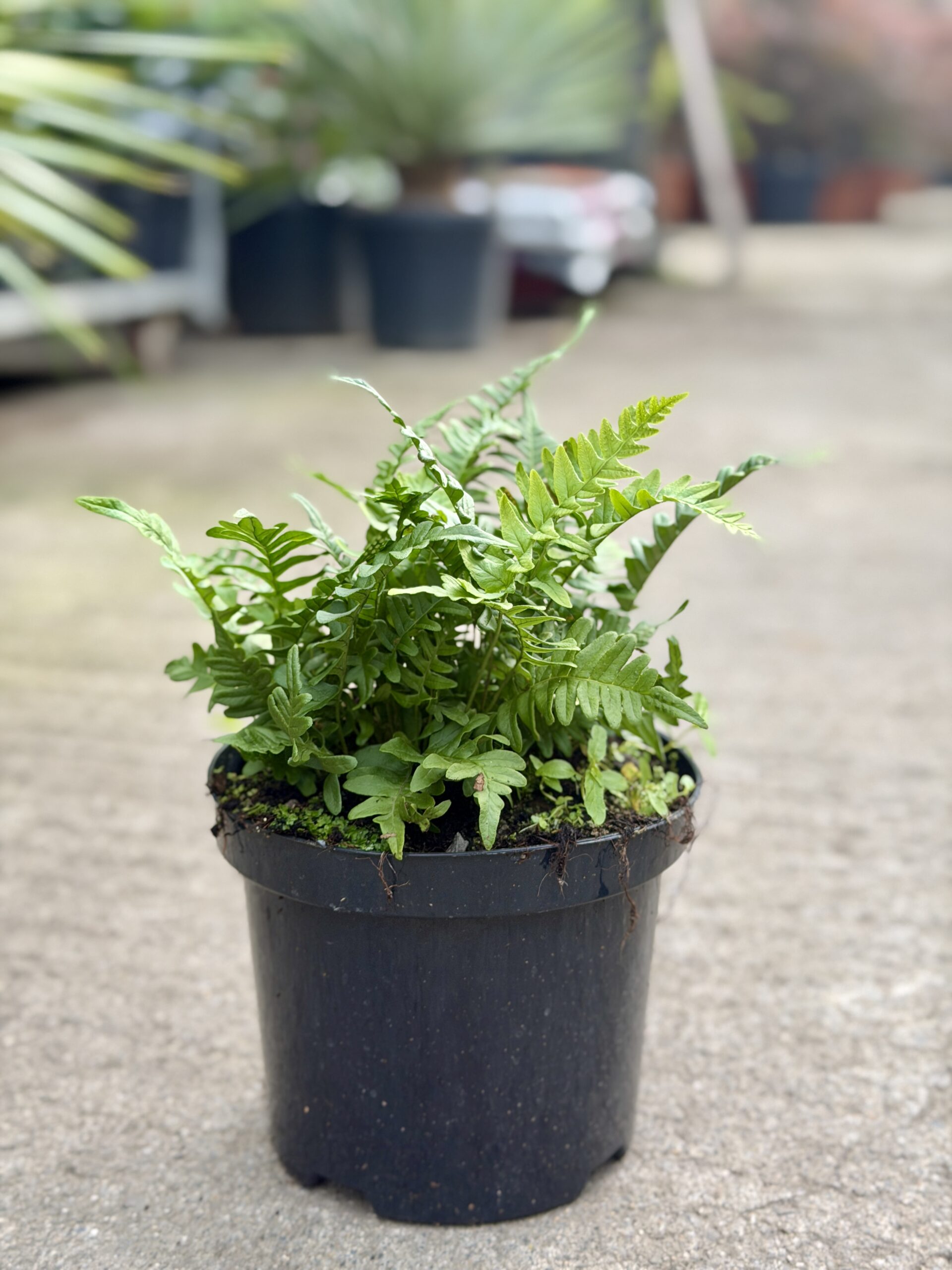
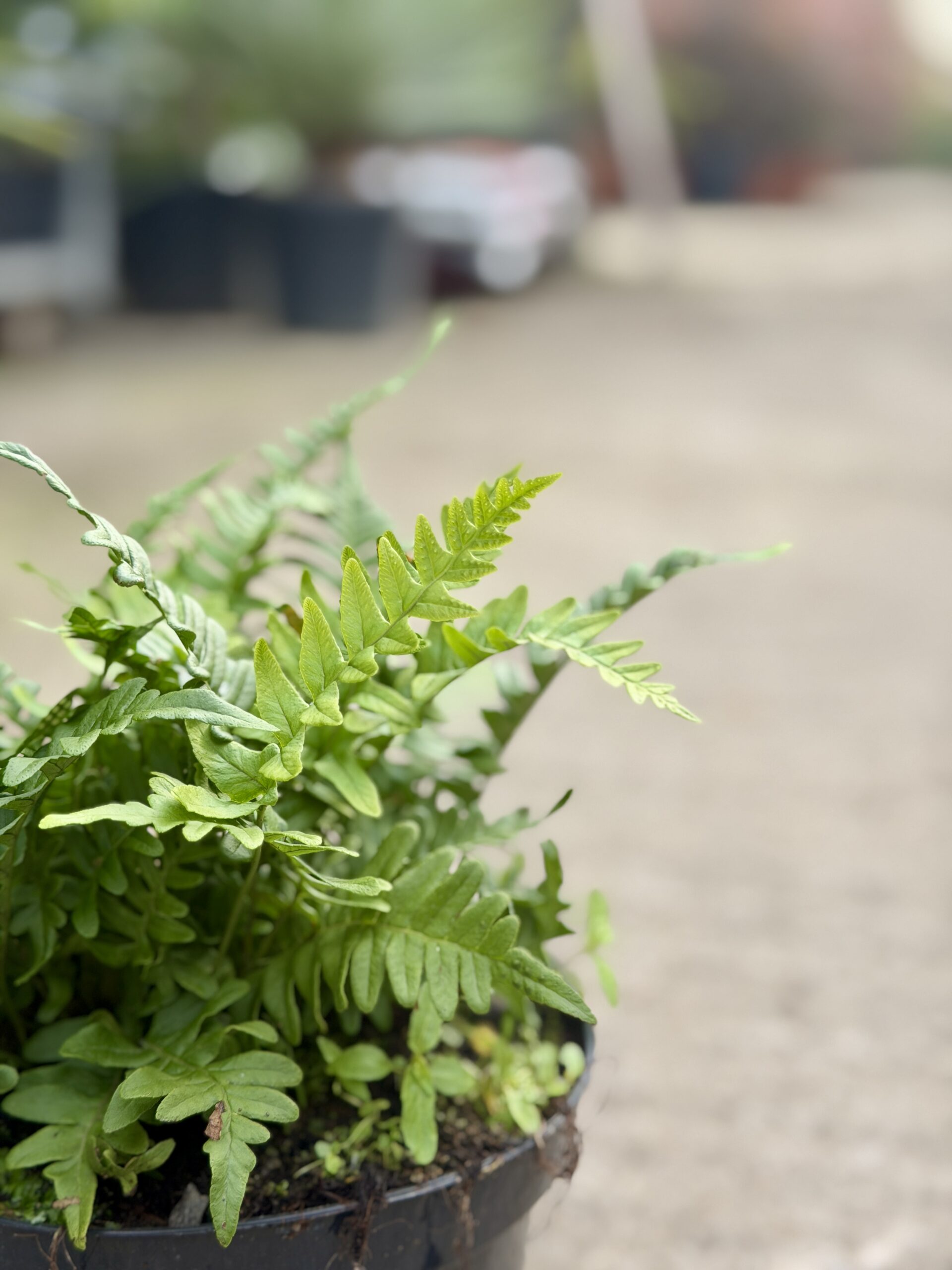
Polypodium vulgare – Common Polypody
€11.00
Description
Quick Facts
– Botanical Name: Polypodium vulgare
– Common Name: Common Polypody / Adder’s Fern
– Plant Type: Evergreen fern
– Mature Height: 15–30cm
– Mature Spread: 30–60cm
– Frond Colour: Deep, glossy green, leathery fronds; semi-evergreen, often retained through winter
– Habit: Low, creeping, spreads gradually by rhizomes to form an attractive colony
– Aspect: Shade to partial shade; tolerates more sun in moist, sheltered conditions
– Soil: Well-drained, humus-rich; thrives in moist shade but tolerates dry shade and dry soils — one of the more drought-tolerant ferns
– Hardiness: Fully hardy — a native fern of Ireland & the UK
– Awards: RHS Award of Garden Merit (AGM)
– Maintenance: Very low
Description
Polypodium vulgare is the fern of old stone walls, woodland floors, and the shaded edges of Irish gardens — a native, evergreen, and quietly tenacious little plant that brings year-round green to the places where so little else will grow. The glossy, leathery fronds form low, loose mats that creep along the ground by rhizomes, knitting together over time into a soft, irregular colony that looks entirely natural wherever it settles.
Its great gift is tolerance. While many ferns demand constant moisture, Polypodium vulgare is genuinely drought-tolerant once established and will grow in dry shade, beneath trees, between paving, and along the base of walls where the soil is thin and the competition fierce. At 15–30cm it is a low, refined presence — the kind of fern that fills a gap, softens a hard edge, and holds its green through the winter months when the deciduous garden has little left to offer.
A native fern with real character — small, evergreen, and utterly dependable.
Caragh Garden Notebook
Planting:
Plant in spring or autumn into well-drained, humus-rich soil with a little leafmould or compost incorporated. Polypodium vulgare is at its happiest in moist shade but is genuinely tolerant of drier conditions once established, making it invaluable in dry shade beneath trees, along shaded walls, and in the thin soils at the base of old structures. It will also appreciate a spot in sun provided the soil stays reasonably moist and sheltered. Space plants to allow the creeping rhizomes to knit into a colony — the natural effect is part of its charm. Water in thoroughly after planting.
Watering:
Water consistently through the first growing season while the rhizomes establish. Once settled, Polypodium vulgare is one of the more drought-tolerant ferns and requires little supplementary watering in an Irish garden; it will live happily in dry shade where many ferns would struggle. In prolonged dry spells, an occasional watering will keep the fronds at their glossiest. Avoid waterlogged conditions, which are the one thing this fern genuinely dislikes.
Feeding:
An annual mulch of leafmould or well-rotted compost in spring feeds gently and improves the soil over time, replicating the woodland-floor conditions this native fern naturally favours. In most garden soils little additional feeding is required; in very poor or stony ground, a light balanced feed in spring will support healthy growth. This is not a demanding plant.
Seasonal Care & Tidy-Up:
As a semi-evergreen fern, Polypodium vulgare holds much of its foliage through winter, providing valuable green structure in the shaded garden through the coldest months. In late winter or early spring, remove any fronds that have browned or died back with a gentle tidy, clearing the way for the new season’s growth. Avoid cutting the plant hard back — a light, careful tidy is always preferable, preserving the healthy fronds and the natural creeping habit.
Division & Spread:
Polypodium spreads slowly by surface rhizomes, and this spreading habit is one of its greatest assets for covering shaded ground. If you wish to propagate or control it, lift sections of the creeping rhizome in spring and replant immediately into well-prepared shaded soil. Division is simple because the plant’s nature is to spread — established colonies can be reduced or moved readily, and a few rhizome sections will quickly settle into a new spot.
Pests & Problems:
Genuinely trouble-free — one of the most reliable and undemanding ferns available. The creeping rhizomes can occasionally be disturbed by heavy foot traffic if planted at a path edge. In very dry and exposed positions, fronds may lose some lustre; a sheltered, shaded spot always shows the glossy green at its best. Otherwise, this is a plant that simply gets on with it, year after year.
Design Notes:
Polypodium vulgare is one of the most natural and useful of the native ferns for garden design — a low, evergreen, tolerant plant that works in the awkward shaded places where so many others fail. Use it at the base of shaded walls and trees, where it softens a hard edge and holds its green through winter; weave it between paving where it will creep and fill with a delicate, naturalistic effect; or use it as a textured, self-sufficient ground cover in dry shade beneath established trees and shrubs. Its fine, leathery fronds contrast beautifully with bold-leaved shade plants — hostas, bergenias, and ferns of larger, more architectural habit — and its willingness to grow in dry, poor conditions makes it genuinely invaluable in the difficult corners of a garden. For the shaded Irish garden, it is the quiet, evergreen constant that holds everything together.
Additional information
| Pot Size |
|---|
Related products
-

Cordyline Charlie Boy
€25.00 Select options This product has multiple variants. The options may be chosen on the product page -
Geranium Wargrave Pink
€8.50 Select options This product has multiple variants. The options may be chosen on the product page -

Euonymus japonicus ‘Green Spire’
Price range: €7.50 through €10.50 Select options This product has multiple variants. The options may be chosen on the product page -

Salvia nemerosa Midnight Purple
Price range: €9.50 through €10.50 Select options This product has multiple variants. The options may be chosen on the product page