

Planed & Ribbed Pine Posts
Price range: €21.00 through €34.50
Description
Garden timber that does more than just hold things up ribbed detailing, a smooth domed top, and a finish that lifts fencing and structures from functional to well-made. Pressure treated and ready to fit, for gardens across Ireland.
Why Choose Planed & Ribbed Pine Posts?
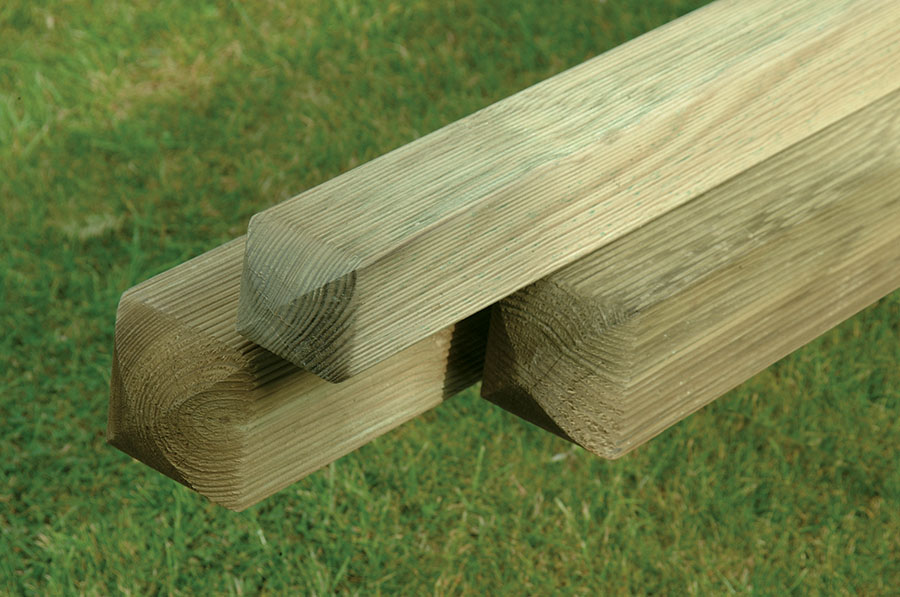
This is the garden timber that adds a level of finish and detail to everything it holds. The ribbed detailing runs vertically down each face, creating subtle shadow lines that catch the light and give the posts texture and visual interest. The 4-way rounded (domed) top is smooth and sheds water naturally — a softer, more refined profile than a flat or pointed top.
Planed all round (PAR) means every surface is smooth and even — no rough edges, no splinters, just clean timber that looks good from every angle. The planing process reduces the nominal size slightly (75mm becomes 70mm, 100mm becomes 90mm), but the result is timber that’s easier to work with, takes finishes beautifully, and looks smart whether you’re painting it, staining it, or leaving it natural.
Key benefits
– Ribbed detailing with subtle shadow lines — texture and visual interest on every face
– Smooth 4-way domed top — sheds water naturally and looks refined
– Planed all round — clean, splinter-free timber, finished to a higher standard
– Pressure treated for long-lasting outdoor use
– Natural, paintable, or stainable — crisp white, dark charcoal, or soft garden greens
– Available in a range of standard sizes plus a versatile ‘H’ post option
What Makes These Posts Different from Standard Fence Posts?
The difference is in the detail. Standard posts are functional; these are considered. The ribbed faces catch the light and give a texture that feels intentional rather than incidental, and the domed top means water sheds naturally rather than pooling and working into the end grain.
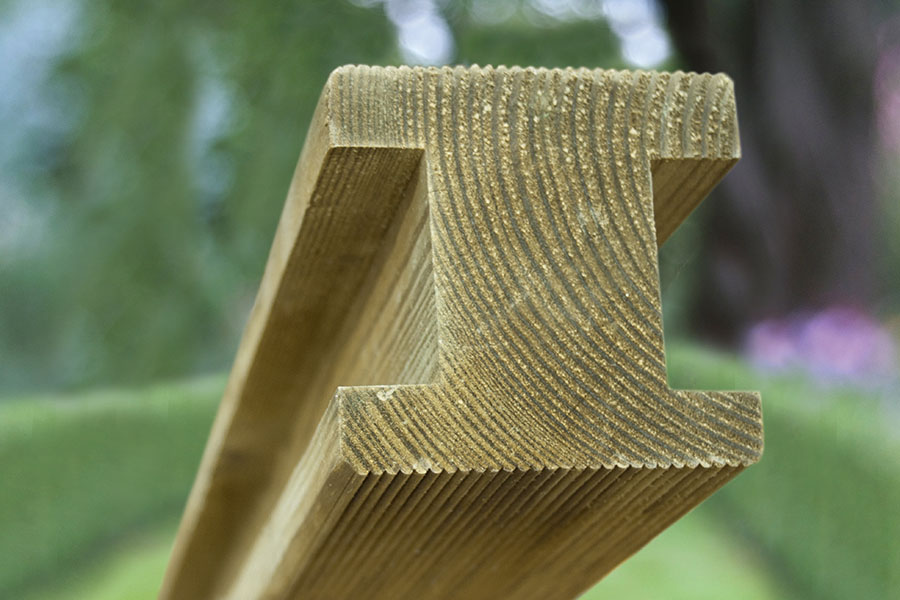
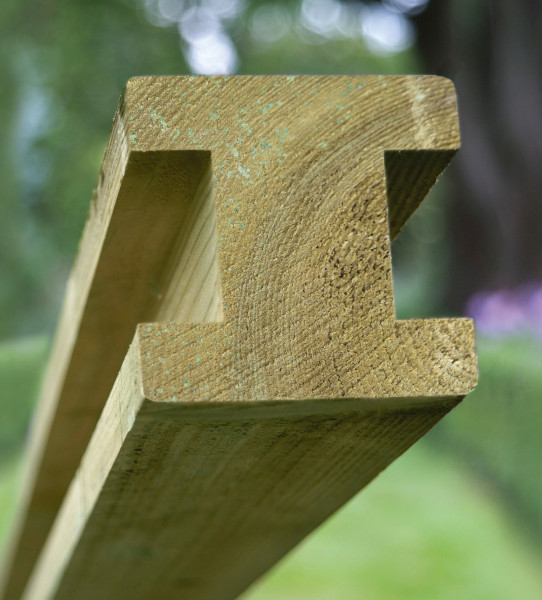
The ‘H’ post is a particularly useful option for panel fencing. The recessed channels on two opposite faces allow fence panels or gravel boards to slot neatly into place, creating a clean, professional finish without the need for brackets or complex fixing — the kind of detail that makes installation easier and the finished result look intentional and well-crafted.
Specification
– Material: Pressure-treated pine timber
– Finish: Planed all round (PAR), natural pressure-treated (paintable or stainable)
– Top design: 4-way rounded (domed)
– Fixings: Not included, concrete or post spikes recommended
Available Sizes
Standard Posts
– 75mm × 75mm × 1.8m (finished 70mm × 70mm × 1.8m) — lightweight fencing, trellis support, garden edging, decorative borders
– 100mm × 100mm × 1.8m (finished 90mm × 90mm × 1.8m) — standard fencing, lightweight gate posts, pergola supports, garden structures
– 100mm × 100mm × 2.4m (finished 90mm × 90mm × 2.4m) — taller fencing, substantial gate posts, pergola posts, arbour supports
‘H’ Post
– 100mm × 100mm × 2.4m ‘H’ Post (finished 90mm × 90mm × 2.4m) — recessed channels on two opposite faces for slotting fence panels or gravel boards; ideal for intermediate posts, gravel board support, and modular fencing systems
Planed & Ribbed Posts for Irish Gardens
Built with Irish conditions in mind, these posts are pressure treated throughout for rot and weather resistance — exactly what garden timber in Ireland needs, where rain and damp do their worst over a structure’s lifetime. The domed top sheds water naturally, which protects the most vulnerable part of any post in the wetter Irish months.
We supply planed and ribbed fence posts nationwide across Ireland from Dublin and the Greater Dublin Area, to Kildare, Wicklow, Meath, and across the island of Ireland and our team can confirm availability and delivery to your county or postcode.
Which Post Is Right for My Garden?
– Lightweight fencing, trellis, and edging: the 75mm × 75mm post is the right scale for lighter work and decorative borders.
– Standard fencing and gates: the 100mm × 100mm × 1.8m post handles everyday boundary fencing and smaller gates.
– Taller fencing, pergolas, and arbours: the 100mm × 100mm × 2.4m post provides the extra height and substance for bigger structures.
– Panel fencing: the ‘H’ post slots panels and gravel boards directly into its recessed channels for a clean, bracket-free finish.
Caragh’s Garden Notebook
Whether you’re building a fence, installing a gate, supporting a pergola, or creating a garden structure, these posts bring the combination of strength, finish, and detail that makes the difference between something that just works and something that looks built to last. Set the posts in concrete footings for a permanent, stable build — allow 60–75cm below ground for a 2.4m post — or use heavy-duty metal post spikes for a quicker job on firm ground. The ribbed detailing and domed top are best appreciated when the posts are used where they can be seen, not just hidden inside a fence run: gate posts, pergola posts, and arbour supports show them off beautifully. Left natural, they weather to a soft silver-grey; painted or stained, they become a feature in their own right. Removing the corners slightly here and there with a sander before finishing gives an even more refined, professional edge.
Additional information
| Size | 75mm x 75mm x 2.4m, 100mm x 100mm x 1.8m, 100mm x 100mm x 2.4m, 100mm x 100mm x 2.4m 'H' Post |
|---|
Customers also purchased...
Related products
-
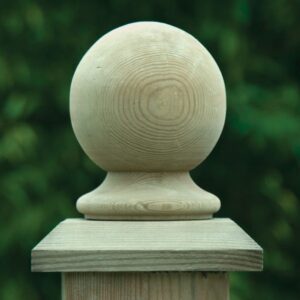
Fence Post Finials
Price range: €4.00 through €4.50 Select options This product has multiple variants. The options may be chosen on the product page -
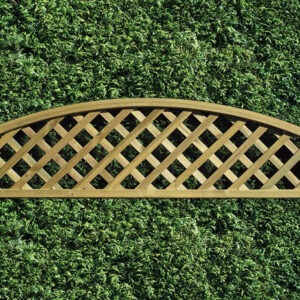
Heavy Diamond Lattice Trellis Panels
Price range: €30.00 through €110.00 Select options This product has multiple variants. The options may be chosen on the product page -
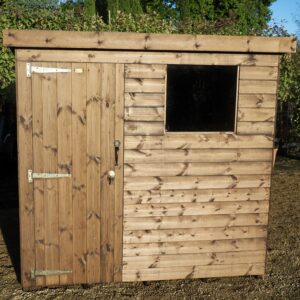
Pent Roof Shed – Medium Sizes
Price range: €1,000.00 through €1,984.50 Select options This product has multiple variants. The options may be chosen on the product page -
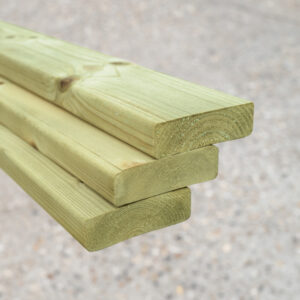
Planed Battening
Price range: €5.50 through €6.50 Select options This product has multiple variants. The options may be chosen on the product page