

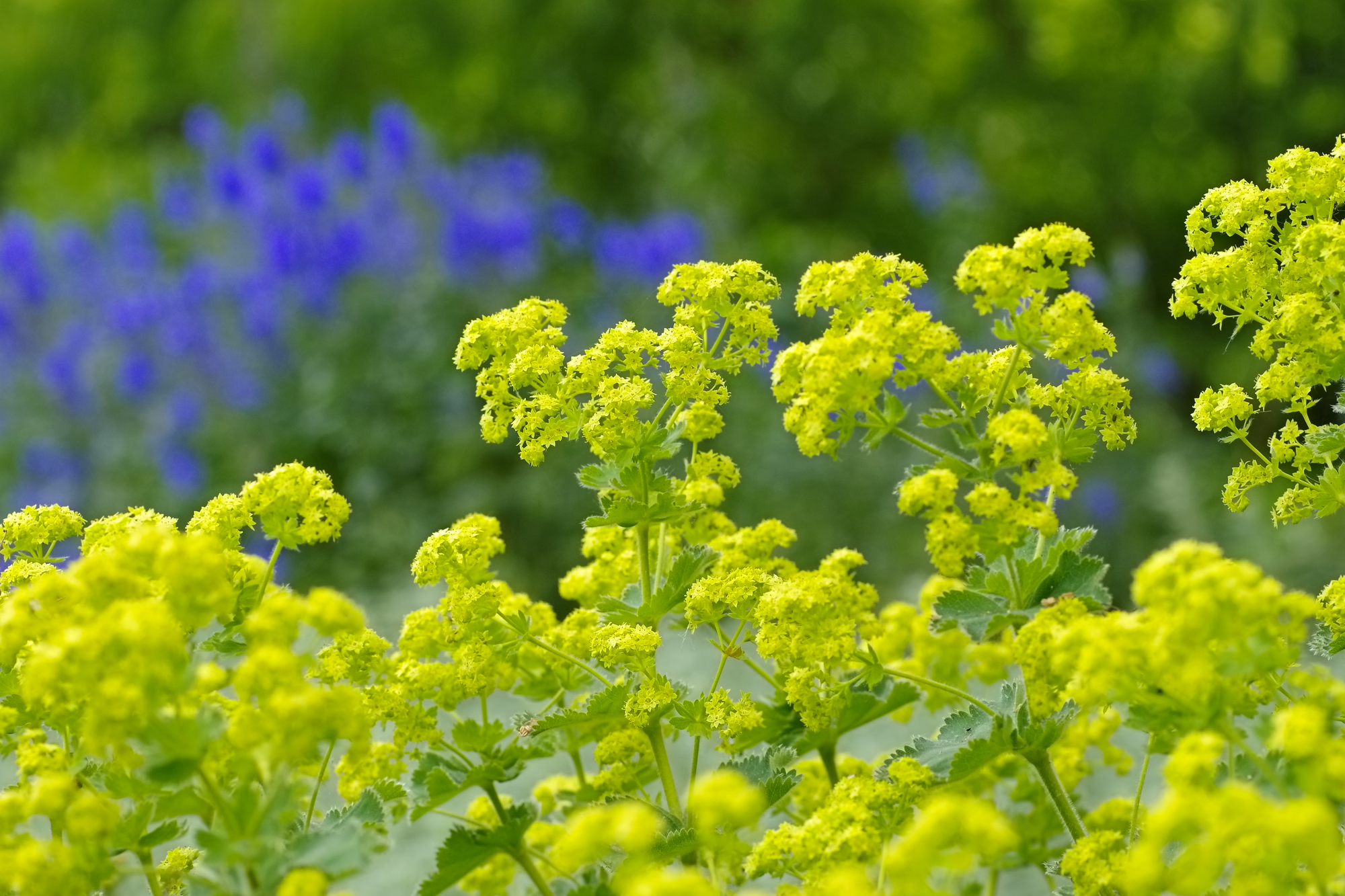
Alchemilla mollis
€8.50
Frequently Bought Together


Description
Quick Facts
Botanical Name: Alchemilla mollis
Common Name: Lady’s Mantle
Plant Type: Deciduous perennial
Mature Height: 30–40cm
Mature Spread: 45–60cm
Flowering Period: Late spring to midsummer (May–July)
Flower Colour: Soft yellow-green frothy sprays
Foliage Colour: Soft grey-green, velvety, scalloped leaves
Hardiness: Very hardy in Ireland & the UK
Soil Requirements: Most well-drained soils; tolerates poor conditions once established
Aspect: Full sun to part shade
Maintenance: Low
Description
Alchemilla mollis is a garden classic for good reason. The soft, velvety leaves catch and hold water droplets like tiny pearls after rain — it’s one of those small things that makes it genuinely lovely to look at. In late spring it throws up frothy sprays of yellow-green flowers that sit just above the foliage, working well as a cut flower too. Tough, unfussy, and happy in most positions, it’s a brilliant gap-filler, edging plant, and border softener that earns its keep from early spring right through to autumn.
Caragh Garden Notebook
Planting:
Plant in spring or autumn into reasonably well-drained soil. Alchemilla isn’t fussy — it will adapt to most garden soils, including poorer ones. Space plants 40–50cm apart and water in well to establish.
Watering:
Fairly drought-tolerant once established. Water regularly through the first season, then it will largely look after itself. In containers, keep an eye on moisture levels through summer.
Feeding:
An annual mulch of compost in spring is sufficient. No heavy feeding required — too rich a soil can encourage excessive spreading at the expense of compact, tidy growth.
Seasonal Care & Tidy-Up:
After flowering, cut the whole plant back hard to ground level — it will quickly produce a fresh flush of foliage and often flowers again later in the season. This also prevents excessive self-seeding, which Alchemilla will do enthusiastically if left unchecked.
Division (to keep plants vigorous):
Divide every 3–4 years in spring or autumn to keep clumps tidy and vigorous. It transplants easily and is a generous plant to divide and spread around the garden.
Pests & Problems:
Generally trouble-free. The main thing to manage is self-seeding — cut back after flowering if you want to keep it contained. Otherwise it’s one of the most reliable, problem-free plants you can grow.
Design Notes:
A brilliant edging plant along paths and borders, where the soft mounding habit spills gently without becoming a nuisance. Works beautifully with roses, geraniums, astrantias, and alliums — the yellow-green flowers complement almost everything. Equally good repeated through a mixed border to tie planting together, and useful in part shade where many other plants struggle to flower well.
Additional information
| Pot Size |
|---|
Related products
-

Hosta sieboldiana Elegans
€9.50 Select options This product has multiple variants. The options may be chosen on the product page -
Carex comans Bronco
€9.50 Select options This product has multiple variants. The options may be chosen on the product page -

Persicaria ‘Darjeeling Red’
€8.50 Select options This product has multiple variants. The options may be chosen on the product page -
Verbena bonariensis
€8.50 Select options This product has multiple variants. The options may be chosen on the product page