

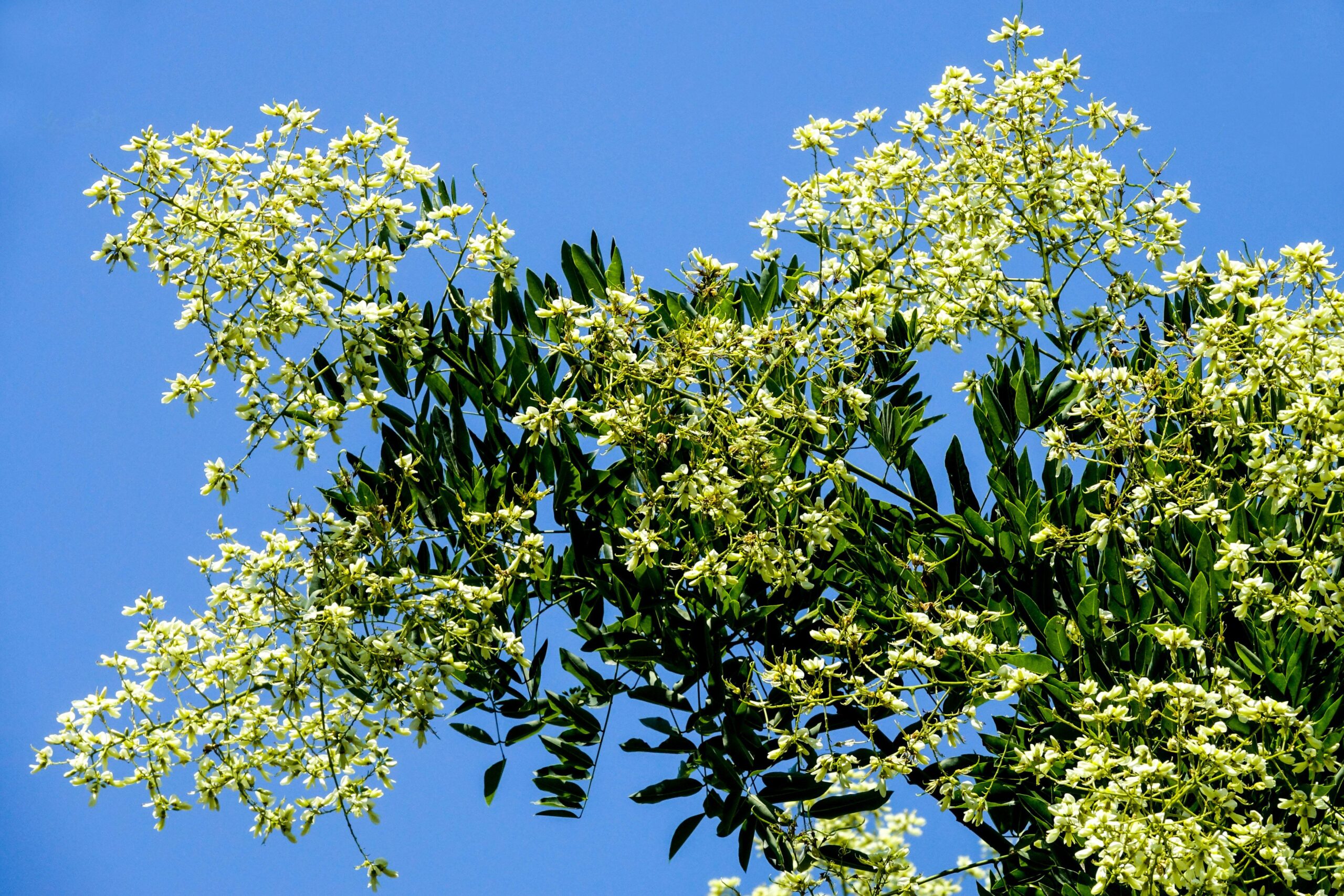
Sophora japonica – Japanese pagoda tree
€390.00
Frequently Bought Together


Description
Quick Facts
- Botanical Name: Sophora japonica (often also listed as Styphnolobium japonicum)
- Common Name: Japanese Pagoda Tree
- Plant Type: Deciduous tree
- Size Supplied: Large specimen, up to 3m tall
- Habit: Upright when young, forming a broad, elegant crown with age
- Foliage: Soft green, pinnate leaves that give light, dappled shade
- Flowering: Late summer (on mature trees)
- Flower Colour: Creamy-white, pea-like flowers in loose panicles
- Position: Full sun
- Soil: Fertile, free-draining; tolerant once established
- Hardiness: Very hardy
- Best For: Feature tree, avenues, light shade, contemporary landscapes, wildlife-friendly gardens
Description
Sophora is a tree with a calm, architectural kind of beauty — the sort that makes a garden feel designed without ever feeling forced.
With its soft, fern-like leaves and naturally elegant branching, Sophora japonica brings a lighter canopy than many trees, casting dappled shade that still lets planting thrive beneath. As it matures, it can also flower in late summer, producing airy, creamy-white blooms that are loved by pollinators — a rare and welcome moment of blossom when most trees are long finished.
As a large specimen up to 3m tall, it gives you instant presence: a proper tree from day one, ready to anchor a lawn, frame a view, or bring height and structure to a new garden.
Caragh Garden Notebook
Planting & position
Full sun is best for strong growth and a well-shaped crown. Give it space to develop — Sophora becomes a generous, spreading tree over time, so it’s happiest where it won’t be cramped.
Full sun is best for strong growth and a well-shaped crown. Give it space to develop — Sophora becomes a generous, spreading tree over time, so it’s happiest where it won’t be cramped.
Soil & drainage
Sophora is adaptable, but it performs best in fertile soil that drains freely. Avoid waterlogged ground in winter. If your soil is heavy, improve with organic matter and consider planting slightly proud.
Sophora is adaptable, but it performs best in fertile soil that drains freely. Avoid waterlogged ground in winter. If your soil is heavy, improve with organic matter and consider planting slightly proud.
Watering (important for big specimens)
Large trees need consistent watering while they establish.
Large trees need consistent watering while they establish.
- Water deeply after planting.
- In the first growing season, water regularly during dry spells (a slow soak is better than a quick sprinkle).
- Mulch around the base to hold moisture and protect roots.
Feeding
Usually not essential in good soil. A spring mulch of compost is often enough to support healthy growth.
Usually not essential in good soil. A spring mulch of compost is often enough to support healthy growth.
Pruning
Minimal pruning is needed.
Minimal pruning is needed.
- Remove any dead, damaged, or crossing branches.
- Light shaping is best done while the tree is young to build a strong framework.
Design notes
- Perfect as a feature tree where you want shade that isn’t too heavy
- Lovely in more contemporary planting with grasses, hydrangeas, underplanting bulbs, and naturalistic borders
- A great choice for gardens that want structure and softness at the same time
Related products
-
Osmanthus Heterophyllus Parachute Form
Price range: €570.00 through €900.00 Select options This product has multiple variants. The options may be chosen on the product page -
Hebe Sutherlandii
€8.50 Select options This product has multiple variants. The options may be chosen on the product page -
Nandina domestica ‘Obsessed’
€20.00 Select options This product has multiple variants. The options may be chosen on the product page -

Choisya ternata – Mexican Orange Blossom
Price range: €9.50 through €22.00 Select options This product has multiple variants. The options may be chosen on the product page