

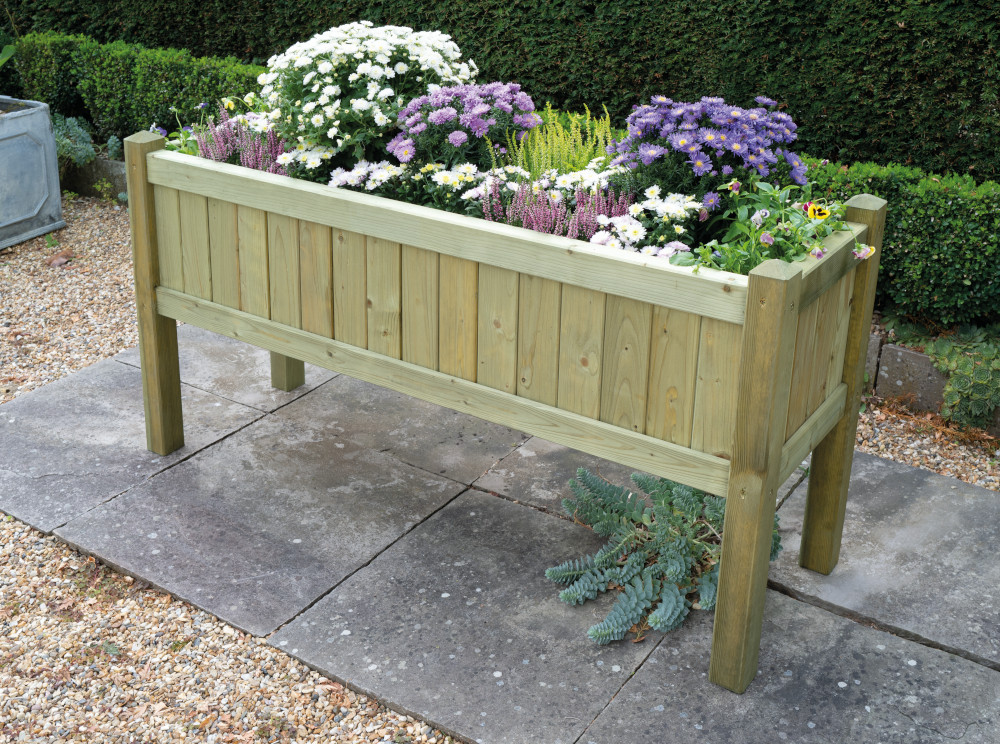
Raised Rectangular Planter
€185.00
Frequently Bought Together
Description
Quick Facts
Product Name: Raised Rectangular Planter
Product Dimensions: 150cm L x 75cm H x 45cm W
Material: Pressure-treated timber with integrated liner
Product Type: Raised bed planter with protective lining
Construction: Planed timber boards with corner posts
Liner: Heavy-duty protective liner pre-installed
Drainage: Drainage in base and liner
Durability: Pressure-treated for long-lasting outdoor use
Material: Pressure-treated timber with integrated liner
Product Type: Raised bed planter with protective lining
Construction: Planed timber boards with corner posts
Liner: Heavy-duty protective liner pre-installed
Drainage: Drainage in base and liner
Durability: Pressure-treated for long-lasting outdoor use
Description
The Raised Rectangular Planter is built for gardeners who want a raised bed that’s ready to fill and plant straight away—no messing about with liners, no worrying about whether you’ve done it right, just a solid timber planter with the liner already fitted and drainage sorted.
The planed timber construction gives a clean, substantial build that’s designed to last outdoors year-round. The integrated liner helps protect the timber from constant contact with damp soil and compost, significantly extending the life of the planter. It’s heavy-duty material that won’t tear or degrade quickly, and it’s already fitted with drainage holes that line up with the base, so water drains freely without waterlogging.
The rectangular shape makes these planters particularly practical. They’re space-efficient—you can tuck them against walls, line them up in rows, or position them end-to-end to create long raised beds without wasting space. The raised height brings planting up to a more comfortable working level, reducing bending and making gardening easier on your back and knees.
The pressure-treated timber weathers to a soft silver-grey if left natural, or takes paint and stain beautifully if you want the planter to stand out or blend into a specific colour scheme. The clean lines and rectangular form work in both traditional and contemporary gardens—they’re simple, unfussy, and let the planting do the talking.
This is a planter for serious growing—vegetables, herbs, perennials, shrubs, or cutting flowers. It’s built to be productive, long-lasting, and low-maintenance, with the liner doing the quiet work of keeping the timber in good condition year after year.
Caragh Garden Notebook
Installation & Preparation
Positioning:
- Choose a level, stable surface—paving, decking, gravel, compacted soil, or directly on ground
- Ensure the location suits the plants you’re planning to grow (sun/shade requirements)
- For vegetable growing, choose a sunny spot (6+ hours of sun daily)
- Consider access for watering, harvesting, and maintenance
- Position before filling—raised planters are very heavy once filled with soil
Drainage:
- Check that drainage holes are present in both the base and the liner (should be pre-drilled and aligned)
- If placing on paving or decking, raise the planter slightly using pot feet, bricks, or timber offcuts to allow water to drain freely and air to circulate underneath
- If placing directly on soil, drainage is naturally better, but ensure the ground isn’t waterlogged
Ground Preparation (if placing on soil):
- Clear the area of weeds and grass
- Loosen the soil beneath to allow drainage and encourage root penetration into the ground below (beneficial for deeper-rooted plants)
- Optionally, lay weed-suppressing membrane beneath the planter to prevent weeds growing up through the drainage holes
Filling:
- Drainage layer (optional): Add a 5–10cm layer of gravel, broken terracotta, or crocks to the base for improved drainage (particularly useful on paving or decking)
- Compost/soil mix: Fill with good-quality multi-purpose or peat-free compost, or a mix of compost and topsoil
- For vegetables and annuals: multi-purpose compost or peat-free compost
- For perennials and shrubs: 50/50 mix of compost and topsoil, or loam-based compost (John Innes No. 3)
- For deep planters: use topsoil or a cheaper compost mix in the bottom third, quality compost in the top two-thirds where roots will be most active
- Leave a 3–5cm gap between the compost surface and the top of the planter for watering
Planting Ideas
Vegetable Growing:
- Salad leaves: Lettuce, rocket, spinach, mizuna—quick-growing, productive, perfect for raised beds
- Tomatoes: Bush or cordon varieties; raised beds warm up faster in spring for earlier crops
- Courgettes & squash: Need space but thrive in raised beds with good drainage
- Beans & peas: Climbing varieties (add canes or trellis); dwarf varieties for compact planting
- Root vegetables: Carrots, beetroot, radishes—raised beds offer loose, stone-free soil for straight roots
- Brassicas: Kale, cabbage, broccoli—benefit from the improved drainage
- Herbs: Rosemary, thyme, sage, parsley, basil—convenient kitchen garden planting
Ornamental Planting:
- Perennials: Hardy geraniums, hostas, heucheras, sedums, grasses—long-term planting with seasonal interest
- Shrubs: Compact varieties like lavender, rosemary, small roses, box balls—structure and year-round interest
- Cutting flowers: Dahlias, cosmos, zinnias, sweet peas—productive cutting garden in a compact space
- Bulbs: Spring bulbs (tulips, daffodils, alliums) underplanted with perennials for seasonal colour
- Grasses: Miscanthus, Stipa, Carex—add movement and texture
Specialist Growing:
- Ericaceous plants: Fill with ericaceous compost to grow acid-loving plants (blueberries, rhododendrons, camellias, pieris) even if your garden soil is alkaline
- Mediterranean plants: Excellent drainage suits lavender, rosemary, thyme, sage, and other drought-tolerant plants
- Alpines & succulents: Add extra grit to compost for sharp drainage; raised beds prevent winter waterlogging
Maintenance
Initial Treatment:
- Planters arrive pressure-treated with liner pre-installed and ready to fill
- For enhanced protection of the exterior, allow timber to weather for 6–12 months before painting or staining
- Clean the exterior with a stiff brush; apply exterior-grade timber preservative, decking oil, or wood stain
- Do not treat the interior—the liner protects the timber from soil contact
Longevity:
With the pre-installed liner protecting the timber from soil moisture, expect 15–20 years of service—significantly longer than unlined planters. Annual treatment of the exterior extends this further.
Related products
-

Terracotta Pot – Vaso Festonato
Price range: €250.00 through €700.00 Select options This product has multiple variants. The options may be chosen on the product page -
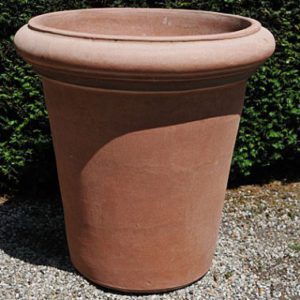
Terracotta pots – Vaso Camelia
Price range: €400.00 through €800.00 Select options This product has multiple variants. The options may be chosen on the product page -

Piazza Planter Cubes in Stone Grey
Price range: €220.00 through €835.00 Select options This product has multiple variants. The options may be chosen on the product page -
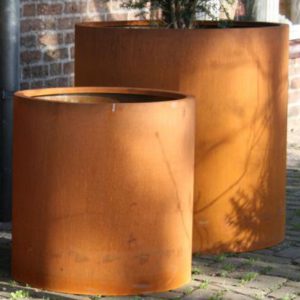
Corten Steel Atlas Pot
Price range: €430.00 through €1,355.00 Select options This product has multiple variants. The options may be chosen on the product page