

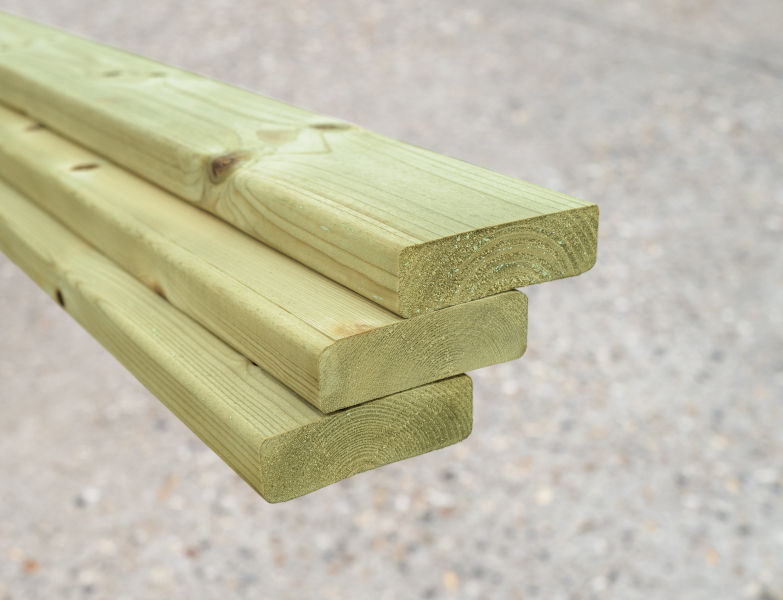
Planed Battening
Price range: €5.50 through €6.50
Description
Smooth, even, versatile timber for cladding, screening, and decorative detail — ready to install or finish however you like. Pressure treated for the outdoors, for gardens across Ireland.
Why Choose Planed Battening?
The planed finish is the difference you notice the moment you handle it — smooth, even timber with clean edges, no rough surfaces, no splinters. It’s built for projects where quality matters, and it gives you the flexibility to create exactly the look you want — from sleek and contemporary to warm and traditional, or somewhere in between.
Key benefits
– Planed finish — smooth, clean-edged timber, ready to use
– Versatile for cladding, privacy screens, and decorative detail
– Long 3.6m and 4.2m lengths — fewer cuts, less waste, cleaner finish
– Pressure treated for long-lasting outdoor use
– Takes paint and stain beautifully for an even, lasting finish
– Natural, paintable, or stainable — from crisp white to dark charcoal
What Makes It Different?
The planed surface takes paint and stain far better than rough-sawn timber — even coverage, longer-lasting finishes, and a smooth face that shows off colour and texture properly. And the long lengths mean you can cover substantial areas — cladding walls, building privacy screens or garden rooms, or adding decorative detailing to fences — with minimal joints and a more streamlined result.
Specification
– Product: Planed Battening
– Material: pressure-treated timber
– Available lengths: 3.6m | 4.2m
– Finish: natural pressure-treated (paintable or stainable)
– Fixings: not included
Local Delivery
We deliver our timber products to Co Kildare, Co Dublin, Co Laois, Blessington, and Carlow. Outside this area? Call 045 879170 or email info@caraghnurseries.ie.
Caragh’s Garden Notebook
Battening rewards good planning — measure carefully, decide your spacing (10–20mm gaps for vertical runs, tight-butted for solid cladding), and allow 10% extra for cuts and wastage. It needs a solid framework: horizontal rails at 40–60cm intervals on walls, or a post-and-rail frame for freestanding screens. Pre-drill screw holes and use galvanised or stainless steel fixings; hidden clips give a seamless, premium look. Keep gaps even with spacers, check plumb and level as you go, and seal cut ends with preservative. Allow the pressure-treated timber to weather 6–12 months before painting or staining for best coverage — after which annual treatment keeps it looking its best for 10–15 years or more.
Related products
-
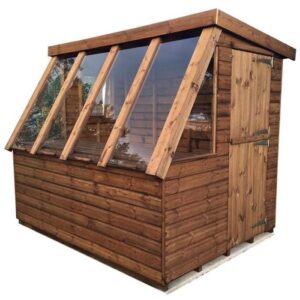
Potting Shed
Price range: €1,700.00 through €2,750.00 Select options This product has multiple variants. The options may be chosen on the product page -
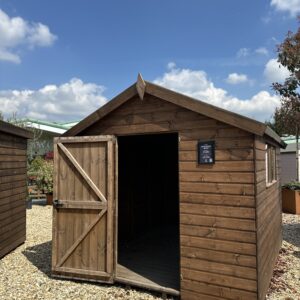
Apex Roof Shed – Large Sizes
Price range: €1,290.00 through €3,199.50 Select options This product has multiple variants. The options may be chosen on the product page -
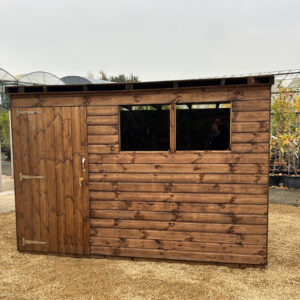
Pent Roof Shed – Large Size
Price range: €1,290.00 through €3,199.50 Select options This product has multiple variants. The options may be chosen on the product page -
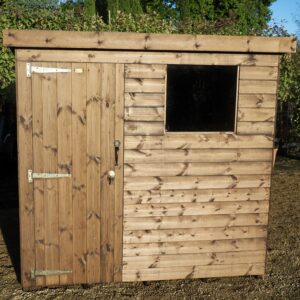
Pent Roof Shed – Medium Sizes
Price range: €1,000.00 through €1,984.50 Select options This product has multiple variants. The options may be chosen on the product page