


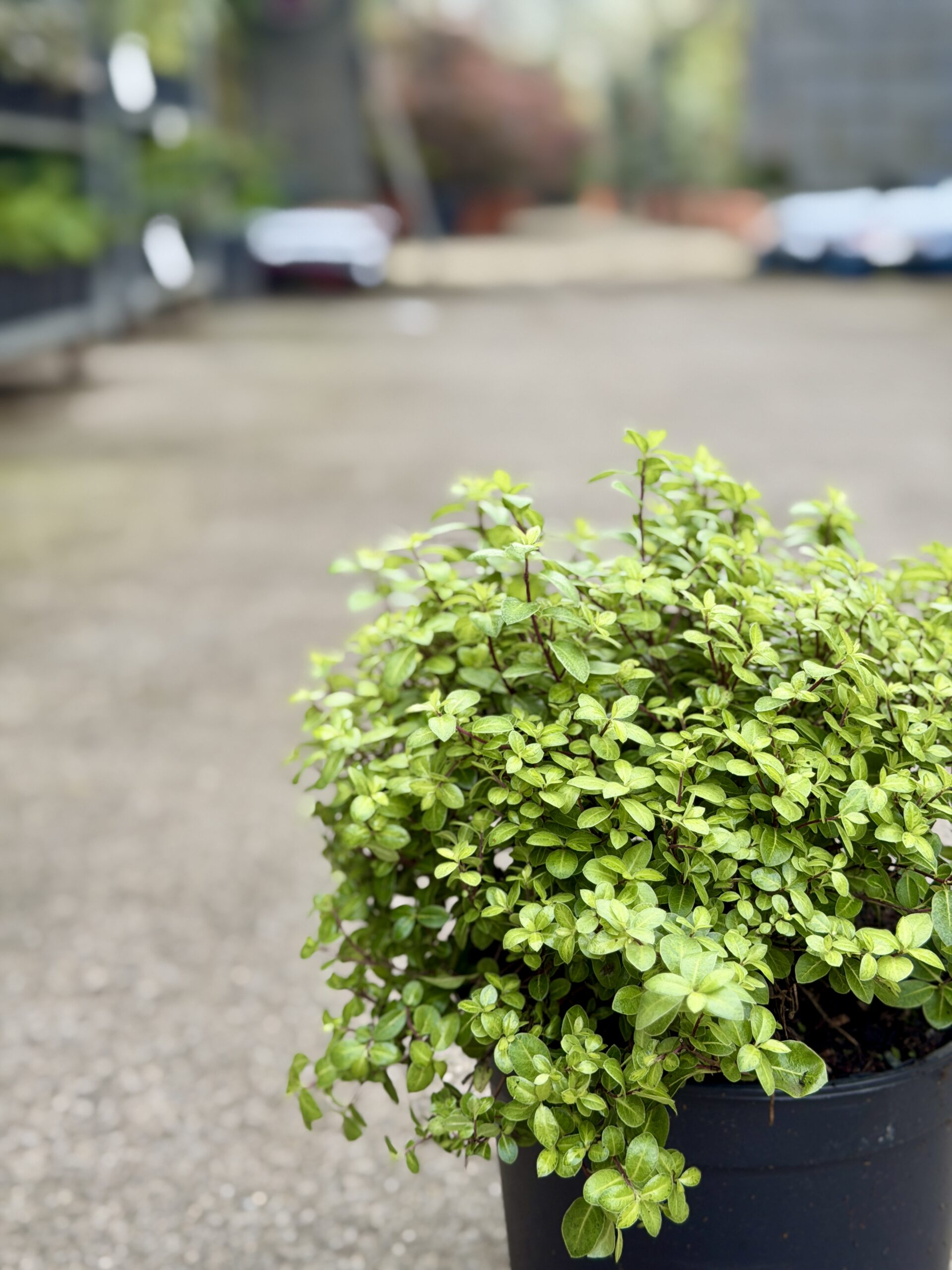
Pittosporum tenuifolium ‘Golden Ball’
€25.00
Frequently Bought Together
Description
Quick Facts
– Botanical Name: Pittosporum tenuifolium* ‘Golden Ball’
– Common Name: Golden Ball Kohuhu / Golden Pittosporum
– Plant Type: Evergreen shrub
– Mature Height: 60–90cm
– Mature Spread: 60–90cm
– Foliage: Small leaves of golden yellow edged with green, maturing to a clear fresh green with age — a bright, softly luminous combination
– Habit: Very compact, naturally ball-shaped — grows into a neat globe without any clipping
– Aspect: Full sun to partial shade; shelter from cold, drying winds
– Soil: Well-drained, fertile; tolerant of most soils once established
– Hardiness: Hardy in mild and coastal areas; benefits from a sheltered position and frost protection in exposed gardens
– Maintenance: Very low — rarely needs any pruning
Description
Pittosporum ‘Golden Ball’ is one of those rare shrubs that shapes itself — a very compact variety that grows naturally and evenly into a neat ball, without a single cut of the shears. The small leaves open in soft golden yellow margined with green, maturing to a clear, fresh green, so the little globe carries both tones at once and glows quietly in the border. In name and in truth, it is a golden ball.
A natural mutation of the celebrated ‘Golf Ball’, it is compact, tidy, and genuinely self-contained — one of the easiest of the small evergreens. It is also impressively tolerant: resistant to drought once established, and widely used as an alternative to boxwood in temperate and Mediterranean regions, bringing the same clean, clipped-looking structure without the boxwood pests and diseases that trouble many gardens.
Structure without the work, colour without the fuss, a compact evergreen that earns its place in any scheme.
Caragh Garden Notebook
Planting:
Plant in spring or autumn into well-drained, fertile soil, incorporating a little compost at planting. ‘Golden Ball’ performs best in full sun to partial shade and is genuinely tolerant of a range of conditions; it appreciates a sheltered position, particularly in colder or more exposed gardens, as Pittosporum does not like cold, drying winds. Because it shapes itself, choose a position where the natural ball can be appreciated — at the front of a border, beside a path or doorway, or in a container. Water in thoroughly after planting and mulch around the base to retain moisture.
Watering:
Water consistently through the first growing season while the plant establishes. Once settled, ‘Golden Ball’ is genuinely drought-tolerant and requires little supplementary watering in an Irish garden — a quality that makes it one of the more accommodating of the small evergreens. During prolonged dry spells, a thorough watering will keep the foliage fresh and bright. In containers, water regularly through the growing season and ensure the pot drains freely.
Feeding:
A light balanced slow-release fertiliser applied in spring as growth begins will support healthy, dense growth. In containers, feed monthly through the growing season with a balanced liquid fertiliser. A spring mulch of well-rotted compost around the base in the ground feeds gently and retains moisture. Avoid high-nitrogen feeds, which push soft, lush growth that can dilute the golden colouring and is more vulnerable to frost.
Pruning:
‘Golden Ball’ requires no pruning — the natural ball habit is the entire point of the plant and develops perfectly without intervention. Simply leave it to shape itself. If an occasional wayward shoot appears, trim it lightly in late spring to keep the globe clean; otherwise, no cutting is needed. This self-shaping quality is what makes it such a useful, low-maintenance alternative to clipped boxwood.
Winter Protection:
In colder or exposed gardens, a little winter protection is worthwhile. Plant in a sheltered position away from cold, drying winds; in very hard frosts, a temporary fleece covering will protect the foliage. Container-grown specimens are more vulnerable to frost than those in the ground — move pots to a sheltered spot near a wall or wrap the pot to protect the roots through winter. In mild coastal gardens, no protection is generally needed.
Pests & Problems:
Generally trouble-free. Scale insects can occasionally appear on the stems and undersides of leaves — treat with a horticultural oil if they cause concern. In very cold, exposed gardens, frost damage can cause die-back of the foliage; a sheltered position is the most reliable prevention. Waterlogged soil is the other main risk — good drainage at planting is essential. Its use as a boxwood alternative is largely because it avoids the box blight and caterpillars that affect Buxus, making it a genuinely disease-free choice.
Design Notes:
The self-shaped golden ball makes ‘Golden Ball’ one of the most useful of the small evergreens for garden design — it delivers formal, clipped-looking structure with no clipping whatsoever, which is a gift to any gardener. Use a pair either side of a doorway, gate, or the foot of steps for instant, balanced symmetry; plant single balls at intervals along a border or path for a calm, rhythmic structure; or grow them in containers on a terrace, where the bright globe brings year-round presence. As an alternative to boxwood, it gives the same neat, architectural form in borders, parterres, and containers, without the boxwood maintenance or disease worries. The golden-edged foliage reads beautifully against dark evergreens, purple foliage, and the silver tones of Mediterranean planting, and its drought tolerance makes it entirely at home in gravel and Mediterranean schemes. A compact, self-shaping, genuinely low-maintenance gem.
Related products
-
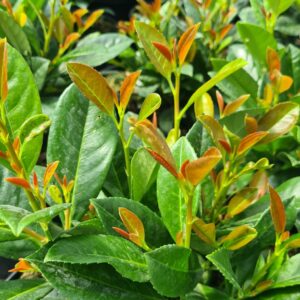
Prunus laur. Bonaparte
Price range: €15.00 through €60.00 Select options This product has multiple variants. The options may be chosen on the product page -
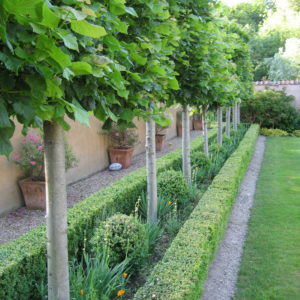
Pyrus Chanticleer Espalier
Price range: €440.00 through €450.00 Select options This product has multiple variants. The options may be chosen on the product page -
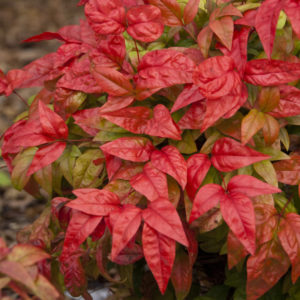
Nandina Firepower
€105.00 Select options This product has multiple variants. The options may be chosen on the product page -

Raphiolepsis umbellata
Price range: €45.00 through €105.00 Select options This product has multiple variants. The options may be chosen on the product page