

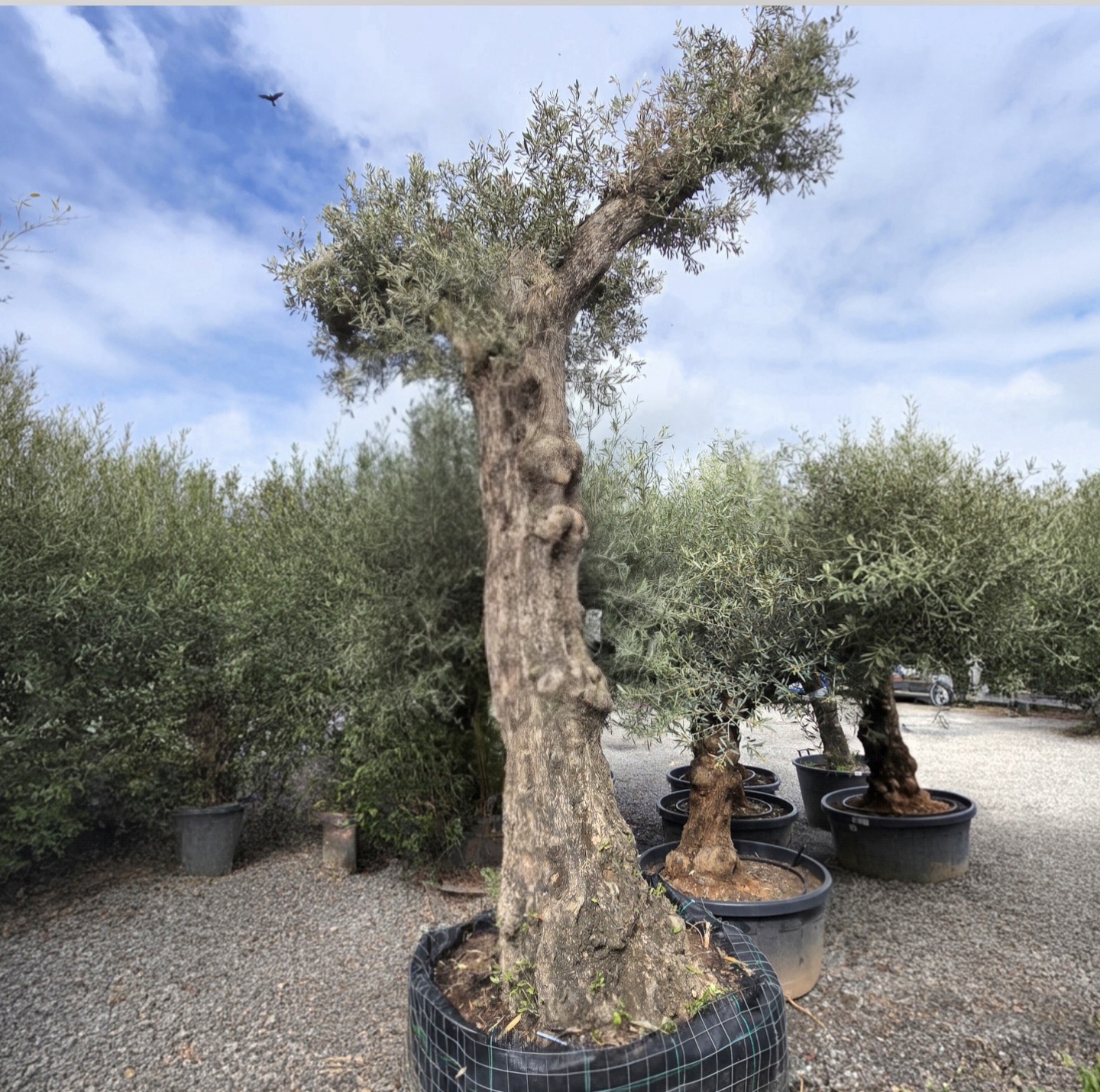
Olea europaea / Tall Gnarled Olive Tree
€2,000.00
Frequently Bought Together

Description
Quick Facts
- Botanical Name: Olea europaea
- Common Name: Olive Tree
- Height (approx.): 350cm
- Trunk Circumference 100–120cm
- Foliage: Evergreen; slender, silvery-grey leaves
- Position: Full sun (sheltered is best)
- Soil: Free-draining; avoid winter wet
- Hardiness: Best in mild, sheltered gardens; protect in severe cold/wet spells
- Best For: Courtyards, statement planting, large pots, gravel gardens, Mediterranean-style schemes
Description
This is the kind of olive tree that changes the feel of a space in one move — mature, sculptural, and full of quiet confidence.
At 3.5m tall, with a bold, characterful trunk (100–120cm circumference), it has that beautifully aged, gnarled texture that can’t be rushed or replicated. The canopy sits with a relaxed, natural balance, and the foliage has that unmistakable olive shimmer — soft silver-green that catches the light and instantly lifts stone, gravel, and planting around it.
Whether it’s placed as a focal point in a courtyard, anchored into a Mediterranean border, or set into a generous pot on a terrace, it brings an immediate sense of permanence — like it’s always belonged.
Caragh Garden Notebook
Position & microclimate
Choose the sunniest spot you have. In Ireland and the UK, olives thrive best where they’re also sheltered from strong winds and not sitting in a frost pocket.
Choose the sunniest spot you have. In Ireland and the UK, olives thrive best where they’re also sheltered from strong winds and not sitting in a frost pocket.
Soil & drainage (the key to success)
Olives hate having wet feet in winter.
Olives hate having wet feet in winter.
- Plant into free-draining soil and improve heavy ground with grit and sharp sand.
- If your soil is clay, consider planting slightly proud (a gentle mound) to help water move away from the root zone.
- In pots, always ensure generous drainage holes and a gritty compost mix.
Watering
- First year: Water consistently while it establishes, especially in dry spells.
- Afterwards: More drought-tolerant, but container-grown olives will still need regular watering in summer.
- In winter, reduce watering and prioritise drainage.
Feeding
A light feed in spring and early summer supports healthy evergreen growth. Avoid heavy feeding late in the season.
A light feed in spring and early summer supports healthy evergreen growth. Avoid heavy feeding late in the season.
Pruning & shaping
- Remove any dead, crossing, or congested growth to keep the crown open and airy.
- Light shaping in late spring/summer helps maintain a clean outline.
- Remove any shoots from the base/trunk as they appear.
Winter care
In severe weather, it’s usually the combination of cold + wet that causes trouble. A sheltered position, excellent drainage, and temporary protection during extreme cold spells will keep your olive in great shape.
In severe weather, it’s usually the combination of cold + wet that causes trouble. A sheltered position, excellent drainage, and temporary protection during extreme cold spells will keep your olive in great shape.
Design notes
- Beautiful with lavender, rosemary, salvias, euphorbia, agapanthus, and ornamental grasses
- Pairs perfectly with stone, gravel, corten steel, and oversized pots
- Ideal for creating that Mediterranean atmosphere — calm, timeless, and lived-in
Related products
-
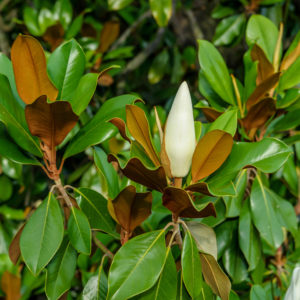
Magnolia grandiflora Gallisonensis
Price range: €1,200.00 through €2,750.00 Select options This product has multiple variants. The options may be chosen on the product page -
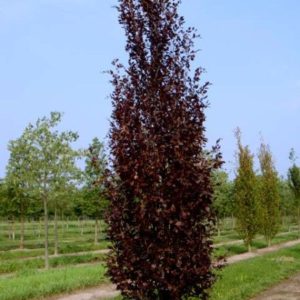
Fagus sylvatica Dawyck Purple
€1,800.00 Select options This product has multiple variants. The options may be chosen on the product page -

Abies nordmanniana Bonsai
€2,800.00 Select options This product has multiple variants. The options may be chosen on the product page -
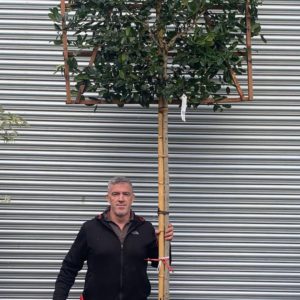
Ilex Nellie Stevens Standard Espalier
€1,150.00 Select options This product has multiple variants. The options may be chosen on the product page