

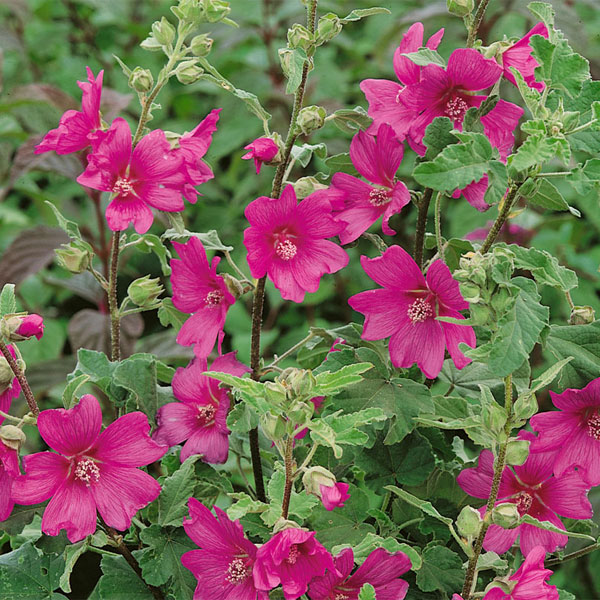
Lavatera ‘Burgundy Wine’
€9.50
Frequently Bought Together

Description
Quick Facts
– Botanical Name: Lavatera × clementii ‘Burgundy Wine’
– Common Name: Tree Mallow ‘Burgundy Wine’
– Plant Type: Semi-evergreen sub-shrub
– Mature Height: 1.5–2m
– Mature Spread: 1.2–1.8m
– Growth Rate: Fast — one of the quickest flowering shrubs you can grow
– Flowering Period: June to early autumn
– Flower Colour: Deep, rich burgundy-pink, funnel-shaped, with distinctive darker veins — a deeper, more intense colour than most mallows
– Foliage: Greyish, palmately-lobed leaves; semi-evergreen in mild winters
– Aspect: Full sun
– Soil: Well-drained to dry; tolerant of poor and coastal soils; dislikes waterlogging
– Hardiness: Hardy; may die back to the base in a hard winter and reshoot strongly from the crown in spring
– Awards: RHS Award of Garden Merit (AGM)
– Maintenance: Low
Description
Lavatera ‘Burgundy Wine’ brings the fast, generous, effortless flowering of the tree mallow in a colour that stands apart from the soft pinks you normally expect. From June through to early autumn, the plant is thickly covered in large, funnel-shaped flowers of deep burgundy-pink, each one delicately veined with darker markings that reward a closer look. The greyish, palmately-lobed foliage provides a soft, muted backdrop that lets the rich flower colour carry the display completely.
It is also one of the quickest flowering shrubs there is — a young plant will reach flowering size and put on a full season of bloom in a single year, which makes it invaluable for establishing impact fast in a new border. At up to 2 metres it is substantial enough to act as a backdrop or anchor in a sunny planting scheme, yet it is one of the easiest and least fussy shrubs to grow, thriving even in poor, dry, and coastal soils where many plants struggle.
Fast to establish, generous in flower, and richly coloured — a shrub that rewards you quickly and keeps going all summer.
Caragh Garden Notebook
Planting:
Plant in spring or early autumn into well-drained to dry soil — good drainage and full sun are the two conditions Lavatera genuinely needs, and both are essential for the plant to thrive. It is impressively tolerant of poor, gravelly, and coastal soils, and is often one of the first choices for a difficult dry, sunny spot where richer shrubs would struggle. Avoid waterlogged or heavy, wet ground, which is the most common cause of failure. In a very wet or exposed garden, planting on a slight mound or in a raised border will help guarantee the drainage it needs. Water in thoroughly after planting and mulch with grit rather than organic mulch, which can hold excessive moisture around the base in winter.
Watering:
Water consistently through the first growing season while roots establish. Once settled, ‘Burgundy Wine’ is genuinely drought-tolerant and thrives in dry conditions — watering is rarely needed beyond natural rainfall in an Irish or UK garden. In fact, neglect suits it well; overfeeding and overwatering produce soft, sprawling growth at the expense of the flowering and the plant’s natural hariness. In containers, water through the growing season and ensure drainage is always free.
Feeding:
Feed sparingly if at all — Lavatera performs best in poor to moderately fertile soil, and rich, heavily fed conditions simply produce soft, leafy growth that is more prone to flop and less floriferous. A light general fertiliser in early spring as growth begins is plenty for most gardens. In very poor soils, a small amount of slow-release fertiliser in spring will support healthy growth without encouraging the rank, soft growth that heavy feeding produces.
Pruning:
Pruning is the key to keeping ‘Burgundy Wine’ flowering well and in good shape. In late winter or early spring, cut the previous year’s growth back hard — to about 30–45cm from the base, or to the lowest strong buds. Lavatera flowers on the current season’s new growth, so this hard annual prune produces vigorous new flowering wood and keeps the shrub compact and prolific rather than leggy and sparse. If the plant has been damaged by a hard winter and died back, cut it right down to the base and it will reshoot strongly from the crown. Through summer, removing spent flower stems as they finish will encourage continued flowering and keep the display fresh.
Pests & Problems:
Generally trouble-free and one of the easier shrubs to grow. Vine weevil can occasionally attack the roots in some situations — monitoring and prevention is worthwhile if you have experienced problems in the garden before. The most common issue is winter wet, which can cause the plant to die; good drainage at planting is the most reliable prevention. In a hard winter the plant may die back to the base, but this is normal and it reliably reshoots strongly from the crown in spring — do not give up on it after a cold season. Cooler, wetter summers can reduce flowering slightly, but the plant recovers quickly with sun and warmth.
Design Notes:
The deep, richly coloured flowers of ‘Burgundy Wine’ make it one of the most effective of all the fast-growing shrubs for anchoring a hot, sunny border. The dark, veined burgundy sits beautifully alongside the soft blues and purples of late-summer planting — lavender, nepeta, and Salvia all complement it well — and against the silver foliage of many Mediterranean plants, which echoes the grey leaves of the mallow itself. Use single plants at intervals through a sunny border for a repeated note of deep colour across the season, or group several together for a more substantial, generous display of bloom from midsummer through to autumn. At the back of a sunny border it acts as a fast, reliable evergreen-to-semi-evergreen anchor; in a coastal garden it is entirely at home, tolerating salt-laden air and dry sandy soil with ease. Its speed of establishment makes it one of the best plants for creating impact quickly in a new planting — a single season will see it go from young plant to a substantial shrub in full, generous flower.
Additional information
| Pot Size |
|---|
Related products
-

Tilia cordata ‘Erecta’
Price range: €500.00 through €550.00 Select options This product has multiple variants. The options may be chosen on the product page -
Campis ‘flamenco’
€30.00 Select options This product has multiple variants. The options may be chosen on the product page -
Physocarpus Midnight
€8.50 Select options This product has multiple variants. The options may be chosen on the product page -

Enkianthus campanulatus Specimen
€900.00 Select options This product has multiple variants. The options may be chosen on the product page