


Campanula carpatica ‘White Clips’
€9.50
Frequently Bought Together


Description
Quick Facts
– Botanical Name: Campanula carpatica f. alba ‘White Clips’
– Common Name: Carpathian Bellflower ‘White Clips’
– Plant Type: Hardy herbaceous perennial
– Mature Height: 15–25cm
– Mature Spread: 25–30cm
– Flowering Period: Early to late summer; weeks of bloom if deadheaded regularly
– Flower Colour: Pure white, open, upward-facing bells — very large and wide for the size of the plant
– Foliage: Small green leaves forming a low, cushion-shaped mound
– Aspect: Full sun to partial shade
– Soil: Moist but well-drained soil
– Hardiness: Very hardy in Ireland & the UK
– Maintenance: Low — regular deadheading and occasional division
Description
Campanula carpatica ‘White Clips’ is the perfect partner to its celebrated blue cousin — and every bit as charming in its own right. It forms a low, cushion-shaped mound of small green leaves that comes alive from early summer onwards with an abundance of upward-facing, white bell-shaped flowers. For a plant of such modest size, the flowers are remarkably large and wide open, borne generously for weeks on end and bringing a clean, fresh brightness to the garden wherever they are planted.
It is one of the easiest alpine campanulas to grow, robust enough for the front of a border yet refined enough for a rockery or alpine trough. The white flowers have a particular freshness — pockets of pure, cool white that read beautifully against both the muted greens of the foliage and the richer colours of the plants around them. Deadhead spent blooms regularly and the display will continue week after week.
Caragh Garden Notebook
Planting:
Plant in spring or autumn into moist but well-drained soil — the balance between moisture and good drainage is the key to success, giving the plant enough water to thrive while never allowing the crown to sit wet. A position in full sun to partial shade suits it well; in our cool-summer climate, full sun brings the best and most generous flowering. Use it at the front of a sunny border, in a rockery, or in an alpine trough where the neat, cushion form and open white bells can be properly appreciated. Water in thoroughly after planting.
Watering:
Water consistently through the first growing season while roots establish. Once settled, ‘White Clips’ is reasonably accommodating — it asks for moist but not waterlogged soil, and tolerates a degree of dryness between waterings. In containers and troughs, water regularly through the growing season but ensure the compost never becomes waterlogged; good drainage in the container is as important as in the ground. Overwatering through winter is more of a risk than drought.
Feeding:
Feed sparingly. A light application of a balanced slow-release fertiliser in spring supports healthy growth and good flowering; in reasonably fertile soil, no further feeding is needed. In containers and troughs, a weak balanced liquid feed every few weeks through the growing season will keep the plant flowering well. Avoid rich feeding, which encourages soft growth at the expense of the compact cushion form and the generous flowering the variety is known for.
Deadheading & Seasonal Care:
Regular removal of spent blooms is the simplest route to the long flowering season this plant is known for — clipping off faded flowers down to the base of their stems encourages a fresh succession of blooms and keeps the cushion covered in white for weeks rather than fading after the first flush. Once flowering has finished, a light tidy of the mound in late summer keeps it neat for the remainder of the season.
Division:
Divide every three to four years in spring or autumn to maintain vigour and prevent the centre of the cushion from dying out. Lift the clump carefully, divide into sections each with a healthy crown and root system, and replant immediately into well-prepared, well-drained soil. Division is also the simplest method of propagation — divisions establish readily and can be used to extend an edge of the border or fill a new corner of the rockery. Water in thoroughly after dividing.
Pests & Problems:
Generally trouble-free and very hardy. Slugs and snails can occasionally target the young growth and flowers, particularly in damp conditions — vigilant monitoring in spring is worthwhile. The most common problem is waterlogging, which causes the crown to rot, particularly over winter; well-drained soil with a little grit incorporated is the most reliable prevention. In very hot or dry positions the plant may flower a little less generously, but in our cool-summer climate it performs particularly well.
Design Notes:
The pure white flowers of ‘White Clips’ bring a freshness and light to the garden that the blue varieties cannot — clean, cool pools of white that lift a border, edge a path, or bring a calm clarity to a rockery or alpine trough. Use the two together — ‘White Clips’ and ‘Blue Clips’ — for a classic pairing of the same form and habit in complementary colours, interplanted along a border front or in a trough for a calm, repeating rhythm of white and blue bells. The white flowers read beautifully against silver foliage, deep greens, and rich pinks and purples, and they are particularly effective in containers where the open, upturned blooms can be seen from above. Robust enough for the front of a border and refined enough for the smallest alpine planting — a genuinely versatile and rewarding little perennial.
Related products
-
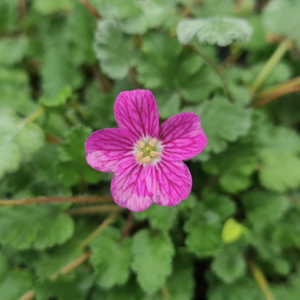
Erodium var. Bishops Form
€9.50 Select options This product has multiple variants. The options may be chosen on the product page -
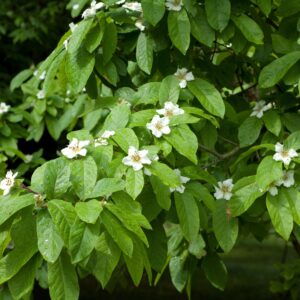
Mespilus Germanica Westerveld specimen multistem
€470.00 Select options This product has multiple variants. The options may be chosen on the product page -
Lavender intermedia Phenomenal ‘Niko’
€22.00 Select options This product has multiple variants. The options may be chosen on the product page -
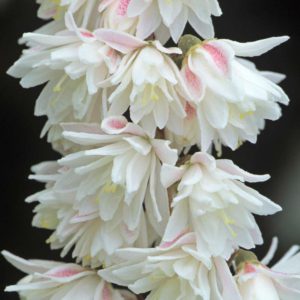
Deutzia scabra Plena
Price range: €15.00 through €20.00 Select options This product has multiple variants. The options may be chosen on the product page