


Ilex aquifolium Argentea Marginata Balls / Variegated Holly Balls
€350.00
Frequently Bought Together


Description
Quick Facts
– Botanical Name: Ilex aquifolium ‘Argentea Marginata’
– Common Name: Silver-Margined Holly / Variegated Holly
– Plant Type: Evergreen shrub trained as a ball / topiary form
– Mature Size: Ball form kept neat by clipping; typically 40–60cm and maintainable at any size
– Foliage: Dark, glossy green, spiky leaves with fine creamy-silver margins — bright, crisp, and evergreen
– Berries: Bright red berries produced in autumn, decorating the plant well into winter
– Sex: Female variety — carries the autumn berries
– Habit: Trained natural ball — clean, formal, and self-contained
– Aspect: Full sun to partial shade
– Soil: Well-drained; tolerant of most soils including chalk
– Hardiness: Very hardy in Ireland & the UK
– Maintenance: Low — one clip a year keeps the ball crisp
Description
A lovely small-growing holly with a great deal to offer — dark, glossy, spiky foliage edged with a fine creamy margin, bright red berries through autumn and winter, and a neat ball form that brings evergreen shape, structure, and colour to a garden all year round. Ilex ‘Argentea Marginata’ is the variegated holly at its best, and in ball form it becomes one of the most useful and dependable of the shaped evergreens.
The variegation is genuinely beautiful — the creamy margin makes the dark green leaves look lit from within, and the foliage holds its colour and its shine through every season. As a female variety, it produces the classic red holly berries in autumn, which decorate the ball long into winter — the red against the silver-edged green is one of the season’s most cheerful combinations, and the birds will work through them gratefully.
In ball form it delivers that instant, considered quality that shaped evergreens bring — a clean, formal, self-contained presence that works in pairs, in containers, or as a quiet anchor in a border. Very hardy, very easy, and beautiful in every season — a genuine staple for the garden.
Caragh Garden Notebook
Planting:
Plant in autumn or early spring into well-drained soil. Holly is tolerant of most soil types, including chalk, and is genuinely one of the easier evergreens to establish. A position in full sun to partial shade suits it well; the creamy variegation is at its brightest with good light, though the plant is happy in quite a range of conditions. As a ball, choose a position where the clean shape can be appreciated — beside a doorway, flanking an entrance, in a container, or as a pair either side of a path. Water in thoroughly after planting and keep consistently moist through the first season.
Watering:
Water consistently through the first growing season while the plant establishes. Once settled, holly is reasonably drought-tolerant and requires little supplementary watering in an Irish garden beyond natural rainfall. In prolonged dry spells, an occasional thorough watering will keep the foliage at its glossiest. In containers, water regularly through the growing season and ensure the pot drains freely.
Feeding:
An application of a balanced slow-release fertiliser in spring supports strong, healthy growth and good foliage colour. In containers, feed monthly through the growing season with a balanced liquid fertiliser. A spring mulch of well-rotted compost in the ground feeds gently and retains moisture. Avoid high-nitrogen feeds, which can reduce the crispness of the creamy variegation and encourage soft growth.
Pruning — keeping the ball crisp:
The ball form is maintained with one clip a year, taken in late summer once the current season’s growth has matured. Use sharp shears and trim lightly, preserving the rounded shape rather than cutting deep into the plant. Holly responds well to clipping and will thicken and keep its shape cleanly with this single annual trim. If the ball ever becomes too large or out of shape, it can be reshaped gradually over a couple of seasons rather than cut back hard in one go.
Pruning & Berry Production:
Because this is a female variety, the autumn berries depend on a male holly nearby for pollination, though in most gardens there is usually one within range. The berries appear on the previous season’s growth, so if you prune hard you may lose a season’s berries — one reason the light annual clip is best left until after the berries have served their winter purpose, if you want to enjoy them fully.
Pests & Problems:
Generally trouble-free and one of the more dependable evergreens. Holly leaf miner can occasionally cause pale, blotchy leaves; affected foliage can be removed and disposed of. Scale insects can appear in sheltered positions — treat with a horticultural oil if they cause concern. In very wet, poorly drained soil the plant will underperform; good drainage at planting is the most reliable safeguard. Otherwise, holly is genuinely low-maintenance.
Design Notes:
The crisp ball of ‘Argentea Marginata’ is one of the most useful elements in garden design — it delivers evergreen shape, variegated brightness, and the red berry colour of winter in a single, tidy, self-contained form. Use a matched pair either side of a doorway, gate, or the foot of steps for instant, formal symmetry; dot single balls at intervals through a border for a calm, rhythmic structure that holds the planting together through winter; or grow them in containers on a terrace or entrance, where the silver-edged green and winter berries carry the space with very little effort. The variegation pairs beautifully with dark evergreens, purple foliage, and the silver tones of Mediterranean planting, and the berries bring a splash of warmth to the winter garden when most else is quiet. A genuine staple — shape, form, and colour, in every season.
Additional information
| Pot Size |
|---|
Related products
-
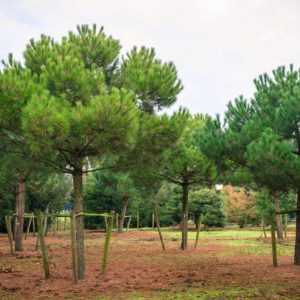
Pinus pinea
Price range: €450.00 through €805.00 Select options This product has multiple variants. The options may be chosen on the product page -
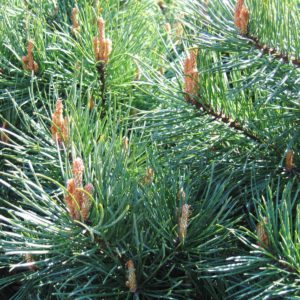
Pinus sylvestris
Price range: €950.00 through €1,250.00 Select options This product has multiple variants. The options may be chosen on the product page -
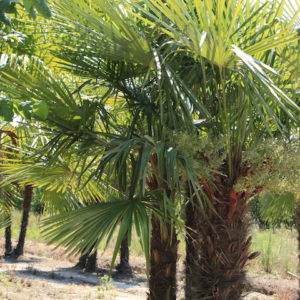
Chamaerops excelsa / Trachycarpus fortunei
Price range: €45.00 through €2,000.00 Select options This product has multiple variants. The options may be chosen on the product page -
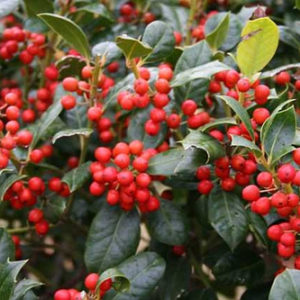
Ilex Nellie Stevens Standard & 3/4 Standard Trees
Price range: €450.00 through €1,500.00 Select options This product has multiple variants. The options may be chosen on the product page