

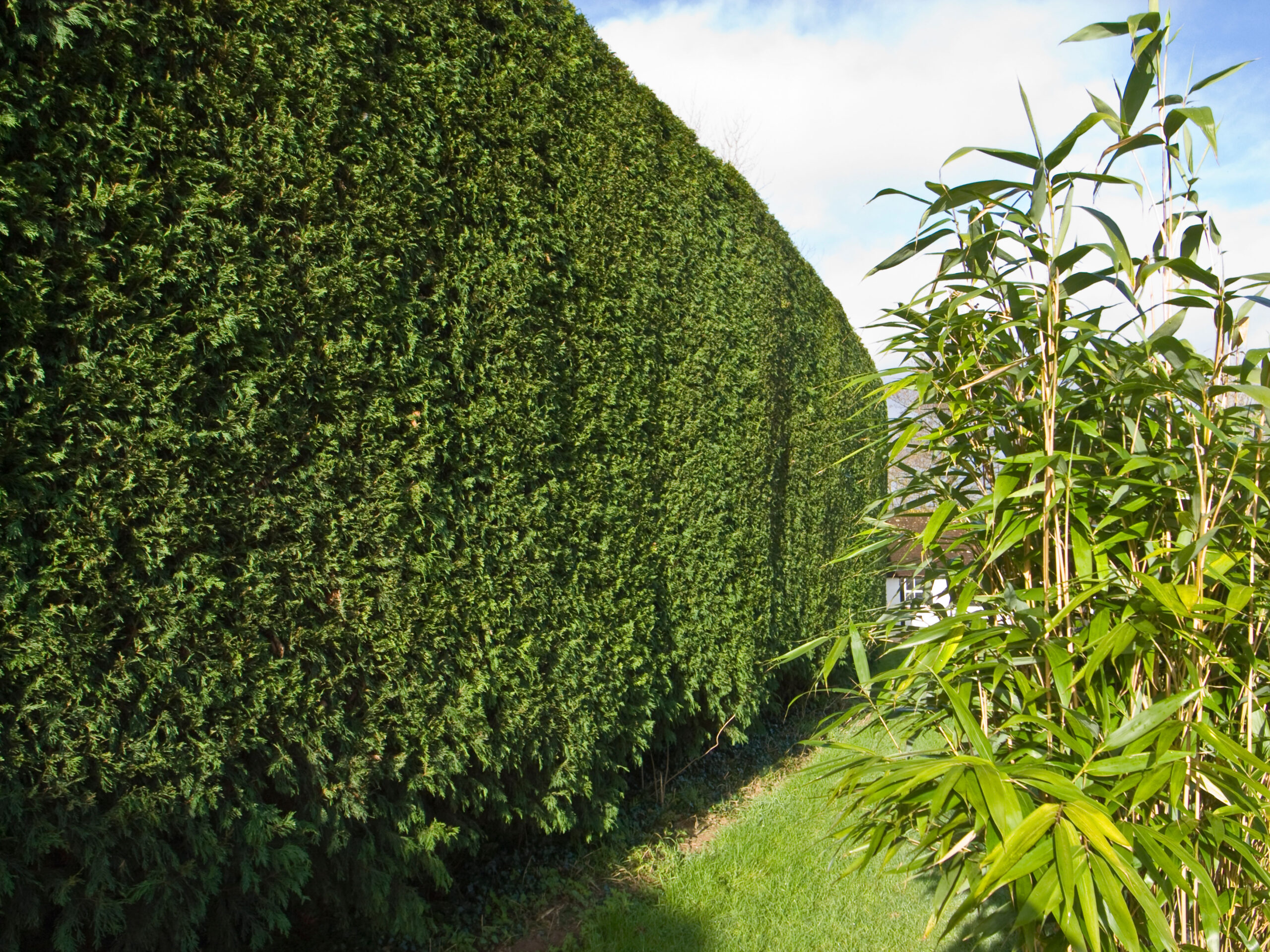
Cupressus × leylandii / Leyland Cypress
Price range: €8.50 through €1,050.00
Frequently Bought Together

Description
Quick Facts
– Botanical Name: Cupressus × leylandii
– Common Name: Leylandii / Leyland Cypress
– Plant Type: Fast-growing evergreen conifer
– Mature Height: Can reach 20m+ if unclipped; kept to 2–4m with regular clipping
– Mature Spread: 1.5–2.5m (responds well to tight clipping)
– Growth Rate: Very fast — among the fastest-growing hedging plants available
– Foliage: Dense, dark green, scale-like foliage; evergreen
– Habit: Upright, dense, columnar when clipped
– Aspect: Full sun to partial shade
– Soil: Moist, well-drained; tolerant of most soils once established
– Hardiness: Fully hardy in Ireland & the UK
– Maintenance: Moderate to high — regular clipping is essential
Description
There is a reason Leylandii remains one of the most widely planted hedging conifers in Ireland and the UK — it is genuinely exceptional at what it does. It is fast growing, dense, evergreen, and affordable, giving you a substantial screen of real height on a small budget in far less time than almost any alternative. Planted as a green-topped boundary hedge and kept at a sensible height, it delivers a solid, year-round screen that few other plants can match for speed and cost.
It is equally effective as a windbreak and as a noise-reduction aid, absorbing both the force of the weather and the sounds of a busy road or neighbour in a way that open fencing cannot. Its reputation, however, rests on a single, crucial fact: it becomes unmanageable and costly if it is not kept at a suitable height. Leylandii is a tree, not a gentle shrub — it wants to be a giant, and regular clipping is absolutely essential to keep it as a hedge. Done properly, it is one of the most useful screening plants available; neglected, it becomes the problem it is famous for.
Determined, fast, and affordable — a superb screen with one non-negotiable condition attached.
Caragh Garden Notebook
Planting:
Plant in autumn or early spring — or at any time the soil is workable and moisture is reliable — into well-prepared soil. Dig a generous planting trench, incorporate organic matter, and space plants at roughly 60cm to 1m apart depending on how quickly you want a dense screen (closer spacing fills faster). Leylandii is tolerant of most soils including poor and chalky ground, but performs best in reasonably fertile, well-drained conditions. Water in thoroughly after planting and keep consistently moist through the first season or two — this is the single most important period for successful establishment. Consider the eventual maintenance commitment before planting: this is a hedge that will need clipping at least once, often twice, a year for its entire life.
Watering:
Water consistently through the first two growing seasons while roots establish — newly planted Leylandii is vulnerable to drought and will brown and fail if allowed to dry out in its first year. Once well established, it is reasonably drought-tolerant and manages on natural rainfall in an Irish or UK garden. In very dry periods, a thorough watering will keep the foliage at its best, but establishment watering is by far the most important part of the plant’s future success.
Feeding:
An application of a balanced fertiliser in spring supports strong, healthy growth. In most garden soils, an annual spring feed is sufficient; in poor ground, feeding twice through the growing season will help the hedge thicken quickly. A mulch of well-rotted compost along the base in spring feeds gently and retains moisture through the season. Be mindful, however, that fertilising also encourages the vigorous growth that will need clipping — feed in moderation unless you are deliberately pushing the screen to full density.
Pruning & Clipping — the essential task:
This cannot be overstated: regular clipping is essential. Leylandii will happily reach 20 metres if left unclipped, and a neglected hedge becomes an expensive and difficult problem. The key is to start early and keep at it. From the first season, clip the leading growth to encourage dense, bushy side growth rather than a single rush upward. Aim to keep the hedge at a manageable height, ideally no higher than 2–4 metres, and clip once a year, or twice in the first years to build density. Clip in late spring to early summer, and again in late summer if needed. Use a hedge trimmer and keep the sides slightly tapered toward the top so light reaches the base, preventing bare, lifeless growth at the bottom. Never cut back into old, brown, leafless wood — Leylandii does not reliably regrow from bare mature wood, which is how so many hedges gain permanent ugly gaps.
Pests & Problems:
The most common problems are almost entirely the result of neglect rather than pests or disease. An overgrown or heavily lopped hedge will not regrow from bare wood and may need to be replaced; excessive height makes clipping difficult, costly, and potentially a safety issue. Prevent rather than cure by keeping the hedge at a manageable size from the start. Phytophthora root rot can occur in poorly drained, waterlogged soil — good drainage at planting is the most reliable protection. In prolonged drought, particularly in the establishment years, foliage can brown; consistent moisture during the first seasons prevents this.
Design Notes:
Leylandii earns its place where a fast, dense, affordable screen is the priority — a boundary hedge that delivers real height quickly, a windbreak along an exposed boundary, or a noise barrier alongside a busy road or between neighbouring properties. Keep it as a tight, green hedge line and it provides excellent year-round privacy and shelter for minimal outlay. Be honest with yourself about the clipping commitment before planting — a well-kept Leylandii hedge is clipped at least annually, and a difficult-to-reach tall hedge quickly becomes costly. If you want the screening effect without the maintenance, a slower-growing formal alternative such as Thuja plicata, Laurus, or a well-clipped yew may serve the same purpose with less urgency. Planted knowingly and kept at a sensible height, Leylandii is an excellent, value-for-money screen; planted without that commitment, it becomes exactly the problem it is famous for.
Related products
-
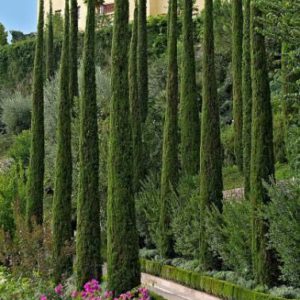
Cupressus sempervirens Pyramidalis / Italian Cypress or Pencil Cypress
Price range: €45.00 through €1,200.00 Select options This product has multiple variants. The options may be chosen on the product page -

Hebe ‘Silver Dollar’
€8.50 Select options This product has multiple variants. The options may be chosen on the product page -

Ilex Nellie Stevens – 1/2 Standards
Price range: €235.00 through €620.00 Select options This product has multiple variants. The options may be chosen on the product page -

Photinia Red Robin Parachute Form
Price range: €780.00 through €1,500.00 Select options This product has multiple variants. The options may be chosen on the product page