

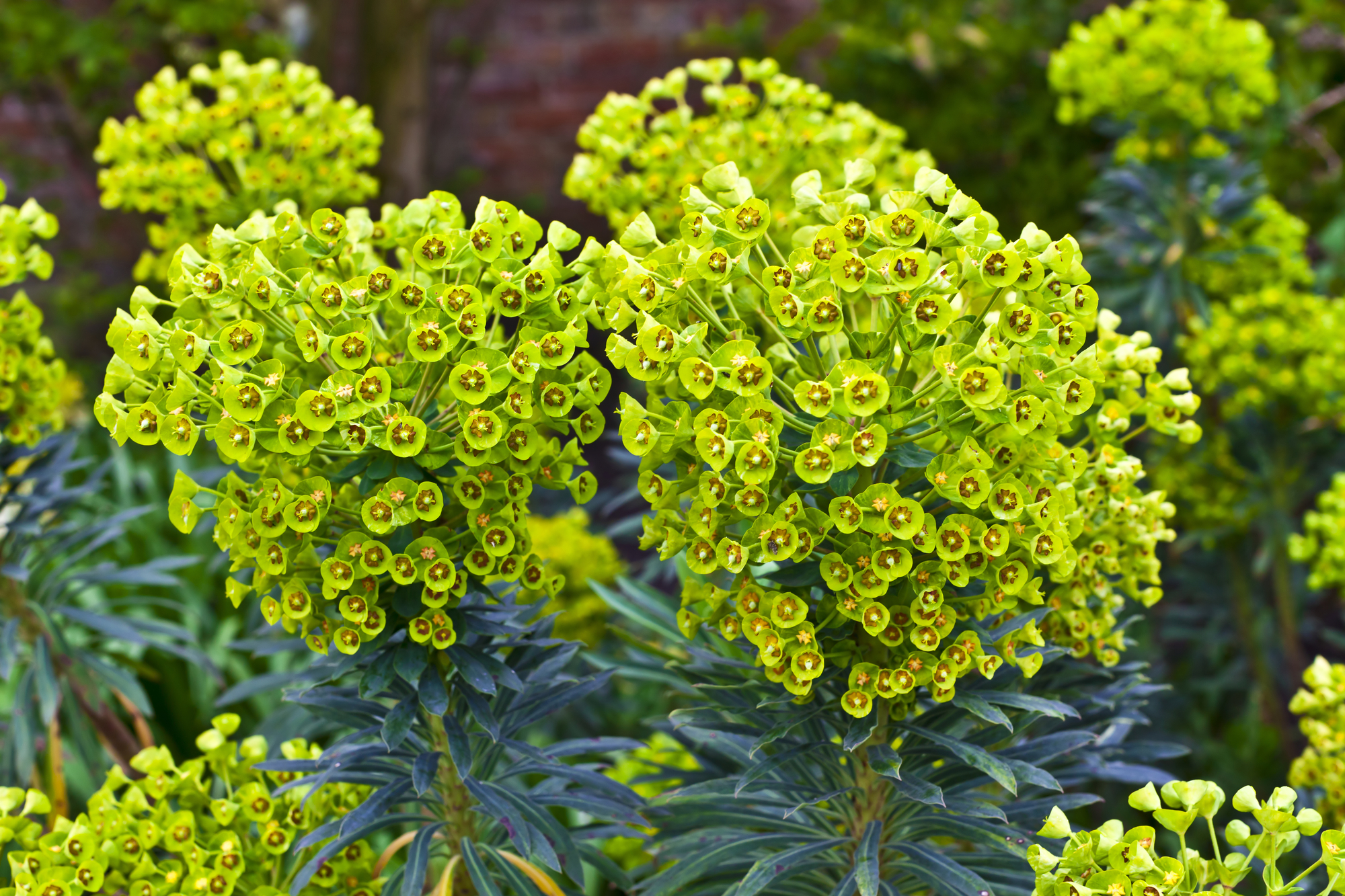
Euphorbia amygdaloides var. robbiae
€8.50
Description
Quick Facts
Botanical Name: Euphorbia amygdaloides var. robbiae
Common Name: Mrs Robb’s Bonnet / Wood Spurge
Plant Type: Evergreen perennial
Mature Height: 45–60cm
Mature Spread: 60–90cm
Flowering Period: Spring (March–May)
Flower Colour: Acid yellow-green bracts
Foliage Colour: Deep, glossy dark green rosettes
Hardiness: Very hardy in Ireland & the UK
Soil Requirements: Well-drained to dry soil; tolerates poor conditions
Aspect: Full shade to part shade (one of the best euphorbias for deep shade)
Maintenance: Low
Description
Euphorbia robbiae is one of the hardest-working plants you can put in a difficult spot. Deep shade, dry soil, under trees, along a north-facing wall — it handles conditions that defeat most other plants and still produces its striking acid yellow-green flower heads in spring with complete reliability. The deep, glossy dark green foliage looks good all year round, spreading steadily by underground runners to form a dense, weed-suppressing carpet over time. It’s not a plant that shouts for attention, but take it away and you’d immediately notice the gap. Tough, structural, and genuinely indispensable in the right place.
Caragh Garden Notebook
Planting:
Plant in spring or autumn. Euphorbia robbiae is tolerant of poor, dry soils and deep shade — conditions where little else thrives. It establishes readily and spreads gradually by underground runners. Space plants 45–60cm apart and allow time for them to knit together into a colony.
Watering:
Minimal watering required once established. Water through the first season to help plants settle in, then leave them largely to their own devices — this is one of the most drought-tolerant ground cover plants available, particularly impressive in dry shade under trees.
Feeding:
No feeding required. Euphorbia robbiae thrives in lean conditions and needs no supplementary nutrition once established in the garden.
Seasonal Care & Tidy-Up:
Cut back flowered stems to the base after flowering in late spring or early summer — this keeps the plant tidy and encourages fresh foliage growth. Wear gloves when handling: the milky white sap is a skin and eye irritant and can cause a reaction on contact, particularly in bright sunlight.
Division (to keep plants vigorous):
Spreads steadily by underground runners — divide or lift sections in spring if it outgrows its space. Divisions establish easily and can be moved to other difficult areas of the garden where ground cover is needed.
Pests & Problems:
Generally very trouble-free. The milky sap deters most pests. In very wet, poorly drained soils root rot can occasionally occur — though this is rarely an issue given its preference for dry conditions. Keep sap away from eyes and skin when pruning.
Design Notes:
Invaluable as ground cover in dry shade under trees and large shrubs, where the glossy dark foliage and bright spring bracts create a striking contrast with the canopy above. Combines well with ferns, hellebores, epimediums, and Carex ‘Ice Dance’ in shaded woodland-style borders. The acid yellow-green flower heads in spring also work beautifully as a colour echo alongside Alchemilla mollis, Narcissus, and other spring yellows. Particularly effective massed in large drifts where it creates a bold, low-maintenance carpet that suppresses weeds and holds structure through every season.
Related products
-
Nandina Firepower
€105.00 Select options This product has multiple variants. The options may be chosen on the product page -

Euphorbia Silver Swan
Price range: €8.50 through €22.00 Select options This product has multiple variants. The options may be chosen on the product page -
Escallonia Pink Elle
€50.00 Select options This product has multiple variants. The options may be chosen on the product page -
Euphorbia amygdaloides ‘Purpurea’
€8.50 Select options This product has multiple variants. The options may be chosen on the product page