

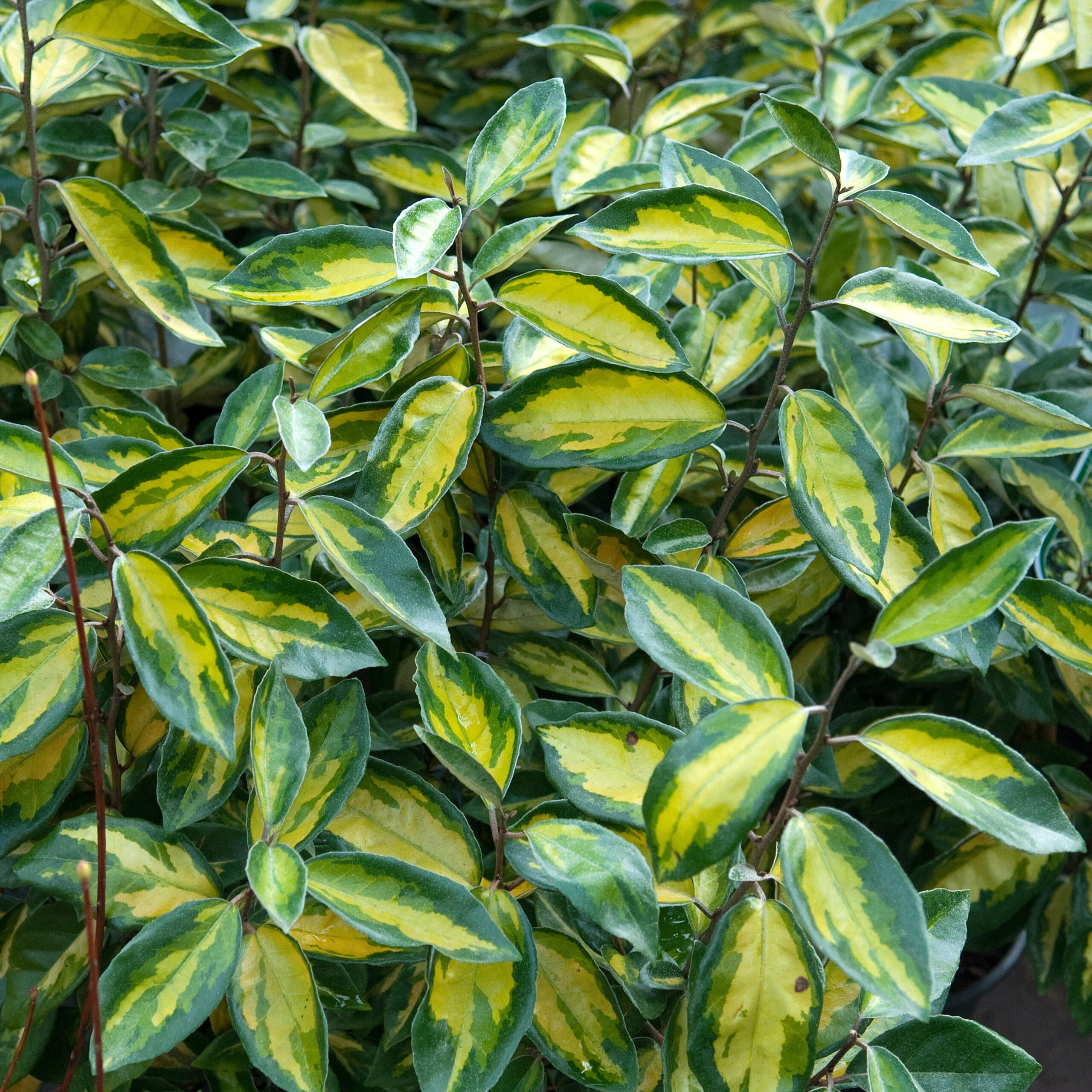
Elaeagnus ebbengei ‘Maryline’
€35.00
Description
Quick Facts
- Botanical Name: Elaeagnus ‘Maryline’
- Common Name: Variegated Elaeagnus / Oleaster
- Plant Type: Evergreen shrub
- Habit: Bushy, upright to gently spreading; dense and wind-tough
- Height (approx.): 2–3m (can be kept smaller with clipping)
- Spread (approx.): 1.5–2.5m
- Foliage: Evergreen; green leaves with creamy-yellow variegation (often with silvery undersides)
- Flowers: Small, creamy-white flowers in autumn (often discreet but beautifully scented)
- Fragrance: Sweet, noticeable scent in flower
- Position: Full sun to part shade
- Soil: Free-draining; tolerant once established
- Hardiness: Very hardy; excellent wind and coastal tolerance
- Best For: Screening, hedging, coastal gardens, brightening boundaries, low-maintenance evergreen structure
Description
If you need an evergreen that earns its keep all year, ‘Maryline’ is a star.
Its leaves are softly variegated — a wash of cream and yellow over green, catching light even on grey days — and the plant itself is famously tough: wind-tolerant, salt-tolerant, and happy in a wide range of soils once established. It’s the kind of shrub that makes a garden feel brighter and more sheltered at the same time.
And then, when autumn arrives, it often surprises you with tiny, understated flowers that carry a sweet perfume — one of those quiet garden moments you only notice when you walk past and think, “what smells so good?”
Caragh Garden Notebook
Planting & position
Full sun will give the strongest variegation and the densest growth, but it also performs well in part shade. It’s an excellent choice for exposed and coastal sites.
Full sun will give the strongest variegation and the densest growth, but it also performs well in part shade. It’s an excellent choice for exposed and coastal sites.
Soil & drainage
Elaeagnus is adaptable, but it prefers free-draining soil.
Elaeagnus is adaptable, but it prefers free-draining soil.
- On heavy ground, improve drainage with compost and grit.
- Once established, it’s drought-tolerant and resilient.
Watering
Water well in the first growing season. After that, it’s low-maintenance, though a deep watering in prolonged dry spells will keep it looking its best.
Water well in the first growing season. After that, it’s low-maintenance, though a deep watering in prolonged dry spells will keep it looking its best.
Feeding
Usually not fussy. A spring mulch of compost is plenty. Avoid overfeeding, which can encourage soft growth.
Usually not fussy. A spring mulch of compost is plenty. Avoid overfeeding, which can encourage soft growth.
Pruning & hedging
This shrub responds very well to clipping.
This shrub responds very well to clipping.
- For a neat hedge or screen, trim once or twice a year (late spring and again late summer if needed).
- For a looser, natural shape, simply remove any wayward stems after flowering.
Pests & problems
Generally robust. Good airflow helps prevent any occasional leaf spotting.
Generally robust. Good airflow helps prevent any occasional leaf spotting.
Design notes
- Brilliant backdrop for flowering shrubs and perennials
- Looks especially good with hydrangeas, roses, grasses, pittosporum, and Mediterranean planting
- Perfect for creating a bright, evergreen boundary without anything fussy
Additional information
| Pot Size |
|---|
Related products
-

Acer Princeton Gold / Maple Princeton Gold
Price range: €120.00 through €180.00 Select options This product has multiple variants. The options may be chosen on the product page -

Carpinus betulus Fastigiata / Upright Hornbeam
Price range: €170.00 through €750.00 Select options This product has multiple variants. The options may be chosen on the product page -
Tilia platyphyllos / Large leaved Lime
Price range: €320.00 through €480.00 Select options This product has multiple variants. The options may be chosen on the product page -
Prunus Royal Burgundy / Red leafed Cherry
Price range: €75.00 through €550.00 Select options This product has multiple variants. The options may be chosen on the product page