


Dryopteris filix-mas Linearis Polydactyla
€8.50
Frequently Bought Together





Description
Quick Facts
– Botanical Name:Dryopteris filix-mas ‘Linearis Polydactyla’
– Common Name: Crested Male Fern / Tasselled Male Fern
– Plant Type: Semi-evergreen to evergreen fern
– Mature Height: 60–90cm
– Mature Spread: 60–90cm
– Frond Colour: Rich mid-green; fronds dramatically finer and more lacy than the species, with narrow linear pinnules and distinctive finger-like crested tips
– Habit: Upright, vase-shaped shuttlecock — lighter, more refined and architectural than the species
– Aspect: Full shade to partial shade
– Soil: Tolerant of most soil types; performs best in moist, humus-rich, well-drained conditions
– Hardiness: Fully hardy in Ireland & the UK
– Awards: RHS Award of Garden Merit (AGM)
– Maintenance: Very low
Description
Dryopteris filix-mas ‘Linearis Polydactyla’ takes the reliable, unfussy character of the Male Fern and refines it into something altogether more elegant. The name tells the story in two parts: *Linearis* for the dramatically narrowed pinnules that give each frond a fine, lacy, almost feathered quality quite different from the bold simplicity of the species; and *Polydactyla* — many-fingered — for the distinctive crested, tasselled tips that divide each frond end into a cluster of delicate finger-like points.
The overall effect is one of considered detail and quiet sophistication. Where the Male Fern impresses through scale and bold structure, ‘Linearis Polydactyla’ impresses through refinement — a fern that rewards close attention and looks deliberately chosen in a way that few plants manage so effortlessly. It is lighter in texture, more architectural in effect, and considerably more ornamental than its parent — yet it carries the same robust, adaptable character beneath, tolerating shade, clay, and dry conditions without complaint.
A fern with the constitution of a workhorse and the appearance of something rare.
Caragh Garden Notebook
Planting:
Plant in spring or autumn into moist, humus-rich, well-drained soil enriched with leafmould or well-rotted compost. Like the species, ‘Linearis Polydactyla’ is tolerant of a wide range of conditions including clay soils and dry shade once established — a quality that makes it one of the more versatile ornamental ferns available. The finer, more delicate frond texture is best appreciated in a position where the plant can be seen clearly — at the front or middle of a shaded border rather than tucked into a corner — and where a little filtered light can catch the laciness of the fronds. Set the crown at soil level, water in thoroughly, and mulch around the base with leafmould or composted bark.
Watering:
Water consistently through the first growing season. Once established, this cultivar shares the good drought tolerance of the species and will manage in drier shade conditions that would compromise more delicate ferns. In very dry spells, a thorough watering will keep the finely cut fronds at their best and prevent tip browning — the narrow pinnules can show moisture stress slightly more quickly than the broader fronds of the species simply because there is less leaf surface to buffer it. Consistent moisture always produces the finest frond quality in this variety.
Feeding:
An annual mulch of leafmould or well-rotted compost around the crown in spring feeds gently and replicates the natural woodland conditions the plant favours. In poorer soils, a light balanced slow-release fertiliser applied in spring will support strong, healthy frond production. No additional feeding is required in good garden soil — this is a fern that performs reliably without demanding much in terms of nutrition.
Seasonal Care & Tidy-Up:
In sheltered or milder positions, the fronds will hold through much of winter, providing valuable fine-textured evergreen interest during the colder months — the lacy fronds are particularly effective in winter light or after a frost. In harsher conditions, the fronds will brown and die back, and should be removed in late winter or early spring before new growth begins. This is the moment to appreciate the shuttlecock crown before the new season’s fronds begin to unfurl from its centre. A light tidy is all that is needed — remove tired or damaged fronds cleanly at the base and leave the healthy ones in place until clearly spent.
Division:
Divide every four to five years in spring if the clump becomes congested, or to propagate and spread the plant. Lift carefully, divide into sections each with a healthy crown and root system, and replant immediately into well-prepared soil. Water in thoroughly and maintain consistent moisture through the first season after division. The crested, tasselled frond tips are a fixed characteristic of this cultivar and will be present in all divisions — no need to select for it.
Pests & Problems:
Essentially trouble-free and as robust as the parent species. Slugs may occasionally target emerging fronds in spring — worth monitoring at this stage when the new growth is most vulnerable. The finer pinnules of ‘Linearis Polydactyla’ are slightly more susceptible to wind damage than the broader fronds of the species — a sheltered position always shows this cultivar at its best and preserves the integrity of the delicate frond tips. In very dry conditions, frond tips may brown more readily than in the species; consistent moisture is the simplest solution.
Design Notes:
The combination of fine, lacy texture and crested frond tips gives ‘Linearis Polydactyla’ a quality that is genuinely unusual in a shade plant — it has the kind of detail that makes people stop and look more closely. Use it where that detail can be properly appreciated: at the front of a shaded border, beside a path, or in a position where low or slanted light can pass through the fronds and reveal their laciness. It combines beautifully with bold-leaved companions — large hostas, Fatsia japonica, or Dryopteris filix-mas itself — where the contrast between broad, simple foliage and finely cut fronds creates an effective and visually interesting planting. The crested tips echo the tasselled quality of ornamental grasses and work well alongside them in a mixed woodland-edge planting. In a container, it is exceptional — the refined, architectural fronds in a well-chosen pot create a planting of genuine quality for a shaded terrace or courtyard.
Additional information
| Pot Size |
|---|
Related products
-
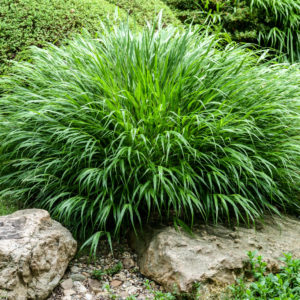
Hakonechloa macra / Japanese Green Forest Grass
€12.50 Select options This product has multiple variants. The options may be chosen on the product page -
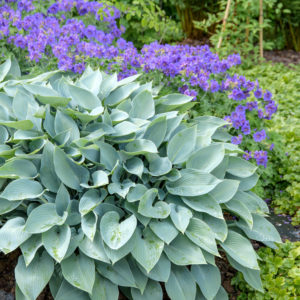
Hosta Halcyon
€9.50 Select options This product has multiple variants. The options may be chosen on the product page -

Dryopteris affinis Cristata The King
Price range: €9.50 through €45.00 Select options This product has multiple variants. The options may be chosen on the product page -
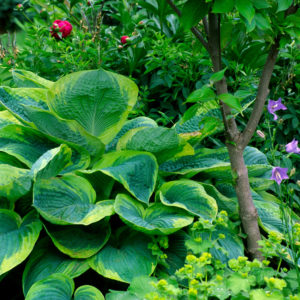
Hosta Frances Williams
€10.50 Select options This product has multiple variants. The options may be chosen on the product page