

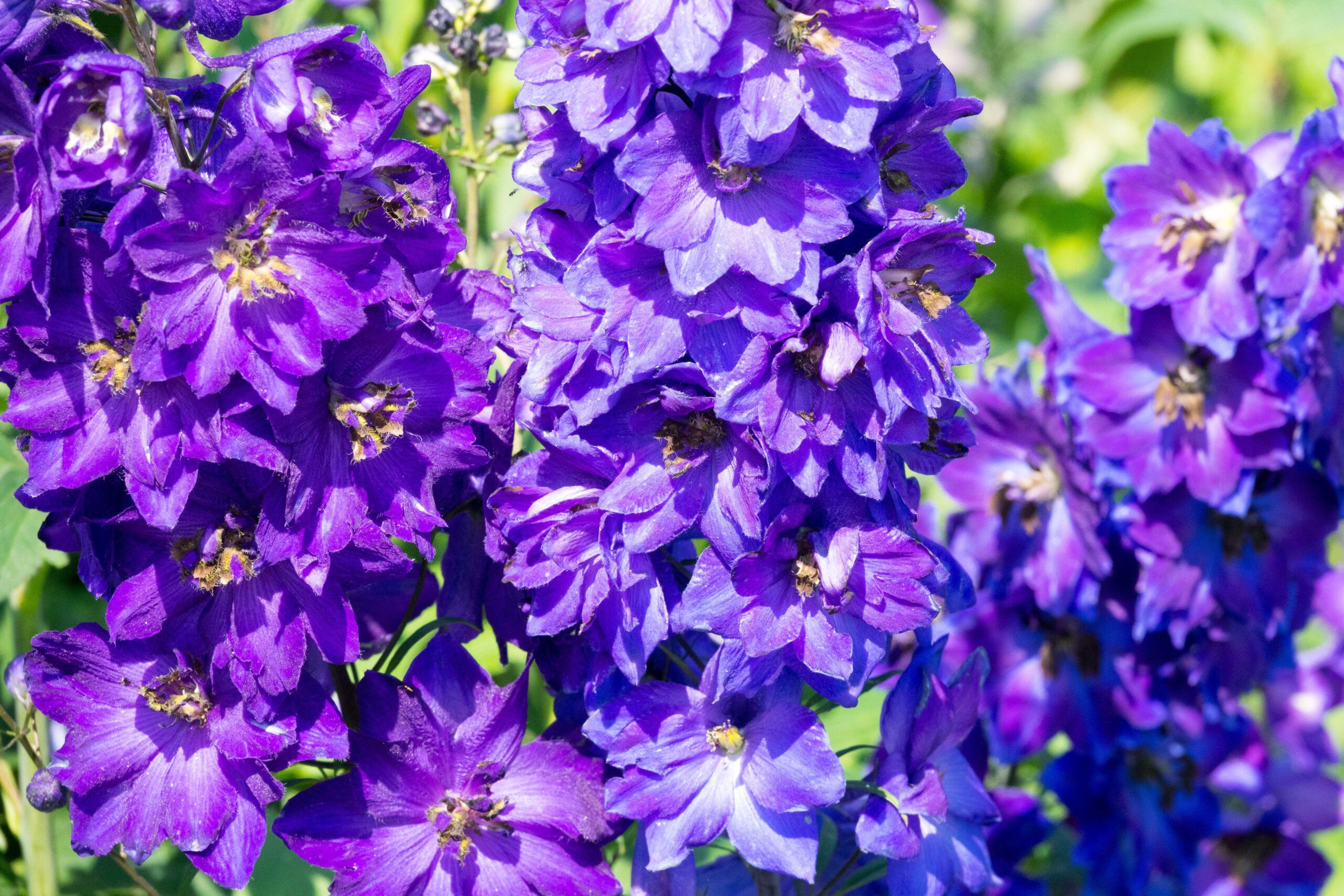
Delphinium ‘dark blue dark bee’
€8.50
Frequently Bought Together

Description
Quick Facts
Botanical Name: Delphinium elatum ‘Dark Blue Dark Bee’
Common Name: Delphinium / Larkspur
Plant Type: Deciduous perennial
Mature Height: 150–180cm
Mature Spread: 60–75cm
Flowering Period: Early to midsummer (June–July), with a second flush if cut back
Flower Colour: Deep navy-blue with a near-black central bee
Foliage Colour: Rich green, deeply lobed leaves
Hardiness: Very hardy in Ireland & the UK
Soil Requirements: Fertile, moist, well-drained soil
Aspect: Full sun, sheltered from strong winds
Maintenance: Moderate
Description
Delphinium ‘Dark Blue Dark Bee’ is the classic English border plant at its most dramatic. Towering spikes of deep navy-blue flowers, each with a near-black central eye — known as the bee — rise to impressive heights from midsummer, bringing a boldness and formality to a border that very few plants can match. It’s not the most low-maintenance plant in the garden, but what it delivers in late June and July is hard to replicate. Cut it back after the first flush and it will often reward you with a second round of flowers in early autumn.
Caragh Garden Notebook
Planting:
Plant in spring into deep, fertile, well-drained soil in a sheltered, sunny spot. Enrich the soil well with compost or well-rotted manure before planting — delphiniums are hungry plants and respond well to a good start. Space plants 60–75cm apart.
Watering:
Water regularly and deeply, especially during dry spells and through the flowering period. Delphiniums dislike drought — consistent moisture is key to strong stems and good flower production.
Feeding:
Feed generously. A high-potash liquid feed every two weeks from spring through to flowering will produce the best results. Top-dress with well-rotted manure or compost in early spring each year.
Seasonal Care & Tidy-Up:
Stake plants early — before stems reach 30cm if possible. Tall spikes in exposed positions will snap in wind without support. After the first flush of flowers, cut spikes back to the base to encourage a second round of blooms. Cut back all growth to ground level in autumn once foliage dies back.
Division (to keep plants vigorous):
Divide every 3–4 years in spring to keep plants strong and floriferous. Delphiniums can become congested and flower less prolifically if left undivided for too long.
Pests & Problems:
Slugs and snails are the biggest threat — they target emerging shoots in spring with enthusiasm. Protect young growth early in the season. Powdery mildew can appear in dry summers; good airflow and consistent watering help. Hollow stems can collect water and rot at the crown — ensure good drainage at planting.
Design Notes:
A cornerstone of the traditional English border, delphiniums work brilliantly at the back of deep mixed plantings alongside roses, peonies, and geraniums. The deep navy-black colouring of ‘Dark Blue Dark Bee’ pairs particularly well with silver and white — think Stachys byzantina, white Phlox, or pale Achillea. Planted in threes or fives it creates a real statement, and the vertical height adds structure and drama at a time of year when borders can start to look flat.
Additional information
| Pot Size |
|---|
Related products
-
Heuchera Palace Purple
€10.50 Select options This product has multiple variants. The options may be chosen on the product page -
Kniphofia Flamenco
€8.50 Select options This product has multiple variants. The options may be chosen on the product page -
Lobelia cardinalis Queen Victoria
€8.50 Select options This product has multiple variants. The options may be chosen on the product page -

Perovskia Blue Spire
€8.50 Select options This product has multiple variants. The options may be chosen on the product page