
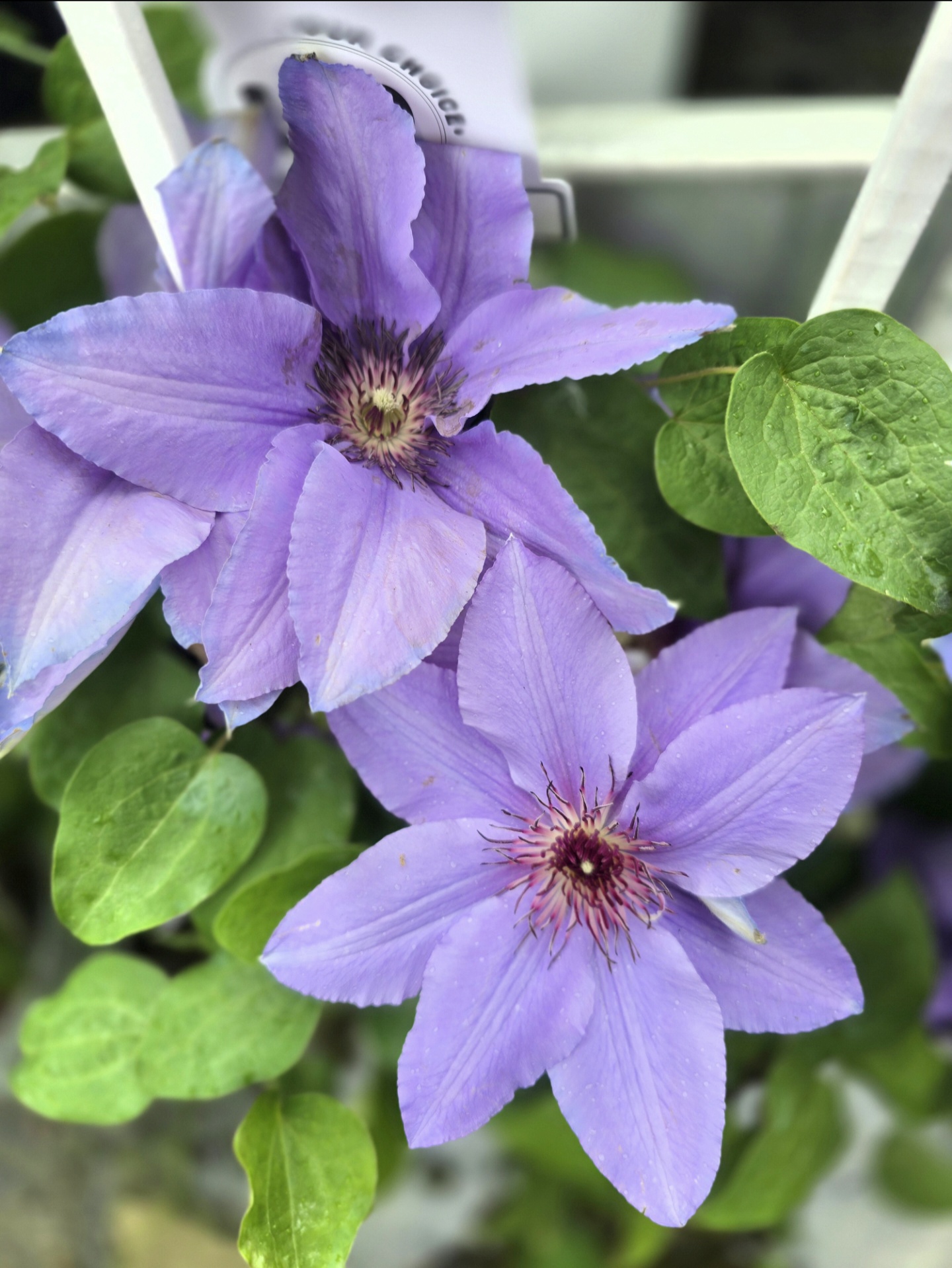
Clematis Raymond Evision ‘Parisienne’
€35.00
Frequently Bought Together


Description
Quick Facts
- Common Name: Clematis ‘Parisienne’
- Botanical Name: Clematis ‘Parisienne’
- Plant Type: Deciduous climbing clematis
- Mature Height: 2–3m (with support)
- Mature Spread: 80cm–1.2m
- Flowering Period: Late spring to early summer, often repeating later in summer
- Flower Colour: Soft lavender-blue with a deeper central bar and creamy-yellow stamens
- Hardiness: Hardy in UK & Ireland
- Soil Requirements: Moist, well-drained, fertile soil
- Aspect: Sun to part shade (best flowering with good light; keep roots cool)
- Maintenance: Low–moderate (light prune once a year + deadheading)
Description
Clematis ‘Parisienne’ is one of those clematis that instantly makes a garden feel gentler — soft lavender-blue flowers with a deeper central bar, opening wide and bright around creamy-yellow stamens. It’s romantic without being fussy, and it mixes beautifully with roses, cottage-garden planting, and fresh green foliage.
It’s a brilliant choice for training up a trellis, arch, pergola, or fence panel, and it’s especially lovely where you’ll see it up close — near a path, a doorway, or a seating area — because the flowers have that luminous, “painted” quality that rewards a second look.
As a Group 2 clematis, it flowers on growth made the previous season, and with good care it often gives a second flush later on. Pruning is gentle: you’re shaping and tidying, not cutting it back hard.
Caragh Garden Notebook
Planting:
Plant in spring or autumn. Choose a spot in sun or part shade with a support in place (trellis, wires, obelisk). Dig a generous hole and enrich with compost. Plant the clematis 5–8cm deeper than it sits in the pot to encourage strong shoots from the base. Water well and mulch to keep roots cool.
Plant in spring or autumn. Choose a spot in sun or part shade with a support in place (trellis, wires, obelisk). Dig a generous hole and enrich with compost. Plant the clematis 5–8cm deeper than it sits in the pot to encourage strong shoots from the base. Water well and mulch to keep roots cool.
Soil Preparation:
Clematis love fertile, moisture-retentive but free-draining soil. Improve heavy soil with compost and grit; improve light soil with plenty of organic matter. Mulch annually to conserve moisture and protect the root zone.
Clematis love fertile, moisture-retentive but free-draining soil. Improve heavy soil with compost and grit; improve light soil with plenty of organic matter. Mulch annually to conserve moisture and protect the root zone.
Watering & Feeding:
Water regularly in the first year and during dry spells. Feed in spring with a balanced fertiliser, then again after the first flush to support repeat flowering. Clematis in pots will need more consistent watering than those in the ground.
Water regularly in the first year and during dry spells. Feed in spring with a balanced fertiliser, then again after the first flush to support repeat flowering. Clematis in pots will need more consistent watering than those in the ground.
Pruning
Late winter / early spring (Feb–March):
- Remove any dead, weak, or damaged stems.
- Then prune lightly, shortening remaining stems back to a pair of strong, healthy buds.
- Aim to leave the plant roughly 60–120cm tall (depending on how established it is and where you want flowers to start).
After the first flush (early summer):
- Deadhead and trim back flowered stems to the next strong pair of buds/leaves.
- This tidies the plant and often encourages a second flush later in summer.
If it’s young or bare at the base:
In years 1–2, you can cut back to 30–60cm in spring to encourage branching low down (still not a full hard prune).
In years 1–2, you can cut back to 30–60cm in spring to encourage branching low down (still not a full hard prune).
Pests & Problems:
Watch for slugs/snails on young shoots. Planting slightly deeper and keeping soil evenly moist helps reduce the risk of clematis wilt. Good airflow helps keep foliage clean.
Watch for slugs/snails on young shoots. Planting slightly deeper and keeping soil evenly moist helps reduce the risk of clematis wilt. Good airflow helps keep foliage clean.
Design Notes:
A gorgeous partner for pale pink roses, white flowering shrubs, nepeta, salvias, and silvery foliage. Lovely on arches and trellis panels, and very effective against dark fencing where the colour glows.
A gorgeous partner for pale pink roses, white flowering shrubs, nepeta, salvias, and silvery foliage. Lovely on arches and trellis panels, and very effective against dark fencing where the colour glows.
Related products
-

Clematis The President
Price range: €20.00 through €25.00 Select options This product has multiple variants. The options may be chosen on the product page -
Clematis ‘Elizabeth’
€20.00 Select options This product has multiple variants. The options may be chosen on the product page -
Clematis ‘Joe’
€30.00 Select options This product has multiple variants. The options may be chosen on the product page -
Clematis ‘Ville de Lyon’
€20.00 Select options This product has multiple variants. The options may be chosen on the product page