

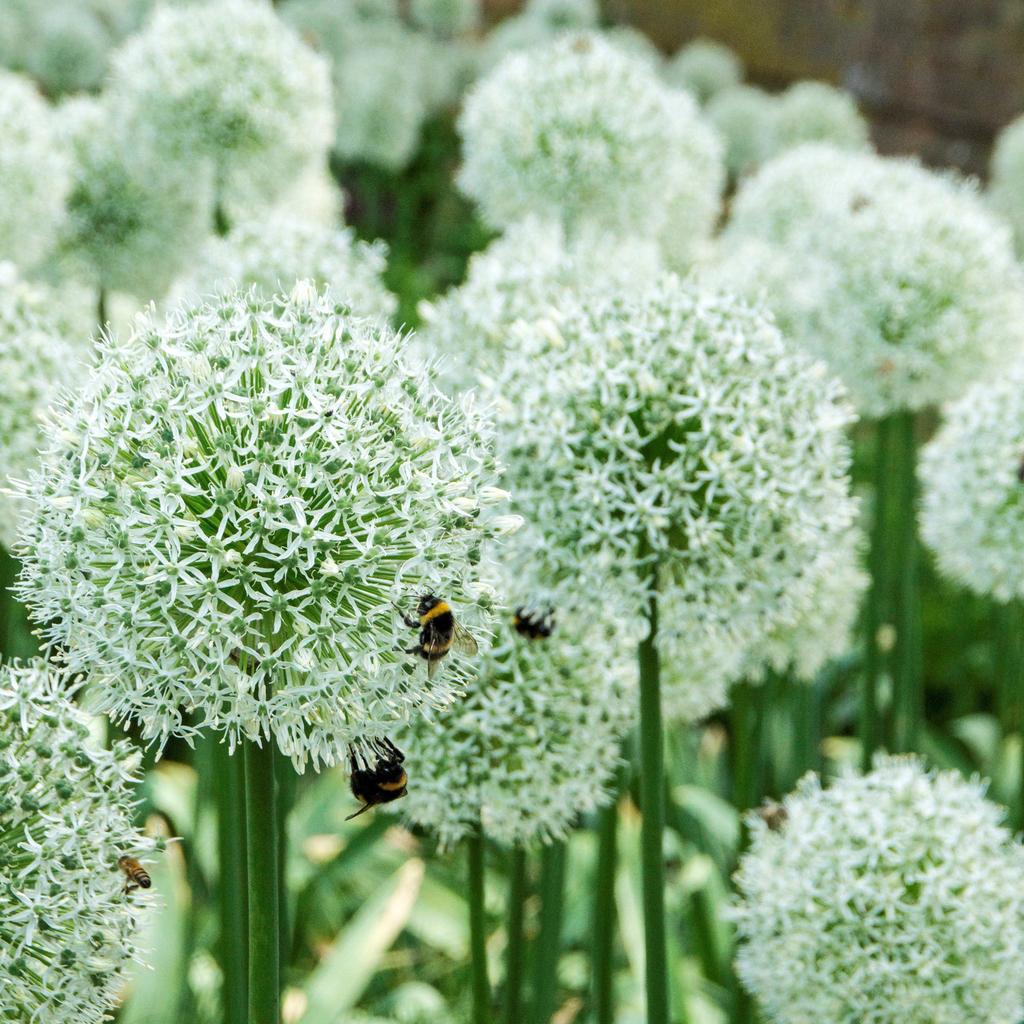
Allium Mount Everest
€8.50
Description
Quick Facts
- Botanical Name: Allium ‘Mount Everest’
- Common Name: Ornamental Onion
- Plant Type: Bulb (hardy perennial)
- Flower Colour: Pure white
- Foliage: Strap-like green leaves (dies back after flowering)
- Height & Spread: Approx. 80–100cm tall x 20–30cm spread
- Flowering Time: Late spring to early summer (typically May–June)
- Position: Full sun (best flowering)
- Soil: Well-drained soil; dislikes sitting wet in winter
- Hardiness: Fully hardy in Ireland & the UK
- Wildlife Friendly: Loved by bees and pollinators
- Best For: Borders, gravel gardens, prairie-style planting, pots, cut flowers
Description
If you’re looking for a plant that feels like a little moment of theatre in the garden, Allium ‘Mount Everest’ delivers it—quietly, confidently, and with real elegance. Each stem rises tall and straight, topped with a perfectly rounded globe of crisp white starry flowers, like a soft lantern floating above your planting.
It’s a brilliant choice for adding structure and rhythm through late spring and early summer—especially when threaded through grasses, nepeta, salvias, or airy perennials. And because the flower heads sit up high, they bring height without heaviness (ideal for smaller gardens too).
Once the blooms fade, the seedheads often stay looking sculptural for weeks—so you get that “designed” look for longer, with very little effort.
Why You’ll Love It
- Brightens planting schemes with clean, fresh white globes
- Adds height and structure without blocking views
- A pollinator magnet when in flower
- Great for cutting (fresh or dried)
- Low maintenance and reliably returns year after year
Caragh Garden Notebook
- When to Plant: Autumn is ideal (September–November), but can also be planted in early winter if the ground is workable.
- How to Plant: Plant bulbs around 10–15cm deep (about 2–3x the bulb’s height), pointy end up. Space 15–20cm apart.
- Watering: Water in after planting. After that, they’re fairly drought tolerant once established—avoid waterlogged soil.
- Aftercare: Let foliage die back naturally (it feeds next year’s flower). You can tidy faded leaves once they yellow.
- Design Tip: Plant in groups of 5–9 for the best impact, weaving them through softer plants so the fading foliage is gently hidden.
Perfect Partners
Try pairing with nepeta, lavender, salvias, verbena bonariensis, stipa grasses, or roses—white alliums make everything around them look more intentional.
Additional information
| Pot Size |
|---|
Related products
-

Delphinium Pacific White ‘Galahad’
€8.50 Select options This product has multiple variants. The options may be chosen on the product page -
Hydrangea Annabelle
€30.00 Select options This product has multiple variants. The options may be chosen on the product page -
Pyrus Chanticleer Espalier
Price range: €440.00 through €450.00 Select options This product has multiple variants. The options may be chosen on the product page -

Acer plat. ‘drummondii’
Price range: €320.00 through €600.00 Select options This product has multiple variants. The options may be chosen on the product page