

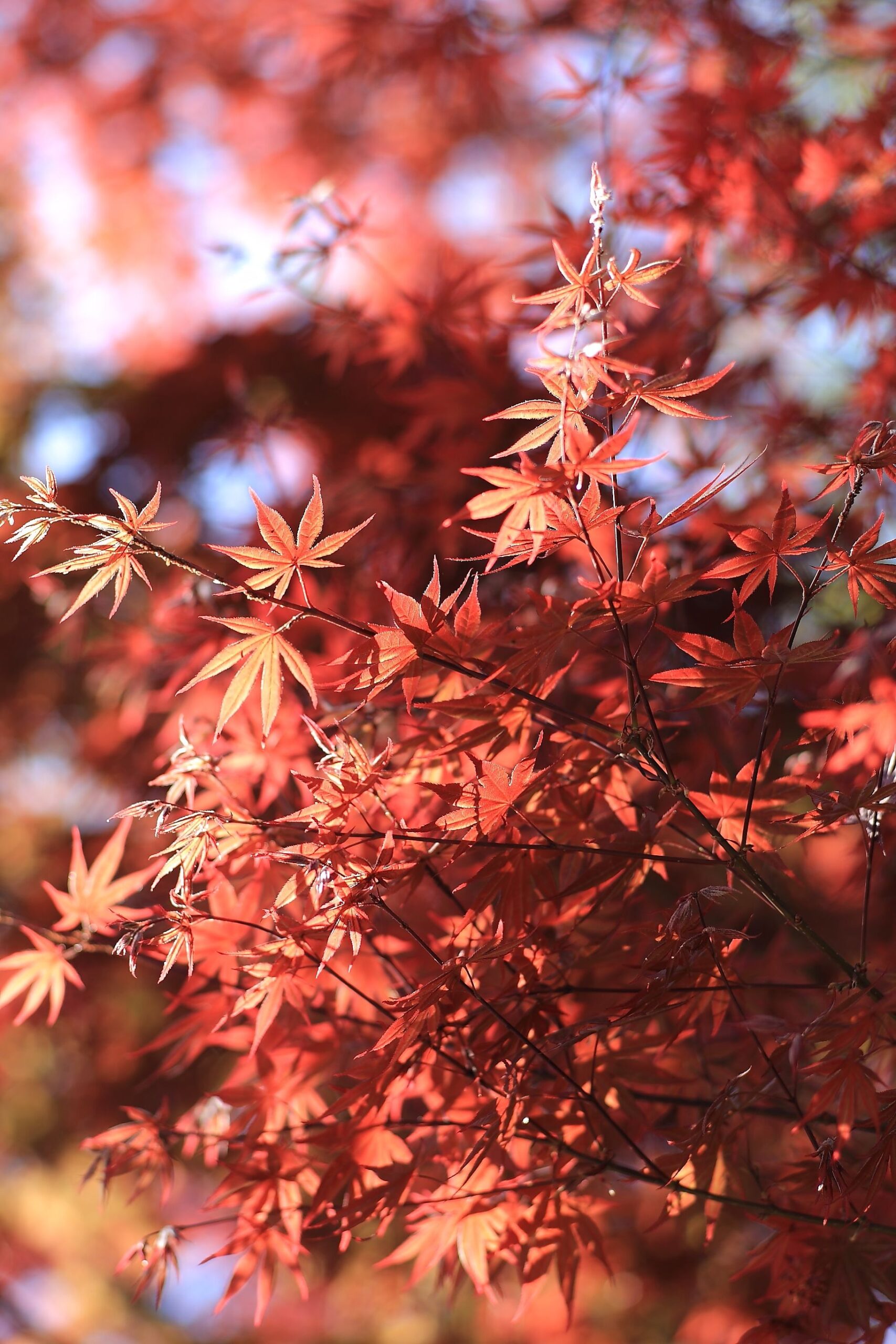
Acer palmatum ‘Starfish’
€220.00
Description
Quick Facts
– Botanical Name: Acer palmatum ‘Starfish’
– Common Name: Starfish Japanese Maple
– Plant Type: Deciduous ornamental tree / large shrub
– Mature Height: Approx. 2-3m
– Mature Spread: Approx. 1.5-2.5m
– Growth Rate: Slow
– Flowering Period: Spring (small and inconspicuous)
– Flower Colour: Red-purple
– Foliage Colour: Deeply cut, star-shaped leaves, fresh green in spring and summer with warm tints on new growth, turning orange and red in autumn
– Habit: Compact, upright and gently spreading
– Hardiness: RHS H5-H6 (hardy; shelter from cold winds and late frosts)
– Soil Requirements: Moist, well-drained, slightly acidic soil; avoid waterlogging
– Aspect: Part shade or dappled light; morning sun with afternoon shade is ideal
– Maintenance: Low
Description
Acer palmatum ‘Starfish’ is a refined Japanese maple with finely divided, pointed leaves that give the canopy a light, star-like texture. The foliage is fresh green through the growing season, and in autumn it turns warm shades of orange and red.
It grows slowly into a compact, neatly shaped small tree, which suits courtyards, smaller gardens and large containers. The delicate leaves move in the slightest breeze and cast a soft, dappled shade.
Delicate, compact and easy to look after, ‘Starfish’ gives a small garden elegant structure and good autumn colour.
Caragh Garden Notebook
Planting:
Plant in autumn or spring in moist, well-drained, slightly acidic soil with well-rotted compost or leaf mould worked in. Choose a sheltered spot out of cold, drying winds and away from frost pockets, as the new spring foliage is tender. Plant at the same depth as the pot, firm in gently, water in well and mulch. In containers, use ericaceous or loam-based compost with good drainage.
Watering:
Water regularly through the first two growing seasons and never let the soil dry out completely. Established trees prefer steady moisture in summer. Container plants need more frequent checks in warm weather. Rainwater is best if your tap water is hard.
Feeding:
Apply a slow-release fertiliser in spring. Avoid high-nitrogen feeds, which can give soft growth and dull the autumn colour. An annual mulch of leaf mould or well-rotted compost is usually plenty.
Seasonal Care & Tidy-Up:
Very little pruning is needed. Remove dead, damaged or crossing branches in late autumn or winter when the tree is fully dormant, as pruning in spring can cause sap to bleed. In exposed gardens, protect young spring growth with a fleece wrap during frosty nights.
Pests & Problems:
Generally trouble-free. Aphids can appear on new growth in spring and are usually easy to control. Leaf scorch can happen in strong sun, drying wind or alkaline soil, so a sheltered, lightly shaded spot and ericaceous compost help.
Design Notes:
A good choice for courtyards, Japanese-style planting and woodland borders, or as a feature in a large container on a terrace. It pairs well with ferns, hostas, hellebores, box and evergreen shrubs, which show off the delicate foliage and autumn colour.
Propagation:
Japanese maples are normally grafted, so named varieties need nursery-grown stock to be true to type.
Additional information
| Pot Size |
|---|
Related products
-
Acer palm. Little Princess
Price range: €150.00 through €1,200.00 Select options This product has multiple variants. The options may be chosen on the product page -

Acer palmatum dissectum ‘Seiryū’ / Japanese Maple
Price range: €49.00 through €140.00 Select options This product has multiple variants. The options may be chosen on the product page -

Osmanthus x burkwoodii
Price range: €45.00 through €175.00 Select options This product has multiple variants. The options may be chosen on the product page -
Acer palm. Sango Kaku
Price range: €600.00 through €660.00 Select options This product has multiple variants. The options may be chosen on the product page