

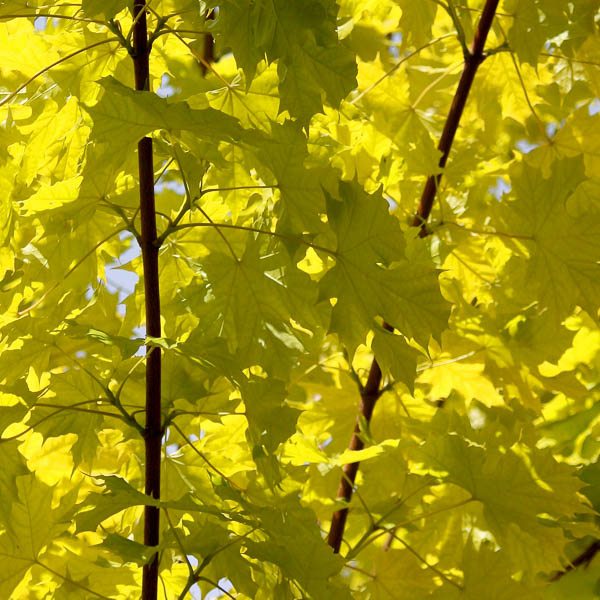
Acer Princeton Gold / Maple Princeton Gold
Price range: €120.00 through €180.00
Frequently Bought Together
Description
If you want a tree that brings instant light to a garden, Acer ‘Princeton Gold’ is a brilliant choice. In spring it bursts into vivid golden-yellow foliage that holds its colour beautifully through summer (especially with a bit of sun), before finishing the year with warm autumn tones. It’s a real “lift” tree—perfect for brightening darker planting schemes and adding contrast against greens, purples and deep evergreens.
Why you’ll love it
- Golden foliage from spring onwards — a true standout colour
- Brilliant contrast tree — glows against darker shrubs and hedging
- Great for structure — a strong, shapely canopy as it matures
- Reliable & hardy — a tough performer once established
Quick Facts
- Botanical name: Acer ‘Princeton Gold’
- Common name: Princeton Gold maple
- Type: Deciduous tree
- Mature size: Approx. 6–10m tall (can vary with conditions and pruning)
- Position: Full sun to partial shade (best colour in sun)
- Soil: Moist, well-drained soil; avoid very waterlogged ground
- Hardiness: Very hardy
- Wildlife value: Spring interest for pollinators; good garden habitat
Caragh Garden Notebook
This is one of those trees that does a lot of heavy lifting in a planting design. The foliage is the main event—fresh, bright and golden—so it works beautifully as a focal point near a terrace, at the end of a view, or to “switch on” a border that needs a bit more energy.
For the most flattering effect, plant it where the morning or midday sun can catch the leaves. Pair it with deep greens (yew, holly, laurel), smoky blues (junipers), or rich purples (physocarpus, sambucus, heucheras) and it absolutely sings.
Top tip: Give it a generous planting hole and a good mulch—strong establishment in year one makes all the difference to colour and growth.
Planting & Aftercare
- Watering: Water regularly through the first growing season, especially in dry spells
- Mulch: Mulch annually to keep roots cool and conserve moisture
- Pruning: Minimal pruning needed—remove any crossing branches in winter while dormant
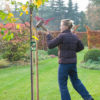
- Staking: Stake young trees in exposed sites for the first year or two
Additional information
| Pot Size | 10-12cm Rootballed 3-4m, 180L 16-18cm girth Standard, 8-10cm Rootballed, 3 – 3.5m tall, 10-12cm girth, bare-rooted, 35L 10-12cm, 8-10cm girth, bare-rooted |
|---|
Related products
-

Catalpa biganoides Mature Specimen
€1,500.00 Select options This product has multiple variants. The options may be chosen on the product page -
Acer Crimson King / Red Norway Maple
Price range: €75.00 through €950.00 Select options This product has multiple variants. The options may be chosen on the product page -

Prunus cerasifera ‘Pissardii’
Price range: €150.00 through €450.00 Select options This product has multiple variants. The options may be chosen on the product page -
Betula Jacquemontii / Himalayan Birch
Price range: €180.00 through €600.00 Select options This product has multiple variants. The options may be chosen on the product page