

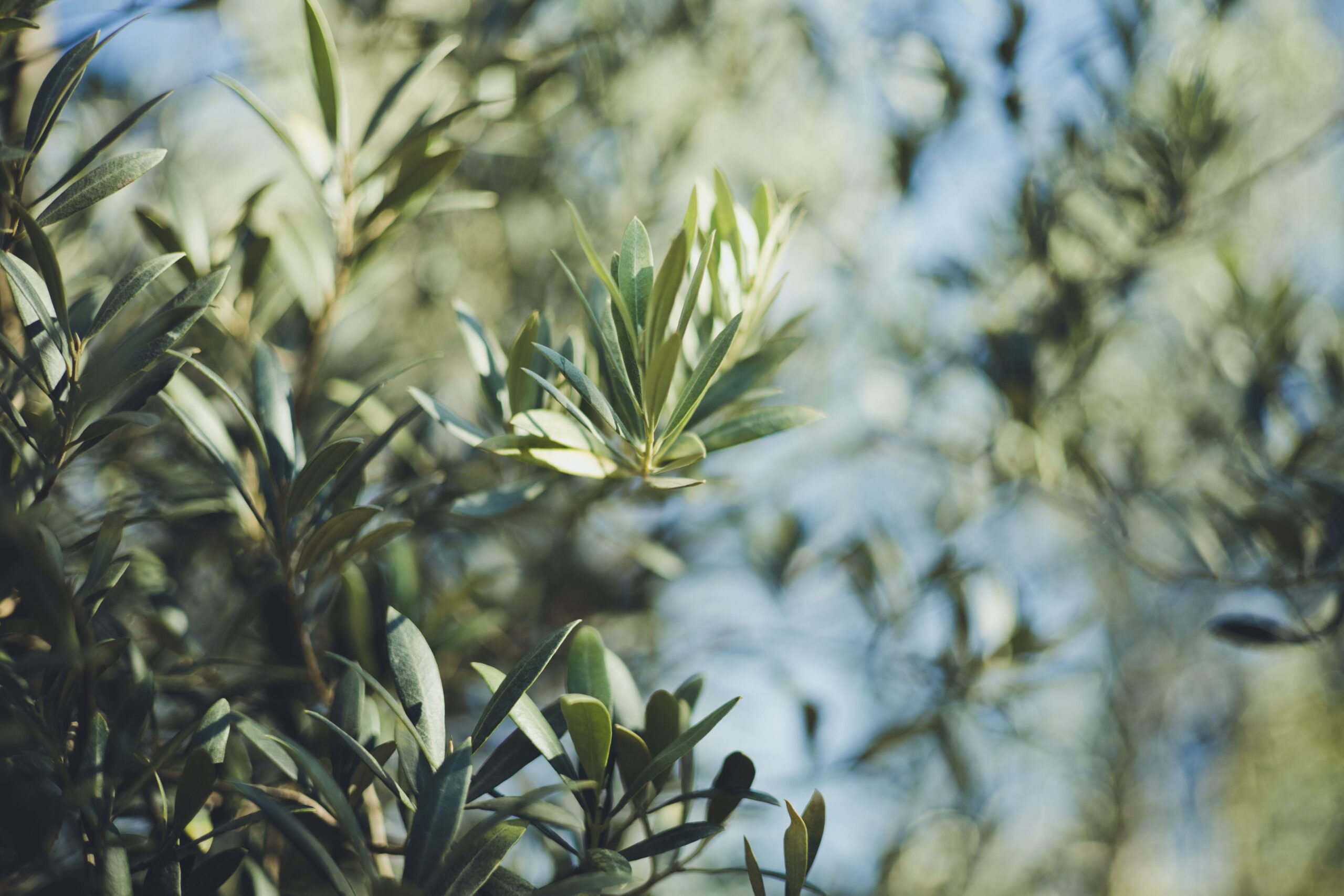
Olea europaea ‘Cipressino’
€85.00
Description
Quick Facts
– Botanical Name: Olea europaea ‘Cipressino’
– Common Name: Italian Cypress Olive (Columnar Olive)
– Plant Type: Evergreen tree
– Mature Height: 3–5m (slow-growing, much less in a pot)
– Mature Spread: 1–1.5m
– Flowering Period: Early summer (tiny, creamy-white, lightly scented)
– Fruit: Small olives are possible in warm summers, but not reliable in the UK or Ireland
– Foliage Colour: Silvery grey-green, paler on the underside
– Hardiness: Hardy in mild, sheltered gardens. Protect in prolonged hard frosts
– Soil Requirements: Free-draining soil, tolerates poor and stony ground
– Aspect: Full sun, sheltered from cold winds
– Maintenance: Low
Description
A tall, slim olive with a narrow, upright habit and silvery foliage. The Mediterranean look takes up very little ground space, so it suits small gardens, courtyards and entrances.
It’s evergreen, so the silvery leaves give you structure all year. Plant a pair either side of a door, repeat a line of them along a wall, or grow one in a large pot on a sunny patio. It’s slow-growing, so you can keep it at the size you want.
Caragh Garden Notebook
Planting:
Plant in spring or early summer so it can settle in before winter. Choose the sunniest, most sheltered spot you have, ideally against a south-facing wall. Drainage matters more than anything else, so add grit to heavy soil or plant on a slight mound. For pots, use a gritty, free-draining compost.
Watering:
Water regularly in the first year. Once established it’s very drought-tolerant. In pots, water when the top few centimetres of compost have dried out, and never leave the pot sitting in water, especially in winter.
Feeding:
In pots, use a slow-release fertiliser in spring and a high-potash feed through summer. In the ground, a light spring mulch is plenty.
Winter Protection:
It’s hardy in most mild, sheltered gardens, but cold and wet together cause the damage. In hard frosts, wrap the plant loosely with horticultural fleece and move pots against a sheltered wall or into an unheated greenhouse or porch. Don’t let the compost stay wet in winter.
Pruning & Tidy-Up:
Little pruning is needed. In spring, remove any dead or damaged growth, and lightly trim any stems that spoil the narrow shape. Avoid hard pruning, as it can be slow to recover.
Pots & Containers:
It looks great in a large terracotta or stone pot. Lift pots on feet for drainage. Re-pot every 2–3 years into a slightly larger container, or top-dress with fresh compost.
Pests & Problems:
Generally trouble-free. Scale insects can occasionally appear on the stems or leaves, so check plants in pots, especially if kept indoors or under cover in winter. Wet roots in winter are the biggest cause of failure.
Design Notes:
Works well as a pair for formal entrances, or in a line to create a rhythm along a wall or driveway. Plant with lavender, rosemary, gravel and terracotta for a Mediterranean look. Its narrow form also makes it a good choice for tight spots where a wider tree wouldn’t fit.
Additional information
| Pot Size |
|---|
Related products
-

Ilex Nellie Stevens Cubed Head Tree
€1,350.00 Select options This product has multiple variants. The options may be chosen on the product page -
Eucalyptus rostrata: Multi-Stem (3 Stem)
€750.00 Select options This product has multiple variants. The options may be chosen on the product page -
Olea Europaea / Olive natural conical shape
Price range: €320.00 through €400.00 Select options This product has multiple variants. The options may be chosen on the product page -
Olea Europaea / Olive Trees – 30-40cm girth
€500.00 Select options This product has multiple variants. The options may be chosen on the product page