

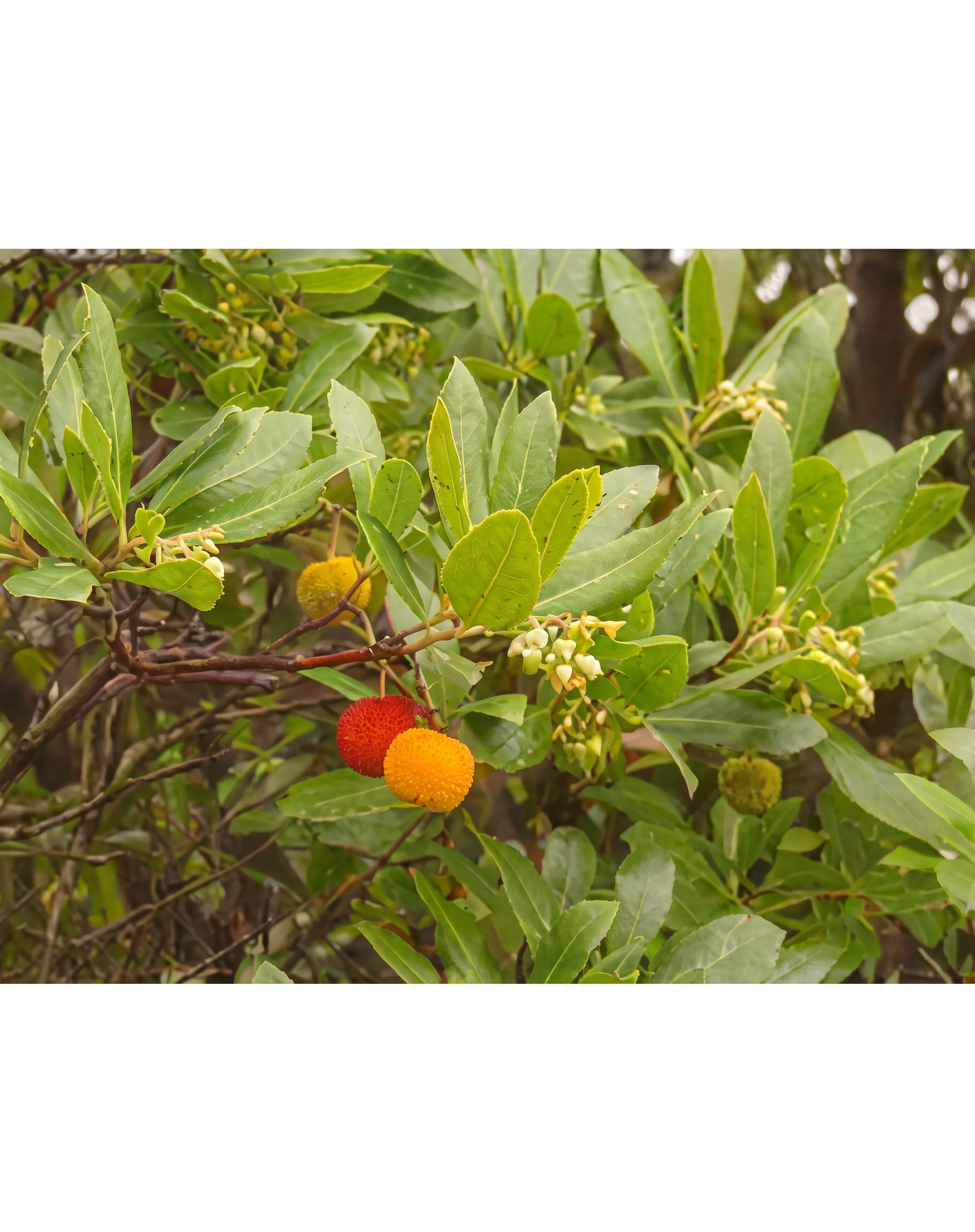
Arbutus unedo ‘Hannie’
€35.00
Description
Quick Facts
- Botanical name: Arbutus unedo ‘Hannie’ (cultivar unverified)
- Common name: Strawberry tree
- Type: Evergreen small tree or large shrub
- Mature height and spread: Typically 4–6m tall and 3–5m wide for the species, after 15–20 years or more. Slow growing, and cultivars may be smaller. Confirm with the supplier.
- Flowering period and colour: Autumn (about October to December). Clusters of white or pink-tinged, urn-shaped flowers.
- Fruit: Round, bumpy, strawberry-like fruits that ripen from yellow to orange to red the following autumn, so flowers and fruit appear together.
- Foliage: Glossy, dark green, leathery leaves with finely toothed edges.
- Bark: Shreddy, reddish-brown, peeling with age.
- Hardiness: Hardy in Ireland and the UK (around RHS H5, to about -15°C). Young plants benefit from shelter in cold areas.
- Soil: Well-drained soil. Unusually for a member of the heather family, it tolerates chalk and lime once established. Dislikes waterlogging.
- Aspect: Full sun to light shade, with shelter from cold, drying winds.
- Maintenance: Low.
Description
A handsome evergreen with glossy dark leaves, peeling reddish bark and clusters of creamy, urn-shaped flowers that appear in autumn alongside the previous year’s red strawberry-like fruits. Slow-growing and easy to look after, it makes a graceful specimen tree or large shrub for a sheltered garden. The fruits are edible but fairly bland, and are best enjoyed for their colour.
Caragh Garden Notebook
Planting Plant in spring or autumn in a sunny, sheltered spot with free-draining soil. Dig a hole about twice the width of the pot, keep the top of the rootball level with the surface, firm in gently and water well. Stake young trees in exposed spots. Avoid planting in cold frost pockets.
Watering Water regularly through the first two to three summers. Once established, it is drought tolerant. Avoid waterlogged soil.
Feeding Little feeding is needed. A mulch of compost or leaf mould in spring is enough. Avoid heavy feeding.
Seasonal Care and Tidy-Up Spring: Mulch and protect young plants from late frosts. Summer: Water young plants in dry weather. Autumn: Enjoy the flowers and fruit together. Winter: Protect young plants from severe frosts and cold winds with fleece if needed.
Division Not applicable. Pruning is minimal. If needed, prune in late spring after the frosts, cutting back to shape or removing dead or damaged branches. Avoid hard pruning, as old wood is slow to regrow.
Pests and Problems
- Leaf spot: Common but mostly cosmetic. Remove badly affected leaves.
- Frost damage: Young plants and new growth can be damaged in hard winters. Shelter helps.
- Honey fungus and root rot: Can occur in poorly drained or stressed trees.
- Fruit: Edible, but bland and mealy. Fruit drop can be messy near paths and patios.
Design Notes A lovely specimen for lawns, sheltered borders and courtyards, with year-round interest from bark, foliage, flowers and fruit. It pairs well with ferns, hellebores, heathers and other autumn-flowering plants. It also works as an informal evergreen screen or hedge, and coastal gardens suit it well.
Pollinators The autumn flowers provide nectar late in the season, when few other plants are flowering, and attract bees.
Propagation Semi-ripe cuttings in late summer can be slow and unreliable. Seed can be sown in autumn but won’t produce a reliable copy of a named cultivar.
Additional information
| Pot Size |
|---|
Related products
-
Alnus cordata / Italian Alder
Price range: €330.00 through €550.00 Select options This product has multiple variants. The options may be chosen on the product page -

Carpinus betulus Fastigiata / Upright Hornbeam
Price range: €170.00 through €750.00 Select options This product has multiple variants. The options may be chosen on the product page -
Laburnum x watereri Vossii / Golden Rain Tree
Price range: €245.00 through €580.00 Select options This product has multiple variants. The options may be chosen on the product page -
Ilex Nellie Stevens Standard Espalier
€1,150.00 Select options This product has multiple variants. The options may be chosen on the product page