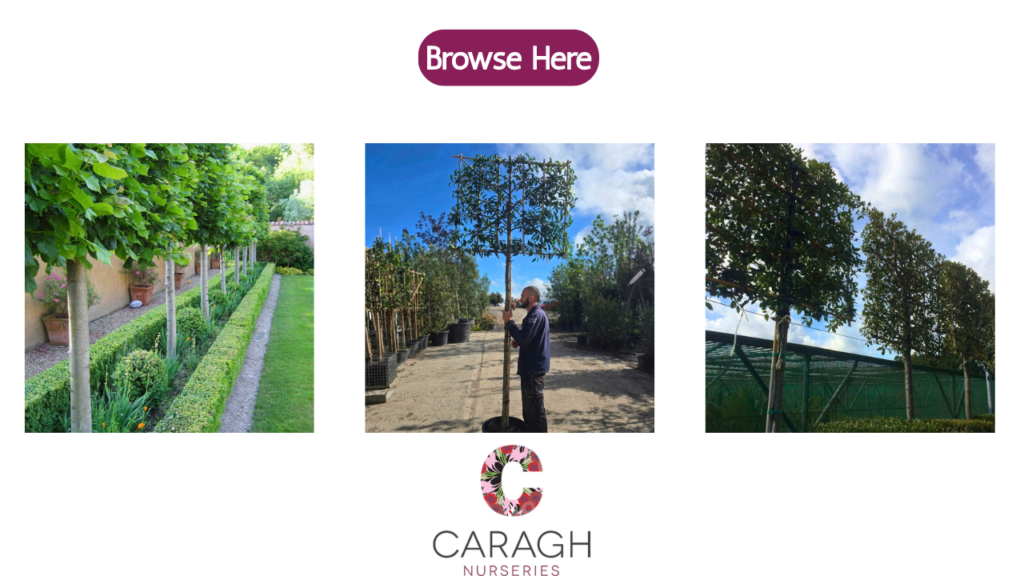

There is a particular kind of privacy that changes the way you use a garden. You sit down at the table and realise you are looking at leaves instead of the upstairs window next door. The patio suddenly feels like a place you can linger.
That is often the moment people come to us for an espalier tree. We have a lovely fresh collection in the nursery at the moment, and each one brings a slightly different character to that all-important boundary.
What is an espalier tree?
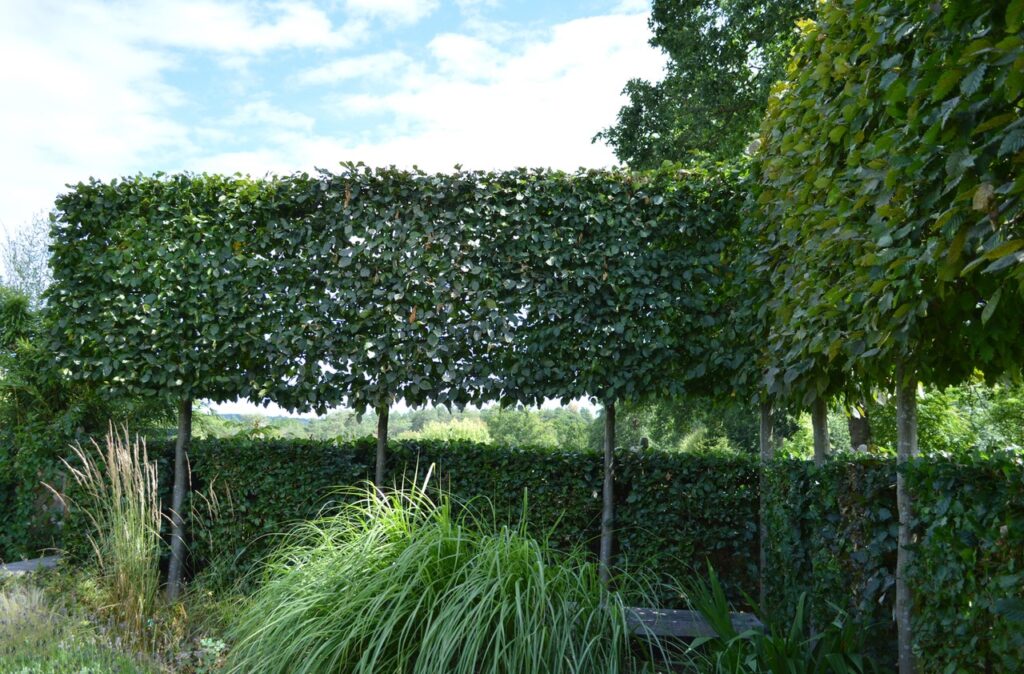
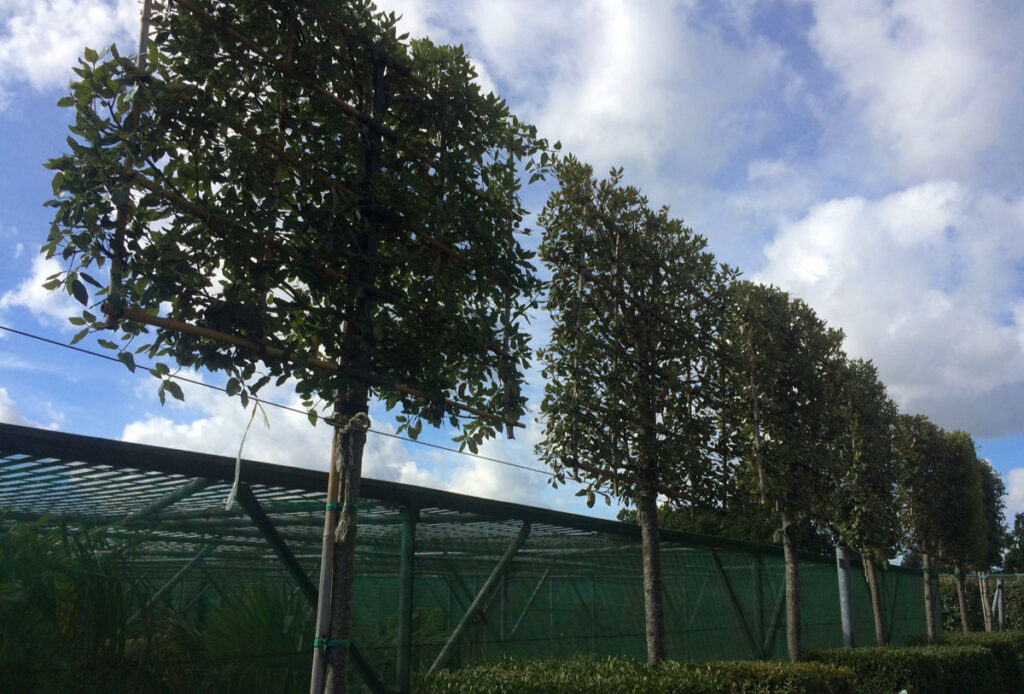
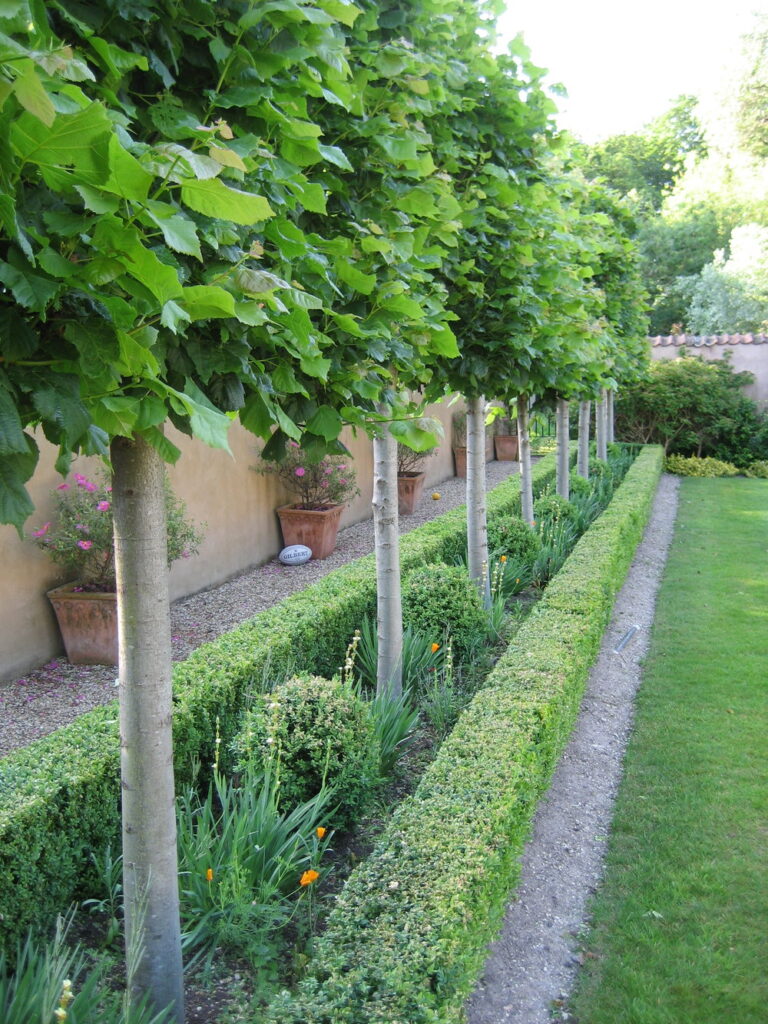
An espalier is a tree trained into a relatively flat shape on a frame. Many of the trees we sell for screening have a clear stem and a raised panel of trained branches above it. You may also hear these called pleached trees: in garden design, pleaching generally describes that raised, linked canopy, while traditional espalier often means branches trained in tiers. On our nursery pages you will see both names used for related trained forms.
The practical appeal is simple. The leafy part sits where you want the screen, often above a fence or wall, while the trunks leave room for planting and movement below. The frame is a starting shape; the foliage will develop with care and clipping. If you need a solid screen at ground level as well, add suitable lower planting.
Which espalier is best for your garden?
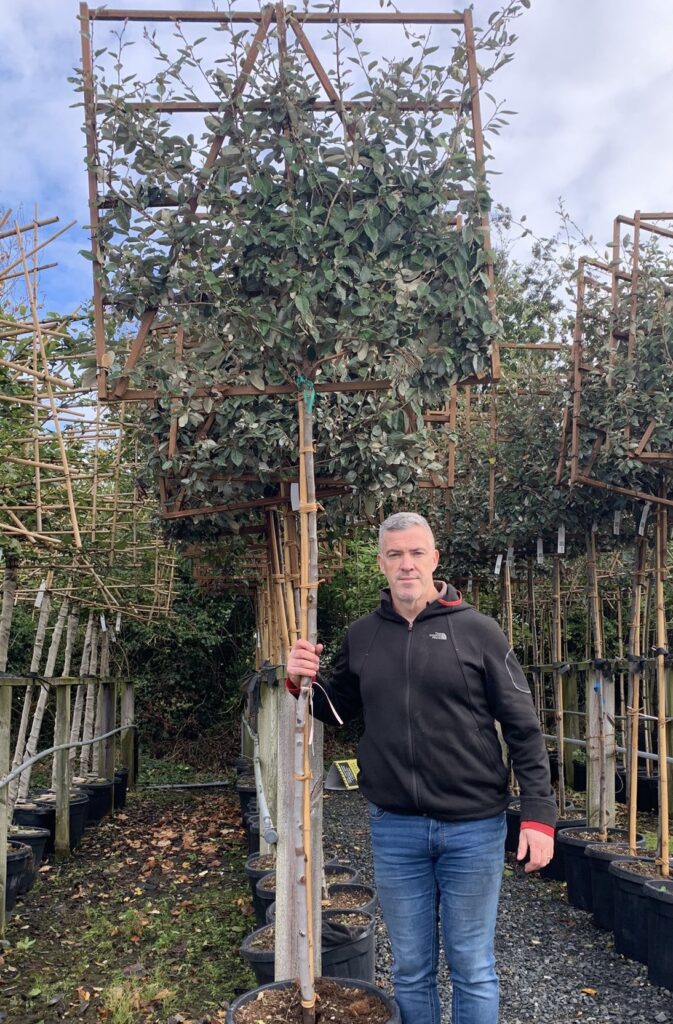
For a soft, silvery evergreen screen: Elaeagnus ebbingei
I love the light this one brings to a boundary. Its silvery green leaves feel less heavy than a dark wall of foliage, especially beside a terrace or in a smaller garden. It is evergreen, and the nursery listing recommends sun or partial shade and well-drained soil. It is a good one to consider for an exposed position once established, although the details of your site still matter.
Our new Elaeagnus ebbingei standard espalier is in a 35L pot, with a 1.8m stem, 8–10cm girth and a frame 120cm wide by 100cm high.
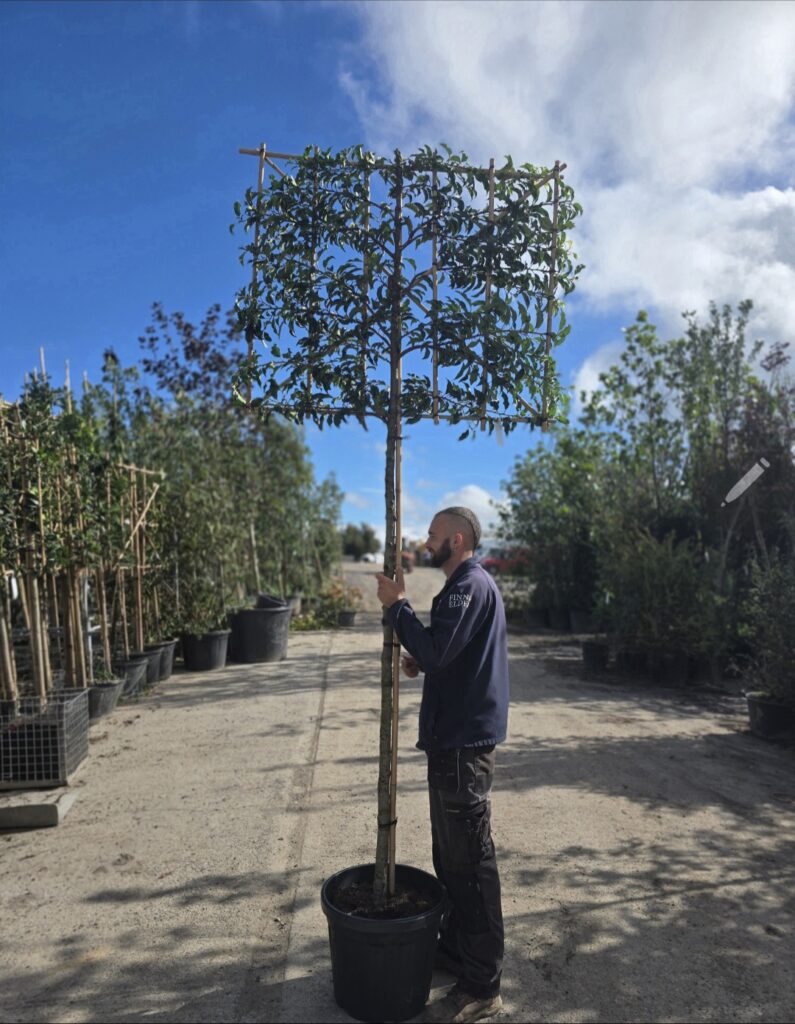
For generous evergreen coverage: Prunus ‘Novita’
If your first thought is, “I really do want the neighbour’s window softened,” laurel is a natural place to start. ‘Novita’ has the familiar substance of a laurel screen, held up on a clear stem so you can screen above the boundary without filling the whole garden with a deep hedge. Expect to maintain the shape as it grows.
Our new Prunus ‘Novita’ standard espalier is in a 45L pot, with 10–12cm girth and a frame 150cm wide by 120cm high. Ask us to confirm the stem height for this exact batch when planning the finished sightline.
For a neat, refined evergreen boundary: Portuguese laurel ‘Brenelia’
‘Brenelia’ has glossy dark leaves and warm red stems. It gives a more tailored look than a broad laurel, and I can picture it beautifully beside clipped planting or a simple contemporary terrace. Like the other evergreens here, it offers foliage through winter, although a young trained frame should never be mistaken for an instantly opaque wall.
Our new Prunus lusitanica ‘Brenelia’ espalier is in a 45L pot, with a 1.8m stem, 10–12cm girth and a frame 100cm wide by 120cm high.
For architectural evergreen character: Quercus ilex
Holm oak is one of those trees that gives a garden a settled feeling. Its dark evergreen leaves and crisp trained outline look particularly lovely against stone or pale render. It is a choice for someone who wants a boundary to feel like part of the garden design, as well as a screen. Give it a suitable well-drained position and allow for routine shaping.
Our new Quercus ilex standard espalier is in a 30L pot, with a 1.8m stem, 6–8cm girth and a frame 120cm wide by 100cm high. Please confirm this exact variant is available before publishing or promoting it.
For a green summer canopy and visible winter structure: Tilia europaea ‘Pallida’
Some gardens do not need to hide everything all year. If it is the summer dining area you want to soften, a deciduous tree can be a beautiful answer. ‘Pallida’ brings fresh green growth in spring, a leafy screen in summer and yellow colour in autumn. In winter you can enjoy the shape of its four trained tiers, but you will see through the branches. It needs ongoing training to keep that disciplined outline.
Our new Tilia europaea ‘Pallida’ espalier is in a 45L pot, with 12–14cm girth and a four-tier frame 150cm wide by 120cm high. Confirm the clear stem height of this batch before specifying an above-fence screen.
For spring blossom and autumn colour: Pyrus ‘Chanticleer’
If the boundary is also the view from your kitchen window, I would think about what you want to see through the seasons. ‘Chanticleer’, an ornamental pear, offers blossom in spring and colour later in the year, as well as the tidy rhythm of its trained shape. It is deciduous, so its privacy is strongest while in leaf. It is grown for ornament; do not choose it expecting a crop of eating pears.
Our new Pyrus ‘Chanticleer’ espalier is in a 45L pot, with a 1.8m stem, 12–14cm girth and a frame 150cm wide by 120cm high. Confirm the supplied product URL is live before publication.
Evergreen or deciduous: a useful first decision
If you need coverage from an overlooking window in January as much as in July, begin with Elaeagnus, ‘Novita’, ‘Brenelia’ or holm oak. If the view matters most when you are out on the terrace in warmer months, ‘Pallida’ lime and ‘Chanticleer’ pear give you more seasonal change. None of these trees can be judged by the species name alone: the clear stem height, frame size, existing foliage and position in your garden all affect the result.
A photograph taken from the place you want to sit is often more useful than a boundary measurement by itself. Send us the view you want to soften, the length of the space and an idea of how high the screen needs to begin. We can help you work out which of these trees feels right there.