

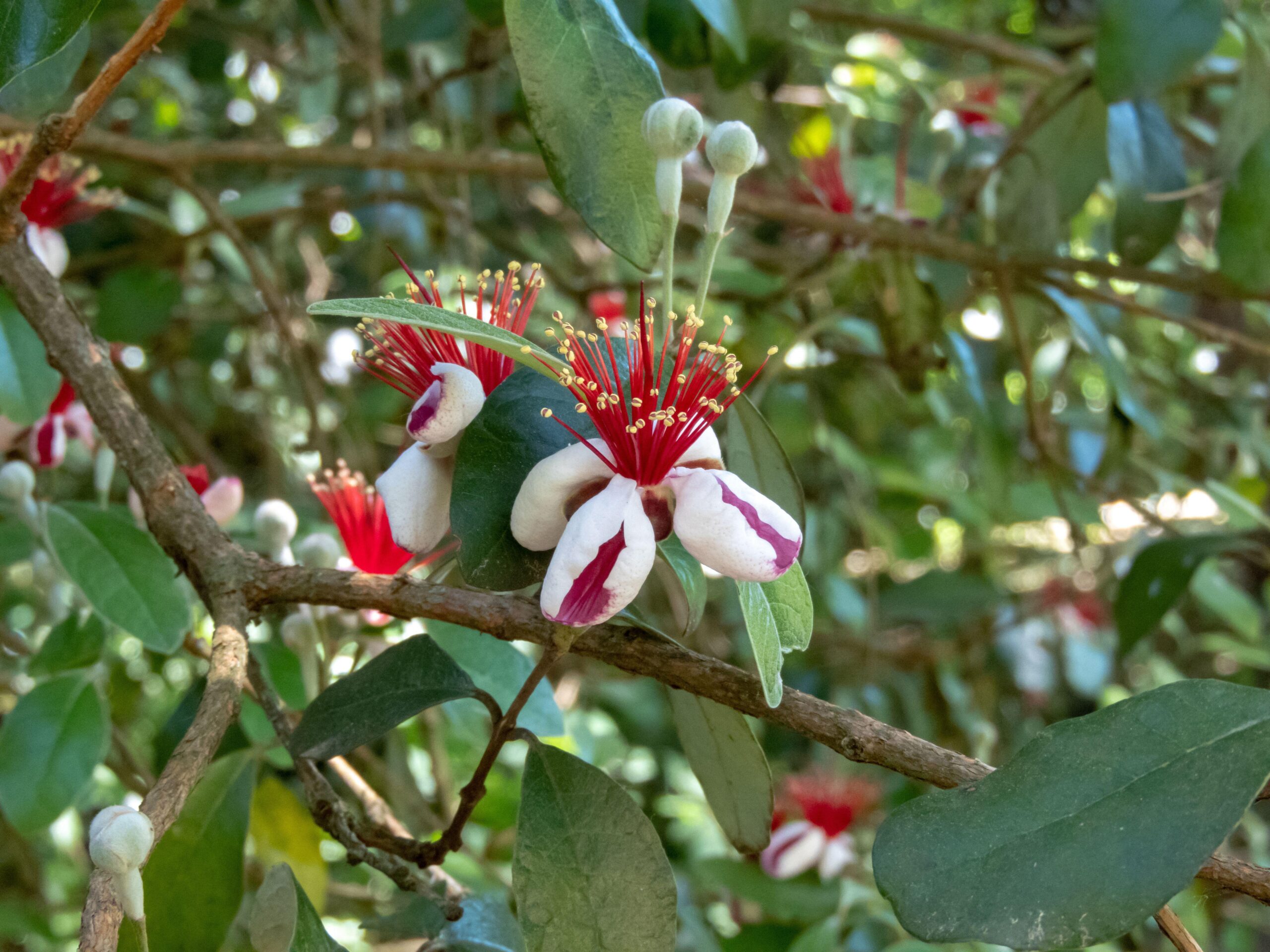
Feijoa sellowiana (Pineapple Guava) — Half Standard
€375.00
Description
Quick Facts
- Botanical Name: Feijoa sellowiana (Half Standard)
- Common Name: Pineapple Guava
- Plant Type: Evergreen fruiting shrub trained as a half standard
- Size Options: Available with a smaller head or a larger, more mature head (choose your preferred size)
- Position: Full sun (warm, sheltered spot)
- Soil: Free-draining soil; adaptable once established
- Hardiness: Best in a sheltered position in Ireland & the UK
- Best Feature: Silvery evergreen foliage + exotic edible flowers; can fruit in the right conditions
Evergreen, Exotic, and Beautifully Shaped
Feijoa is one of those plants that instantly makes a garden feel more considered. Trained as a half standard, it gives you that lovely “lollipop” structure — a clear stem with a rounded evergreen canopy — perfect for adding height and shape without taking up much ground space.
Because you’re adding two options (one with a smaller head and one with a larger head), this listing is ideal whether you want a neat, refined silhouette for a pot, or a fuller, more established canopy for instant impact.
Why We Love It
- Evergreen structure all year round, with deep green leaves and silvery undersides
- Striking flowers in early summer: white petals with vivid crimson centres
- Edible petals (sweet, delicate — gorgeous as a garnish)
- Potential fruiting in warm, sunny, sheltered gardens
Where to Plant It
Feijoa loves a sunny, sheltered position — near a warm wall is perfect. As a half standard, it’s especially good for:
- Statement pots by a front door, patio, or terrace
- Either side of an entrance for symmetry (mix matching head sizes if you want a softer, less formal look)
- Mediterranean-style planting with olives, lavender, rosemary and grasses
Care Notes (Simple + Practical)
- Watering: Water well in the first season; in pots, water regularly during warm spells.
- Pruning: Light trim after flowering to maintain a rounded head (especially useful for keeping the smaller-head option neat).
- Feeding: A spring feed supports healthy growth and flowering.
- Fruiting tip: The warmer and sunnier the spot, the better the chance of fruit. In cooler areas, it’s still a brilliant foliage-and-flower plant.
Caragh Garden Notebook
This is one of our favourite ways to bring a touch of the Mediterranean into an Irish or UK garden — not with something tender and temperamental, but with a plant that’s genuinely useful: evergreen shape, beautiful flowers, and that little possibility of fruit if the summer plays along. Choose the smaller head for a crisp, elegant look in pots, or the larger head when you want instant presence and a more mature silhouette.
Additional information
| Pot Size |
|---|
Related products
-

Olea europaea / Olive Tree – 60-80cm Girth
€650.00 Select options This product has multiple variants. The options may be chosen on the product page -
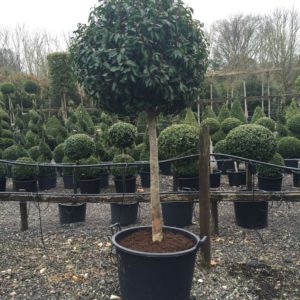
Prunus lusitanica – 1/2 & 3/4 Standards
Price range: €135.00 through €450.00 Select options This product has multiple variants. The options may be chosen on the product page -

Elaeagnus ebbengei – 1/2 Standard and 3/4 Standard Espaliers
€350.00 Select options This product has multiple variants. The options may be chosen on the product page -
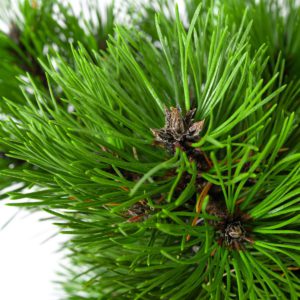
Pinus nigra Bambino / Dwarf Austrian Pine
€330.00 Select options This product has multiple variants. The options may be chosen on the product page