

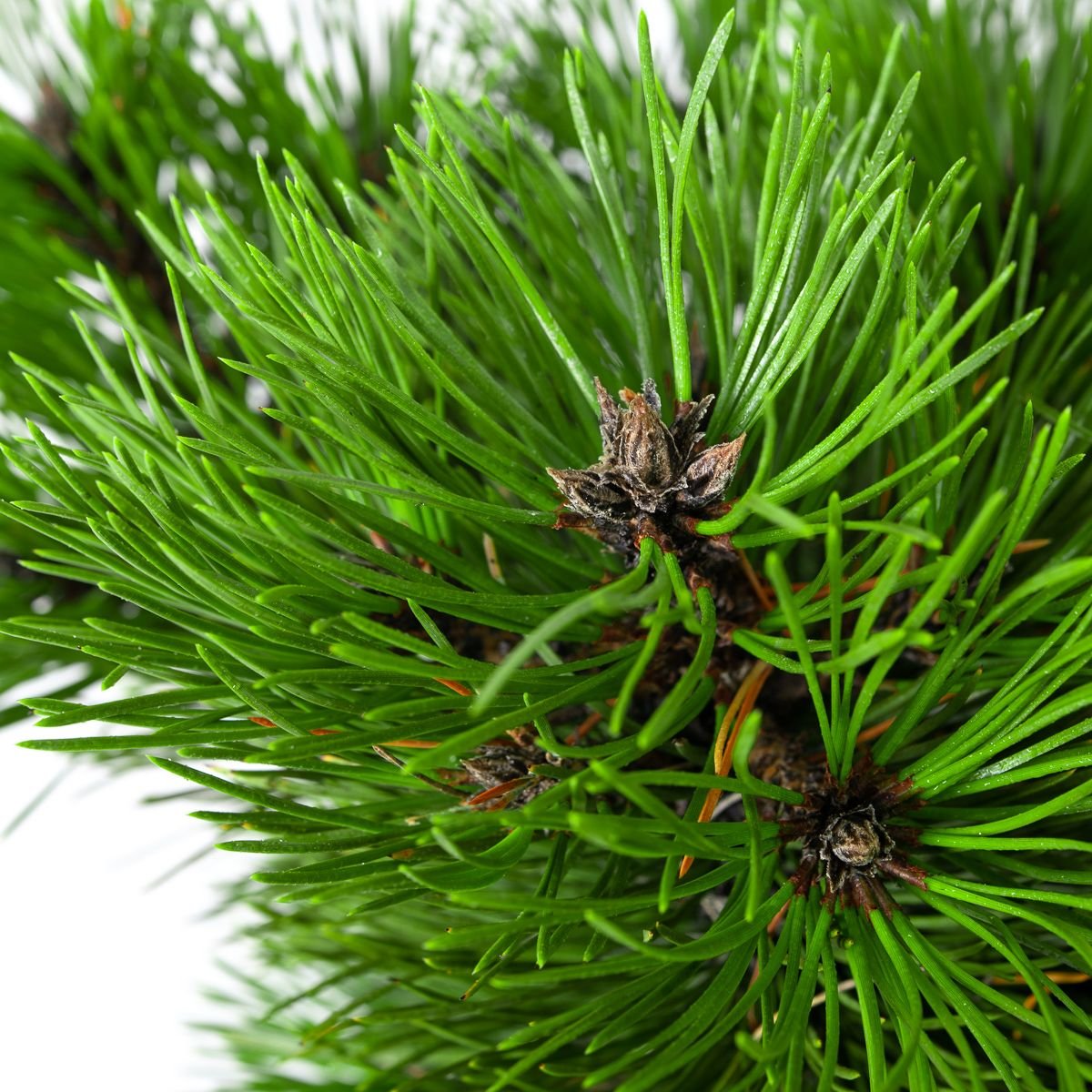
Pinus nigra Bambino / Dwarf Austrian Pine
€330.00
Description
Quick Facts
- Botanical Name: Pinus nigra ‘Bambino’
- Common Name: Dwarf Austrian Pine
- Plant Type: Evergreen conifer
- Habit: Compact, dense, naturally rounded mound
- Height (approx.): 0.6–1m (slow growing)
- Spread (approx.): 0.8–1.2m
- Foliage: Deep green needles; tidy, architectural texture year-round
- Position: Full sun (tolerates light shade)
- Soil: Free-draining; tolerant of poorer soils once established
- Hardiness: Very hardy
- Best For: Rockeries, gravel gardens, low-maintenance structure, pots, front-of-border evergreen shape
Description
If you love the bold, rugged look of a pine but don’t have space for a full-sized tree, ‘Bambino’ is the answer.
This dwarf Austrian pine forms a neat, cushiony dome of deep green needles — compact, calm, and quietly architectural. It brings that “mountain garden” feel to borders and gravel planting, and it looks especially good where you want structure all year round without anything fussy or high maintenance.
Tucked into a rockery, paired with boulders and grasses, or planted in a generous pot, ‘Bambino’ gives you evergreen presence in a perfectly scaled, garden-friendly form.
Caragh Garden Notebook
Planting & position
Give ‘Bambino’ as much sun as you can — it will stay denser and more compact in a bright, open spot. It’s ideal for exposed gardens too, as it’s naturally tough and wind-tolerant once established.
Give ‘Bambino’ as much sun as you can — it will stay denser and more compact in a bright, open spot. It’s ideal for exposed gardens too, as it’s naturally tough and wind-tolerant once established.
Soil & drainage
Like most pines, it prefers free-draining soil. It’s forgiving of poorer ground, but it won’t thank you for heavy, waterlogged winter soil. If you’re on clay, improve drainage with grit and plant slightly proud.
Like most pines, it prefers free-draining soil. It’s forgiving of poorer ground, but it won’t thank you for heavy, waterlogged winter soil. If you’re on clay, improve drainage with grit and plant slightly proud.
Watering
- Water well in the first growing season to help it settle in.
- Once established, it’s fairly drought-tolerant, though pots will need more regular watering in summer.
Feeding
A light, balanced feed in spring is plenty. Avoid overfeeding — slow and steady growth keeps the shape at its best.
A light, balanced feed in spring is plenty. Avoid overfeeding — slow and steady growth keeps the shape at its best.
Pruning & shaping
‘Bambino’ naturally holds a tidy mound, but you can refine it:
‘Bambino’ naturally holds a tidy mound, but you can refine it:
- In late spring/early summer, you can pinch back a little of the new growth (“candles”) to keep it extra compact.
- Remove any dead or damaged needles as needed.
Pests & problems
Generally trouble-free. The main risk is poor drainage in winter, which can stress the roots.
Generally trouble-free. The main risk is poor drainage in winter, which can stress the roots.
Design notes
- Gorgeous with gravel, stone, corten edging, and boulders
- Pair with lavender, thyme, sedums, ornamental grasses, or low alpines
- Brilliant as a repeating evergreen “dot” through a border for rhythm and structure
Related products
-
Prunus lusitanica – 1/2 & 3/4 Standards
Price range: €135.00 through €450.00 Select options This product has multiple variants. The options may be chosen on the product page -
Photinia Pink Marble – 1/2 Standard
€225.00 Select options This product has multiple variants. The options may be chosen on the product page -

Ligustrum delavayanum – 1/2 Standard
€235.00 Select options This product has multiple variants. The options may be chosen on the product page -
Azalea japonica Half Standard
€225.00 Select options This product has multiple variants. The options may be chosen on the product page