

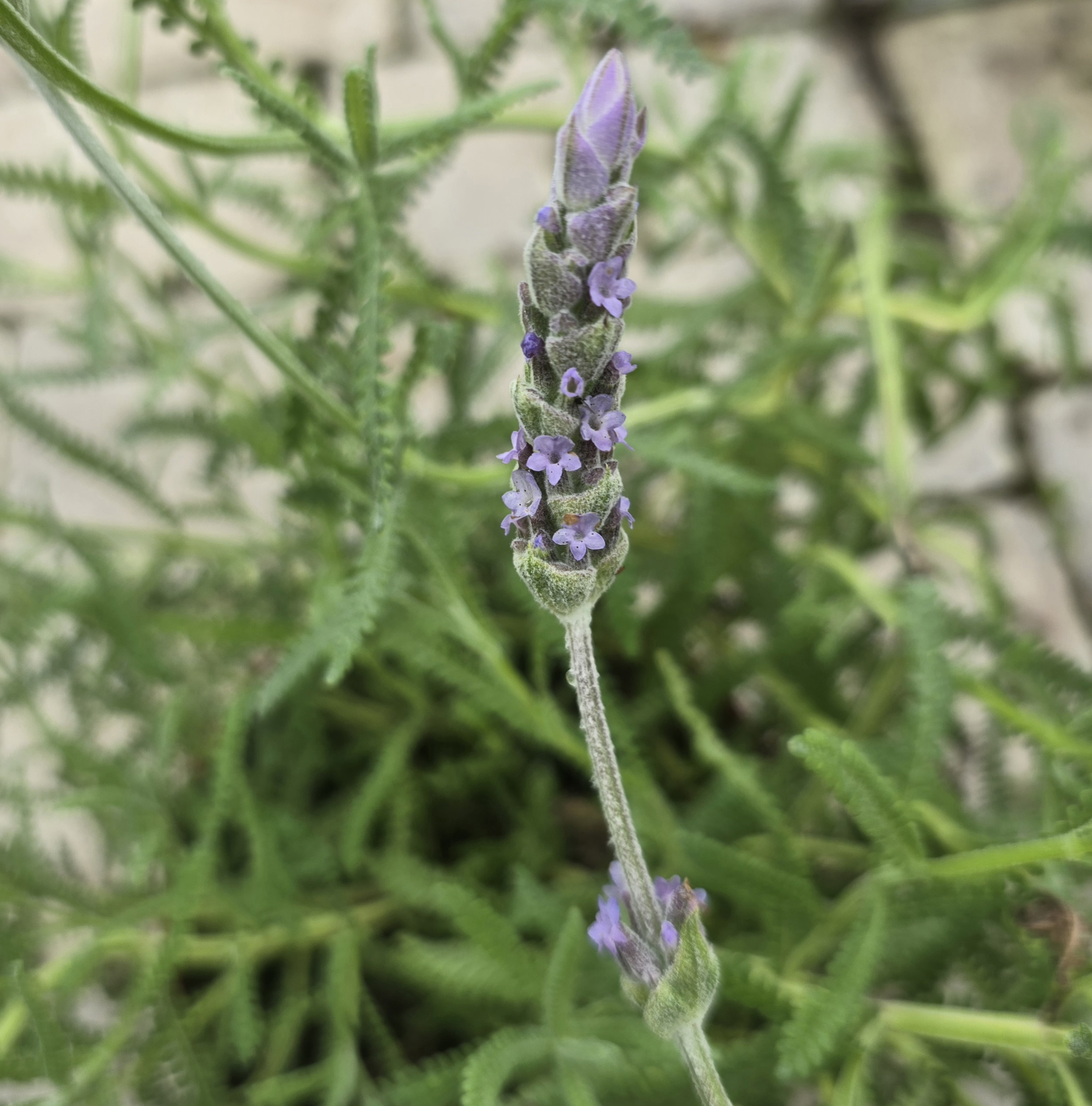
Lavandula dentata – fringed lavender
€9.50
Frequently Bought Together


Description
Quick Facts
- Botanical Name: Lavandula dentata
- Common Name: French Lavender (Fringed Lavender)
- Plant Type: Evergreen shrub (in mild areas)
- Height (approx.): 60–90cm
- Spread (approx.): 60–90cm
- Flowering: Long season, typically late spring through autumn (best in warmth)
- Flower Colour: Purple flower spikes with distinctive “butterfly” bracts
- Fragrance: Strongly aromatic foliage and flowers
- Position: Full sun
- Soil: Very free-draining; poor to moderately fertile soil is ideal
- Hardiness: Tender compared to English lavender — best in a sheltered spot; excellent in pots
- Best For: Pots, sunny courtyards, Mediterranean borders, pollinator planting, edging paths
Description
Lavandula dentata is lavender with a slightly wilder, more sun-soaked feel — all soft-grey, scalloped foliage and those elegant purple flower spikes topped with little “flags”, like tiny butterflies resting in the heat.
It’s wonderfully fragrant, brilliantly long-flowering in the right spot, and perfect for bringing that Mediterranean mood to patios, gravel gardens, and sunny borders. If you love lavender but want something a little more exotic-looking (and a little less expected), this is a gorgeous choice.
Caragh Garden Notebook
Planting & position
Full sun is essential — the more light and warmth it gets, the happier it will be. In Ireland and the UK, choose a sheltered, bright spot, especially near a wall, courtyard, or south-facing aspect.
Full sun is essential — the more light and warmth it gets, the happier it will be. In Ireland and the UK, choose a sheltered, bright spot, especially near a wall, courtyard, or south-facing aspect.
Soil & drainage (the secret to success)
This lavender must have sharp drainage.
This lavender must have sharp drainage.
- In the ground: improve heavy soil with grit and sand, and consider planting slightly proud.
- In pots: use a gritty, free-draining compost and ensure excellent drainage holes.
Watering
- Water regularly while establishing.
- Once settled, it’s drought-tolerant, but pots will need watering in warm spells.
- Avoid constant damp — lavender prefers a dry rhythm between waterings.
Feeding
Keep feeding light. Too much richness can make growth soft and floppy. A small spring feed (or a top-dress with a little compost) is plenty.
Keep feeding light. Too much richness can make growth soft and floppy. A small spring feed (or a top-dress with a little compost) is plenty.
Pruning
To keep it neat and encourage fresh growth:
To keep it neat and encourage fresh growth:
- Lightly trim after flowering flushes.
- Avoid cutting into old, woody stems too hard, as regeneration can be slow.
- In colder areas, leave heavier pruning until spring to avoid winter damage.
Winter care
This is the big difference versus Lavandula angustifolia (English lavender): dentata is more tender.
This is the big difference versus Lavandula angustifolia (English lavender): dentata is more tender.
- In colder or wetter gardens, it’s often best treated as a patio plant and moved to a protected spot in winter.
- Excellent drainage + shelter makes all the difference.
Pests & problems
Generally trouble-free. The main risk is winter wet and poor airflow. Give it space, sun, and drainage and it will reward you.
Generally trouble-free. The main risk is winter wet and poor airflow. Give it space, sun, and drainage and it will reward you.
Design notes
- Beautiful with olive trees, rosemary, salvias, euphorbia, agapanthus, and ornamental grasses
- Perfect edging for gravel paths and sunny steps
- A dream for pollinators — bees will find it fast
Related products
-
Cotoneaster ‘Cornubia’
Price range: €220.00 through €320.00 Select options This product has multiple variants. The options may be chosen on the product page -
Escallonia Pink Elle
€50.00 Select options This product has multiple variants. The options may be chosen on the product page -
Carpinus betulus / Hornbeam
Price range: €320.00 through €750.00 Select options This product has multiple variants. The options may be chosen on the product page -
Trachelospermum jasminoides / Evergreen Jasmine Espalier
€375.00 Select options This product has multiple variants. The options may be chosen on the product page