

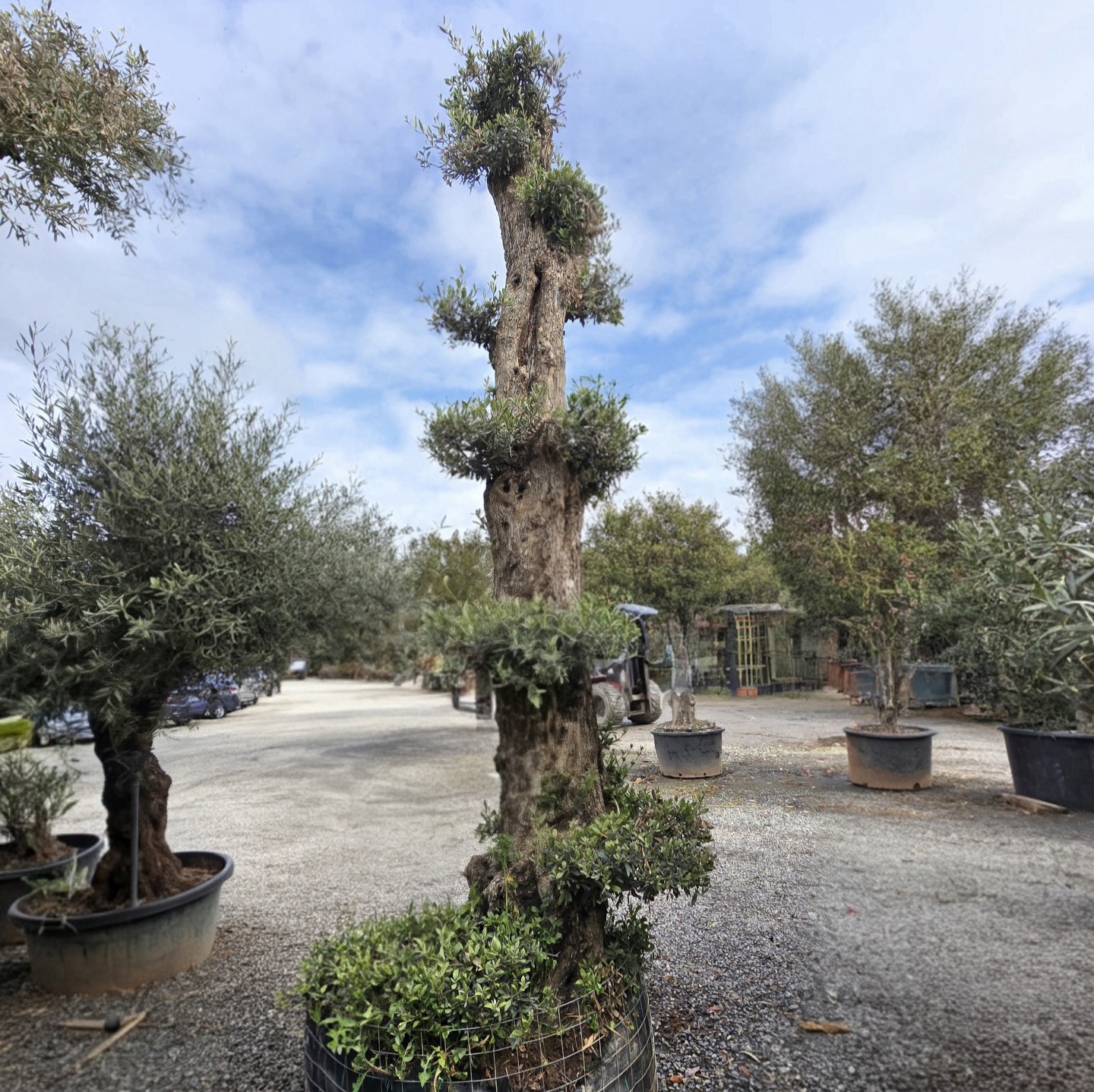
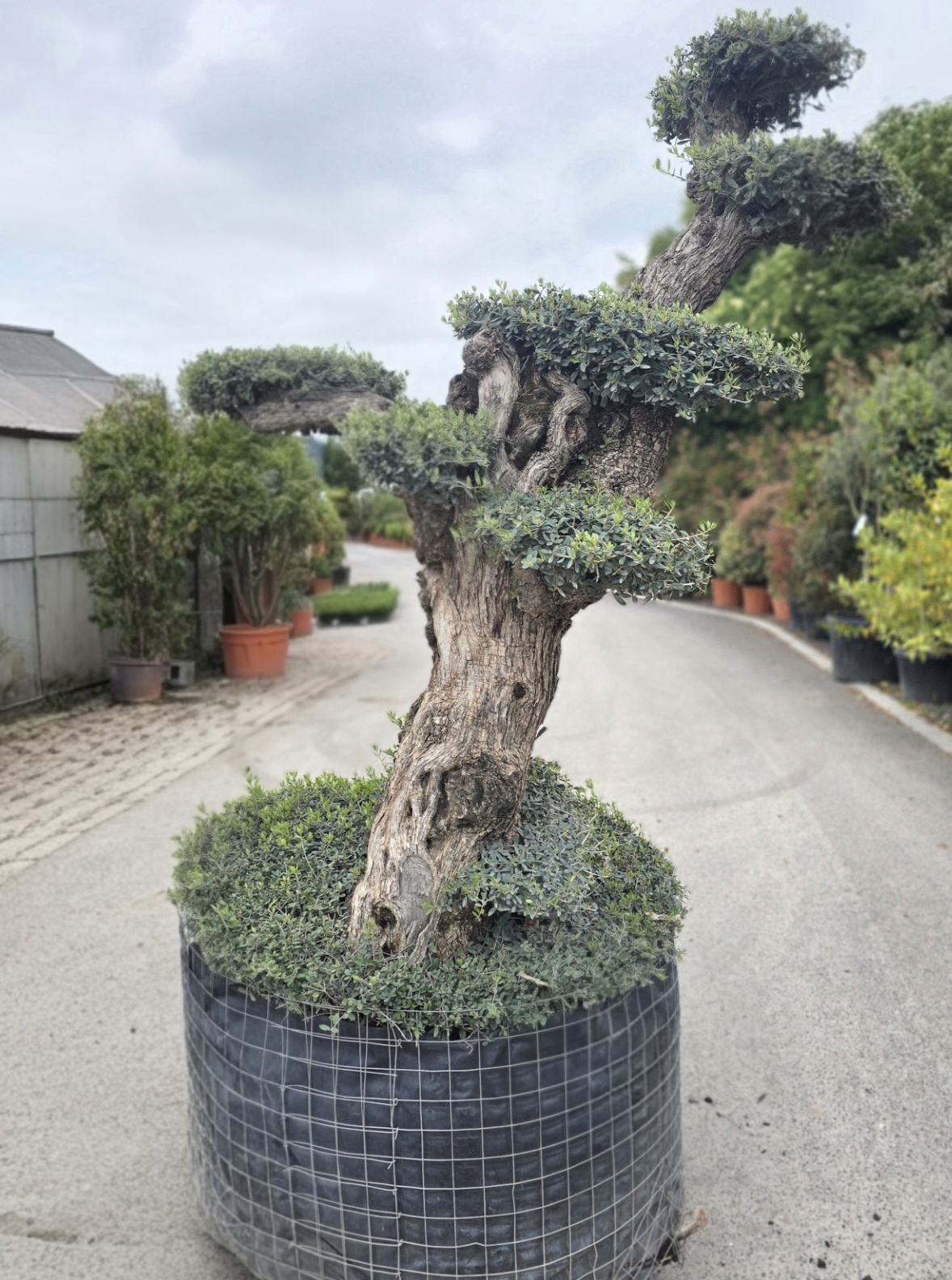
Olea europaea / Mature Gnarled Olive Tree – Bonsai Form
Price range: €1,800.00 through €2,500.00
Frequently Bought Together


Description
Quick Facts
- Botanical Name: Olea europaea
- Common Name: Olive Tree
- Form: Tall “bonsai-style” specimen (cloud-pruned / sculptural framework)
- Height (approx.): Up to 4.5m
- Foliage: Evergreen; slender, silvery-grey leaves
- Position: Full sun; sheltered is best
- Soil: Free-draining (gritty/sandy ideal); avoid waterlogging
- Hardiness: Best in mild, sheltered gardens; protect in harsh cold/wet spells
- Best For: Courtyards, entrances, terraces, Mediterranean planting, statement containers
Description
There’s something quietly cinematic about an olive tree — that silver-green shimmer, the timeworn bark, the feeling that it has already lived a life before it arrived in your garden.
In this tall bonsai form, Olea europaea becomes pure structure: a sculptural trunk with carefully placed “clouds” of foliage, lifted high like living punctuation marks against the sky. It’s dramatic without being loud — the kind of tree that makes a space feel finished, even if everything else is still a work in progress.
Placed by a front door, at the end of a path, or as a focal point in a gravel garden, it brings instant Mediterranean calm — the sense of warmth, light, and long evenings outdoors.
Caragh Garden Notebook
Choosing the right spot
Olives love sun and airflow, but in Ireland and the UK they do best where they’re also sheltered from harsh winds. A south- or west-facing position is ideal.
Olives love sun and airflow, but in Ireland and the UK they do best where they’re also sheltered from harsh winds. A south- or west-facing position is ideal.
Soil & drainage (the non-negotiable bit)
If there’s one secret to olive success here, it’s drainage.
If there’s one secret to olive success here, it’s drainage.
- Plant into free-draining soil (add grit and sharp sand if needed).
- If your ground is heavy, consider mounding the planting area or keeping your olive in a large container.
- Avoid low-lying spots where winter water sits.
Watering
- First season: Water regularly while it establishes (especially in dry spells).
- After establishment: Olives are drought-tolerant, but container specimens will still need consistent watering in summer.
- In winter, the goal is the opposite: keep roots from sitting wet.
Feeding
A light feed in spring and early summer helps keep foliage healthy and growth steady. Avoid heavy feeding late in the season, especially outdoors, as soft growth is more vulnerable in winter.
A light feed in spring and early summer helps keep foliage healthy and growth steady. Avoid heavy feeding late in the season, especially outdoors, as soft growth is more vulnerable in winter.
Pruning & maintaining the bonsai form
This style is all about keeping the silhouette crisp and the foliage pads defined.
This style is all about keeping the silhouette crisp and the foliage pads defined.
- Light clip through the growing season to keep the “clouds” neat.
- Remove any shoots from the trunk and any growth that spoils the shape.
- Step back as you prune — the magic is in the negative space as much as the foliage.
Winter care
In very cold snaps, olives can suffer from a mix of cold + wet. If it’s in a pot, it can be moved to a more protected spot. In exposed gardens, consider temporary protection during severe weather.
In very cold snaps, olives can suffer from a mix of cold + wet. If it’s in a pot, it can be moved to a more protected spot. In exposed gardens, consider temporary protection during severe weather.
Design notes (where it looks its best)
- Perfect with gravel, stone, corten steel, and big architectural pots
- Beautiful alongside lavender, rosemary, salvias, euphorbia, agapanthus
- Works brilliantly as a pair framing an entrance, gate, or view
Related products
-

Taxus baccata Semperaurea Specimen Bonsai
€3,200.00 Select options This product has multiple variants. The options may be chosen on the product page -
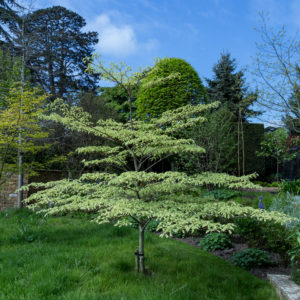
Cornus controversa Variegata / Wedding Cake Tree
Price range: €350.00 through €1,350.00 Select options This product has multiple variants. The options may be chosen on the product page -

Cedrus atlantica Glauca Pendula / Blue Weeping Cedars
€180.00 Select options This product has multiple variants. The options may be chosen on the product page -
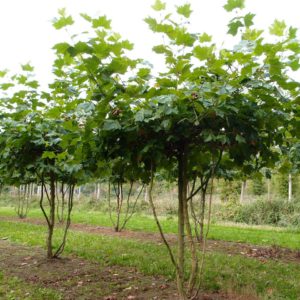
Platanus acerfolia Multistem Parachute
Price range: €270.00 through €600.00 Select options This product has multiple variants. The options may be chosen on the product page