

If you love the look of a crisp, architectural garden — but you don’t have the space (or patience) for bulky hedging — espalier trees are one of the smartest upgrades you can make.
They give you height, screening and instant structure, while staying beautifully narrow. Perfect for boundary lines, along fencing, beside patios, and especially in modern Irish gardens where every metre matters.
Here are our top-performing espalier choices at Caragh Nurseries — the varieties customers come back for again and again.
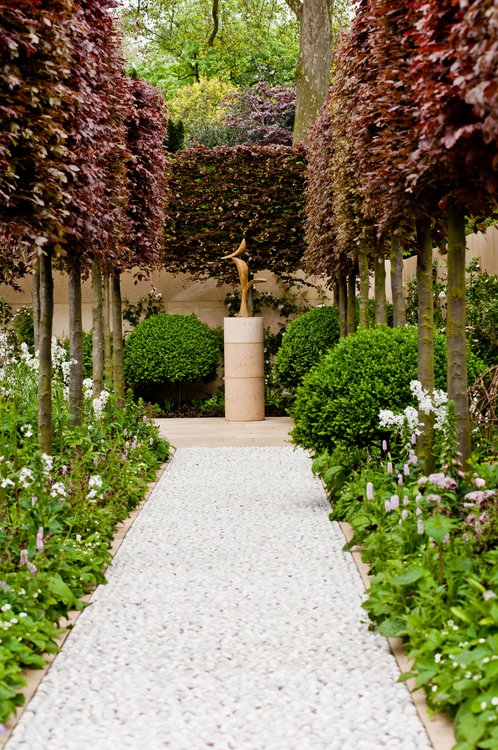
Why espaliers work so well for Irish gardens
Espaliers are trained flat on a frame (usually in tiers), so you get:
- Privacy without losing width (ideal for narrow gardens + side passages)
- Instant “finished” structure in new builds
- A designer look along boundaries and patios
- Easier maintenance than a deep hedge (less footprint, easier access)
Our best-selling espalier trees (Ireland)
1) Photinia ‘Red Robin’ Espalier
Our number one for good reason. Photinia gives you fast, colourful coverage — with that signature red flush on new growth that instantly lifts a boundary line.
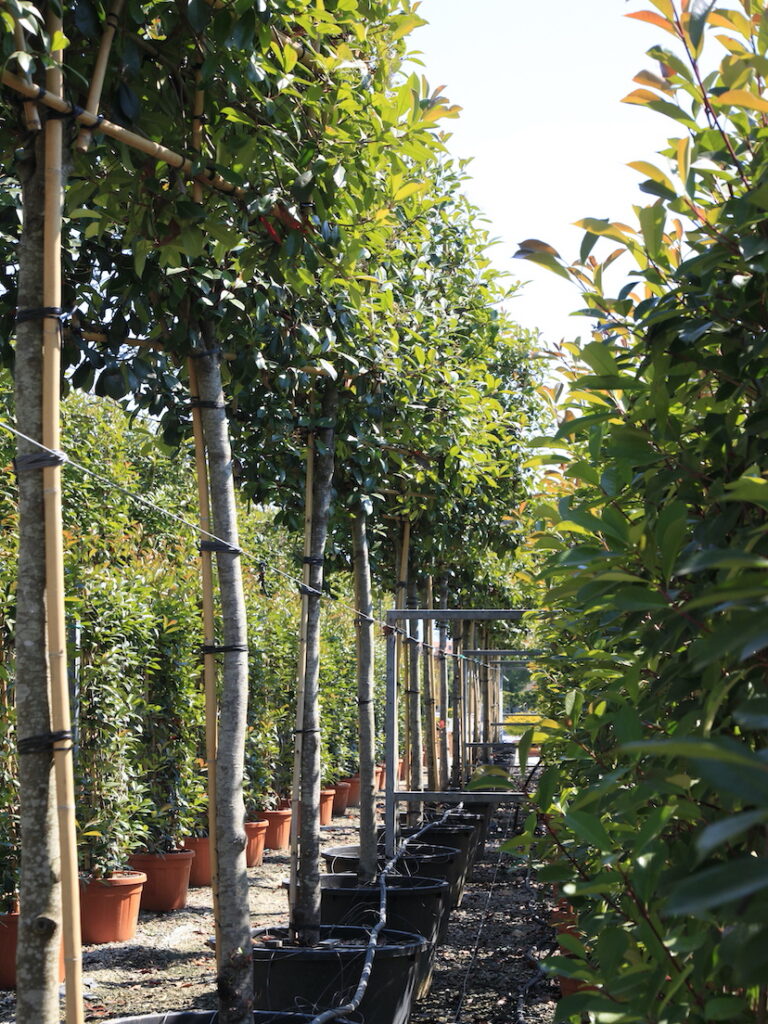
Why people love it:
- Bright red new growth (especially after clipping)
- Dense, evergreen screening
- Looks amazing in contemporary gardens
Best for: privacy, modern boundaries, adding colour + structure.
2) Jasmine Espalier
If you want something that feels a bit more romantic (and seriously good near seating areas), jasmine is a gorgeous choice trained on a frame.
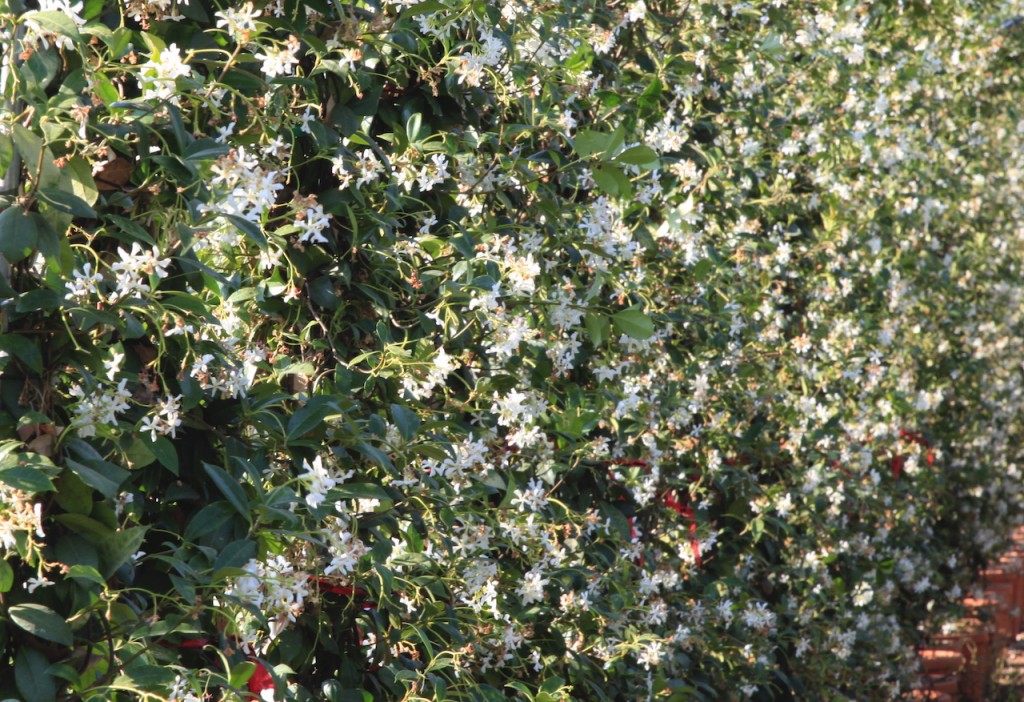
Why people love it:
- Softer, more “garden-y” feel than solid evergreens
- Brilliant near patios/pergolas where fragrance matters
- Adds vertical interest without heaviness
Best for: sheltered spots, courtyards, patio privacy with a softer look.
3) Ilex ‘Nellie R. Stevens’ Espalier
A powerhouse evergreen for people who want reliable, year-round screening with a richer, darker green finish.
Why people love it:
- Strong evergreen privacy
- Very tidy, structured look when clipped
- Great “backdrop” plant for feature borders
Best for: year-round screening, formal structure, clean evergreen lines.
4) Carpinus betulus (Hornbeam) Espalier
Hornbeam is one of the most dependable choices for Irish conditions. While it’s deciduous, it often holds onto its coppery leaves well into winter — giving you longer privacy than you’d expect.
Why people love it:
- Tough, reliable, and elegant
- Beautiful seasonal colour
- Great for a softer, natural look that still feels structured
Best for: classic Irish gardens, exposed sites, softer screening.
5) Prunus lusitanica (Portuguese Laurel) Espalier
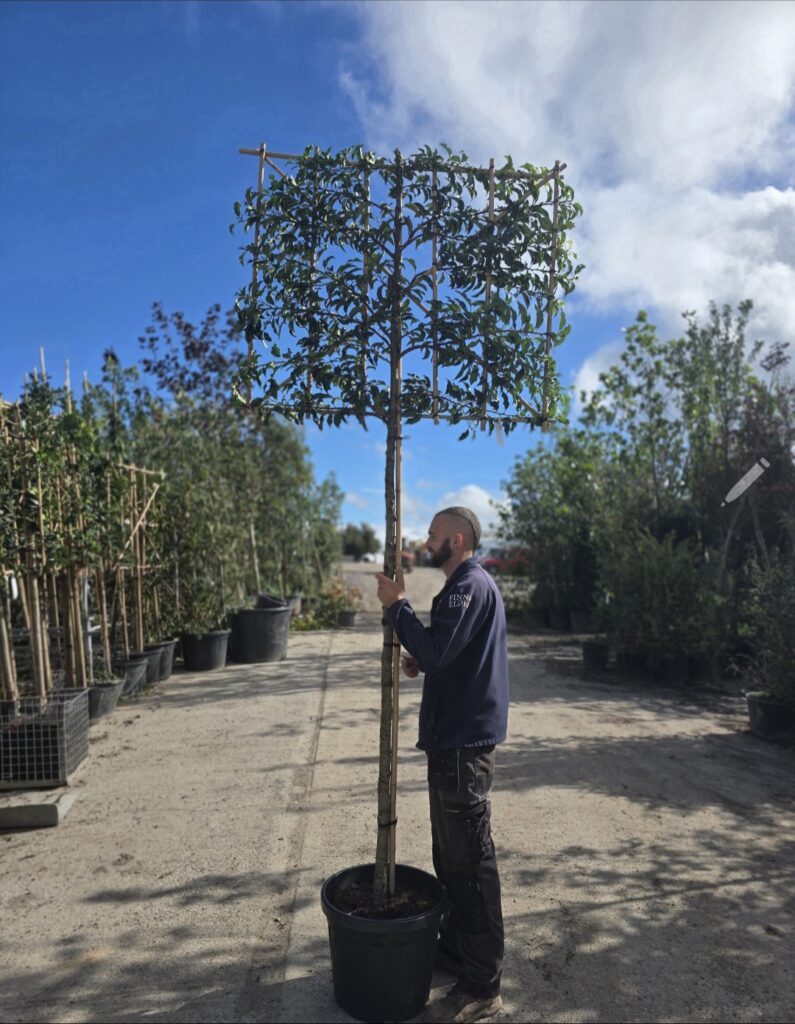
If you want a premium evergreen look, Portuguese laurel is a favourite. It’s dense, glossy and responds beautifully to shaping.
Why people love it:
- Evergreen coverage with a refined finish
- Great for clipping into a clean, architectural shape
- Looks “expensive” along boundaries
Best for: evergreen privacy, modern gardens, neat boundary structure.
6) Prunus ‘Novita’ Espalier
A brilliant, vigorous laurel option when you want quick coverage and strong performance.
Why people love it:
- Fast to fill out
- Dense evergreen screening
- Excellent value for impact
Best for: quick privacy, boundary planting, strong evergreen screening.
7) Elaeagnus ebbingei Espalier
Elaeagnus is an absolute workhorse — and one of the best choices when you want something tough, evergreen, and coastal-friendly (depending on site).
Why people love it:
- Very hardy and resilient
- Silvery-green foliage that brightens a boundary
- Great in challenging conditions
Best for: exposed gardens, coastal areas, low-fuss evergreen screening.
7) Magnolia grandiflora Espalier (Evergreen flowering)
If you want privacy and wow-factor, Magnolia grandiflora brings glossy evergreen leaves and beautiful creamy blooms in season.
Best for: feature screening, stylish gardens, a more luxurious evergreen look.
8) Magnolia soulangeana Espalier (Deciduous flowering)
A spring showstopper. This one is all about big, beautiful blooms and a softer, more romantic feel — but it is deciduous, so it’s not your strongest winter screen.
Best for: spring impact, feature areas, softer structure.
9) Carpinus betulus (Hornbeam) Espalier — Instant Mature Option
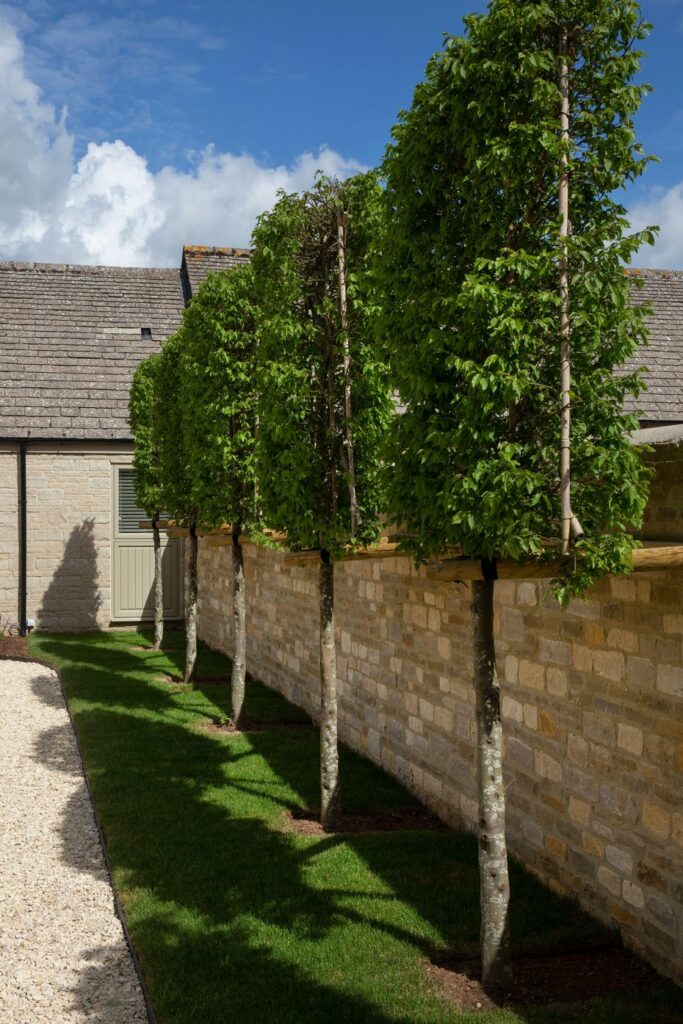
Hornbeam is a classic for Irish gardens and looks stunning trained on a frame. And if you want that “finished garden” look immediately, your most mature sizing is the one to lead with.
Shop the mature Carpinus betulus espalier here:
https://caraghnurseries.ie/product/carpinus-betulus-mature-espalier/
https://caraghnurseries.ie/product/carpinus-betulus-mature-espalier/
Best for: instant structure, elegant screening, classic Irish garden style.
10) Fruit Espaliers (Malus, Ficus, Prunus & Pyrus)
If you love the idea of a productive garden without needing an orchard, fruit espaliers are the dream: neat, space-saving, and genuinely beautiful through blossom and fruiting seasons.
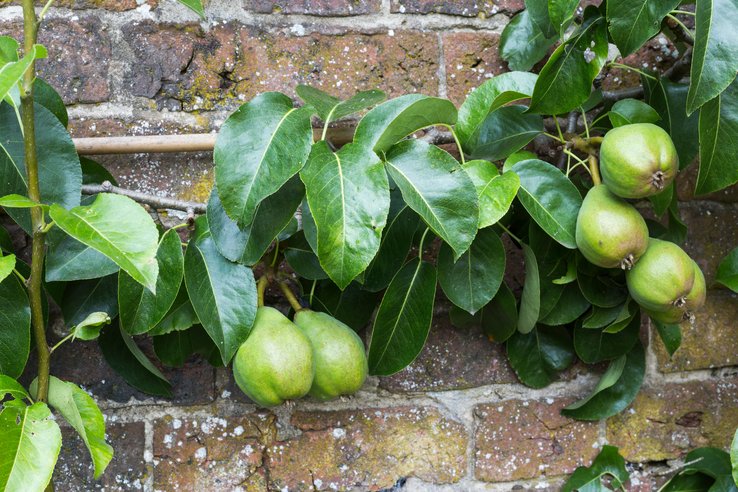
Browse Fruit Espaliers here:
https://caraghnurseries.ie/product-category/all-trees-and-plants/espaliered-and-pleached-trees/fruit-espaliered/
https://caraghnurseries.ie/product-category/all-trees-and-plants/espaliered-and-pleached-trees/fruit-espaliered/
Best for: sunny walls, kitchen gardens, family gardens, edible landscaping.
Quick pick guide
For the strongest evergreen privacy:
Photinia ‘Red Robin’, Ilex ‘Nellie R. Stevens’, Portuguese Laurel, Prunus ‘Novita’, Elaeagnus
Photinia ‘Red Robin’, Ilex ‘Nellie R. Stevens’, Portuguese Laurel, Prunus ‘Novita’, Elaeagnus
For flowering + feature impact:
Magnolia grandiflora (evergreen), Magnolia soulangeana (deciduous)
Magnolia grandiflora (evergreen), Magnolia soulangeana (deciduous)
For instant “mature garden” structure:
Carpinus betulus (mature espalier)
Carpinus betulus (mature espalier)
For edible + beautiful:
Fruit espaliers (Malus, Ficus, Prunus, Pyrus)
Fruit espaliers (Malus, Ficus, Prunus, Pyrus)
Planting & spacing (so it looks right from day one)
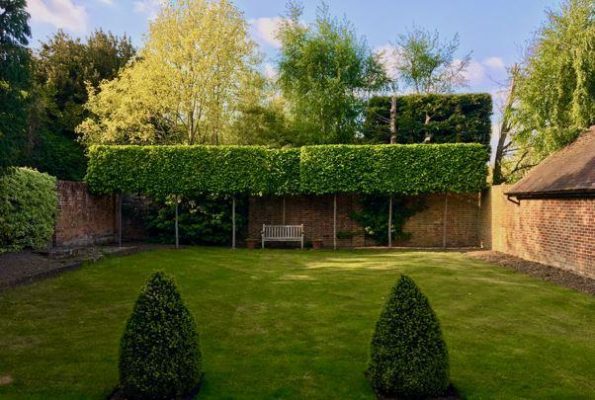
A quick rule: espaliers are narrow, but they still need good planning.
- Measure the frame width and plan your spacing accordingly
- Allow room at the base for planting and maintenance
- For boundaries, make sure your supports/wires are solid from the start (it’s what gives that “instant finished” look)
If you tell me the typical frame sizes you sell (e.g., 120cm / 150cm / 180cm wide), I’ll add exact spacing guidance to match your product range.
Browse our Espalier & Pleached Trees
If you’re not sure which one suits your garden, start here and choose by the look you love — evergreen, colourful, formal, or softer and flowering.
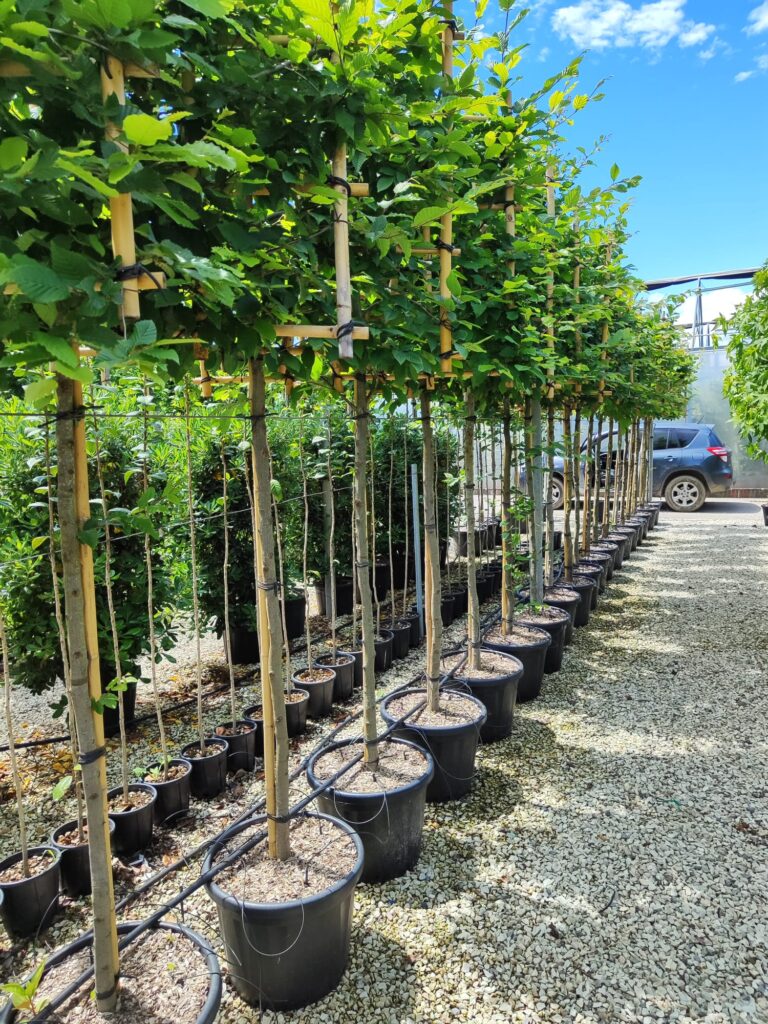
Why I Chose Hornbeam Espaliers for Privacy (and I’d do it again)
Jo’s Garden: Why I Chose Hornbeam Espaliers (and why I love them for privacy)
I’m often asked why I chose a deciduous espalier for privacy — and honestly, hornbeam has been one of my favourite decisions in my own garden.
I’m often asked why I chose a deciduous espalier for privacy — and honestly, hornbeam has been one of my favourite decisions in my own garden.
What I wanted was privacy without heaviness. I didn’t want a bulky hedge pushing into the garden, and I didn’t want something that felt harsh or blocky. The hornbeam espaliers give me that perfect balance: clean lines, structure and elegance, with a softer, more natural feel than a solid evergreen wall.
In spring and summer, they create a beautiful green screen that feels calm and refined. And as the seasons change, the leaves turn that gorgeous golden-copper tone. Even though hornbeam is deciduous, it often holds onto its leaves well into winter, so you still get a surprising amount of coverage when you need it most.
The other thing I love is how “finished” they make the garden feel. Espaliers bring instant architecture — like living garden design — and they’re brilliant if you want boundaries to look intentional, not just practical.
If you’re choosing espaliers mainly for privacy in Ireland, evergreens like Photinia, Ilex and laurels are fantastic. But if you’re drawn to something a little more timeless (and you love that seasonal beauty), I genuinely think hornbeam (or beech) is hard to beat.
If you want instant impact, this is our most mature hornbeam espalier option:
If you ever want to pop a photo into our team, I’m always happy to help you choose the right size and spacing for your own boundary.
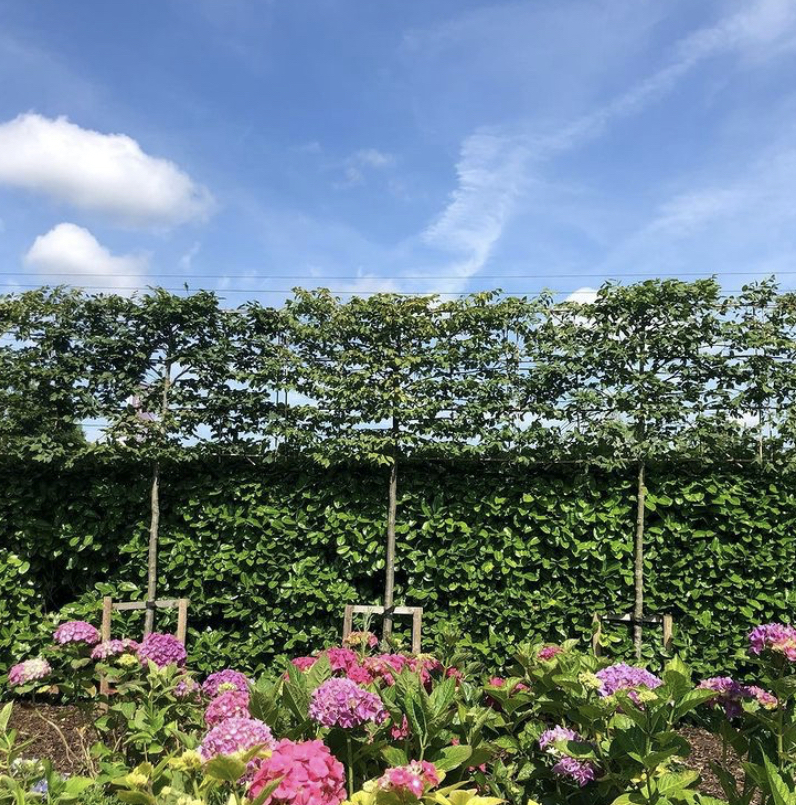
Proof you can have privacy and elegance — even with a deciduous option. My own Garden – Jo
FAQ’s
What’s the difference between an espalier and a pleached tree?
Honestly there is a difference to what we call espaliers and the horticultural term, we use the term espalier as its what would be know better here in Ireland but here is the actual guide to what is pleached and what is espalier.
An espalier is trained flat in horizontal tiers (usually on a frame or wires), keeping the tree narrow and architectural.
A pleached tree has a clear stem with a “panel” of foliage trained at the top—like a living screen on stilts.
Rule of thumb: choose espalier for walls/fences and narrow spaces; choose pleached for instant above-eye-level screening along boundaries and patios.
A pleached tree has a clear stem with a “panel” of foliage trained at the top—like a living screen on stilts.
Rule of thumb: choose espalier for walls/fences and narrow spaces; choose pleached for instant above-eye-level screening along boundaries and patios.
Are espalier trees good for privacy in Ireland?
Yes—especially evergreen espaliers if you want year-round screening. For Irish gardens, popular privacy choices include Photinia ‘Red Robin’, Ilex ‘Nellie R. Stevens’, Portuguese Laurel (Prunus lusitanica), Prunus ‘Novita’, and Elaeagnus ebbingei.
Deciduous options (like Hornbeam & Beech ) can still give strong structure and often hold some leaves into winter, but they won’t be as solid as evergreens in the coldest months.
Deciduous options (like Hornbeam & Beech ) can still give strong structure and often hold some leaves into winter, but they won’t be as solid as evergreens in the coldest months.
How far apart should you plant espalier trees?
Spacing depends on the frame width and the look you want (a linked screen vs individual features). As a practical guide:
- For a continuous screen, plant roughly frame-width apart (so the panels visually “join”).
- For a more sculptural look, leave a little breathing room between frames.
If you share your most common frame sizes (e.g., 120cm / 150cm / 180cm), I’ll add a simple spacing table that matches your stock.
Do espalier trees need a wall or fence?
No—but they do need support. You can train them on:
- a wall with vine eyes + wire runs,
- a fence with strong posts/wires, or
- Stakes and straps creating a free-standing frame.
The key is making the support sturdy from day one so the tree stays perfectly flat and “finished” and also pleasing to the eye.
What supports do espalier trees need?
Most espaliers are trained on horizontal wires or a rigid frame. For best results:
- Use strong posts (especially along boundaries)
- Keep wires taut and evenly spaced
- Tie in growth gently as it develops (soft ties, not wire against bark)
Which espalier is best for fast privacy?
For quicker evergreen coverage, customers typically choose Photinia ‘Red Robin’, Prunus ‘Novita’, or Portuguese Laurel. If you want a darker, more formal finish, Ilex ‘Nellie R. Stevens’ is a great option.
Are flowering espaliers good for screening?
They can be, but it depends. Magnolia grandiflora is evergreen, so it can contribute to privacy while also flowering. Magnolia soulangeana is deciduous—stunning in spring, but not a strong winter screen. Both of these options are more ornamental so not the ideal for screening but ever so beautiful, so it really is 50-50 on these but I’m going to go with they’re not the best choice and if it was me, I’d add these options as trees rather than using an espaliered/pleached frame but space may dictate otherwise.
Can you grow fruit trees as espaliers in Ireland?
Yes—fruit espaliers are a brilliant way to grow apples (Malus), pears (Pyrus), figs (Ficus) and other fruit in a tidy, space-saving form. They’re ideal against a sunny wall or in a kitchen garden where you want beauty and productivity. Take a look at the candelabra options too as these are beautiful against a wall or fence.