

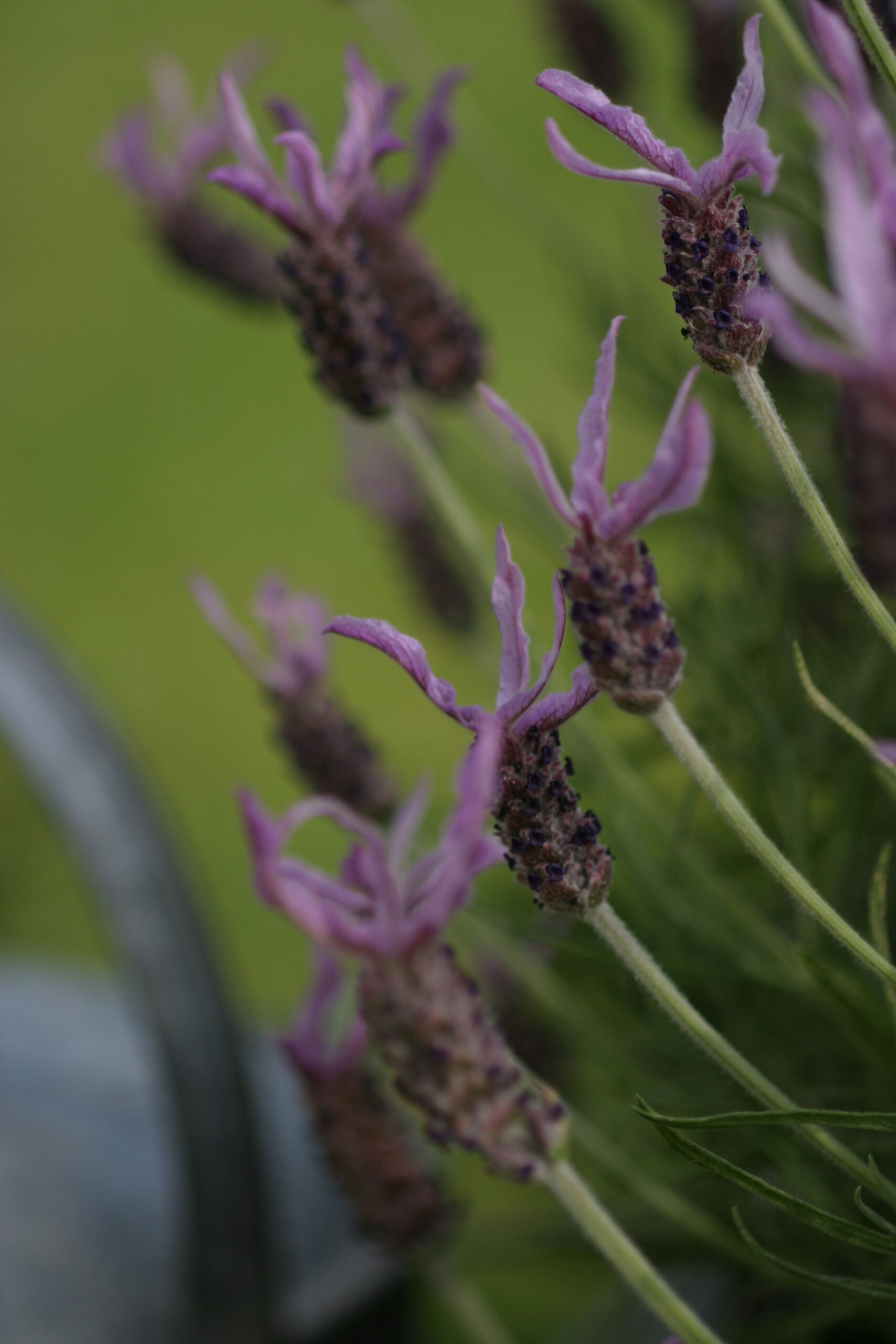
Lavander stoechas pedunculata
€20.00
Frequently Bought Together
Description
Quick Facts
- Common Name: Pedunculata French Lavender, Long-Stemmed Lavender
- Botanical Name: Lavandula × intermedia ‘Pedunculata’
- Plant Type: Evergreen perennial herb
- Mature Height: 60-80cm
- Mature Spread: 60-80cm
- Flowering Period: July to September
- Flower Colour: Rich violet-blue to purple-blue
- Foliage: Silvery-grey aromatic evergreen leaves
- Hardiness: RHS H4 (hardy in most of UK and Ireland)
- Soil Requirements: Well-drained, poor to moderately fertile soil
- Aspect: Full sun
- Maintenance: Low
Description
Experience the breathtaking beauty of Lavandula × intermedia ‘Pedunculata’, one of the most spectacular and fragrant lavenders for gardens, where abundant rich violet-blue flowers on exceptionally long stems, intensely aromatic silvery-grey foliage, and vigorous robust habit combine to create stunning displays of continuous colour and intoxicating fragrance that bring months of summer blooms and year-round evergreen structure with remarkable resilience making this perfect for adding Mediterranean elegance and sensory delight to sunny borders, gravel gardens, and herb gardens. This exceptional hybrid cultivar offers remarkable qualities—spectacular abundant rich violet-blue to purple-blue flowers produced on exceptionally long flower stems (peduncles) reaching 50-70cm creating dramatic vertical displays perfect for cutting, intensely fragrant flowers and foliage releasing classic lavender perfume that fills gardens with Mediterranean scent attracting bees and butterflies, vigorous robust growth habit forming substantial rounded mounds reaching 60-80cm tall making it one of the largest and most productive lavenders, silvery-grey aromatic evergreen foliage creating year-round structure and soft textural contrast, and outstanding drought tolerance and heat resistance thriving in hot sunny positions once established with minimal water requirements, making this one of the most rewarding and versatile choices for adding summer-long flowering colour, intoxicating fragrance, and Mediterranean character to sunny gardens and cutting gardens.
Throughout the seasons, this captivating perennial herb displays its most spectacular features in summer—the flowering begins in July and continues through September, providing 3 months of continuous colour and fragrance. The flowers are produced on exceptionally long unbranched flower stems (peduncles)—this is the cultivar’s defining characteristic and the source of its name ‘Pedunculata’ (meaning “with long flower stalks”). The flower stems rise 50-70cm above the foliage creating dramatic vertical displays significantly taller than most lavenders. Each flower stem is topped with a dense cylindrical flower spike measuring 5-8cm long. The flower spikes are composed of numerous tiny individual flowers arranged in whorls around the stem. The flower colour is rich violet-blue to purple-blue creating vibrant Mediterranean displays. The flowers open progressively from bottom to top of each spike, extending the flowering period. The fragrance is intensely aromatic with the classic sweet lavender perfume—one of the most fragrant lavenders available. The long stems make this exceptional for cutting and drying—stems can be harvested when half the flowers are open and hung upside down in bunches to dry, retaining colour and fragrance for months. The flowers are rich in nectar attracting bees, butterflies, and other pollinators creating valuable wildlife habitat. The foliage is equally attractive year-round—narrow linear leaves measuring 3-5cm long and 2-4mm wide with entire (smooth) edges creating refined appearance. The leaves are silvery-grey to grey-green with fine downy covering creating soft felted texture. The foliage is intensely aromatic when touched or brushed releasing lavender fragrance. The leaves are arranged in opposite pairs along square stems (characteristic of the mint family). The foliage remains evergreen year-round providing constant structure—in winter, the silvery-grey foliage remains attractive providing reliable presence. The growth habit is vigorous, upright, and rounded—multiple stems arise from woody base creating substantial bushy mounds. Mature plants typically reach 60-80cm tall and equally wide (excluding flower stems which add additional 30-40cm height when in bloom), forming one of the largest and most substantial lavenders. The overall effect is dramatic, aromatic, and abundantly productive—like having violet-blue fountains on long graceful stems creating months of colour and fragrance with Mediterranean elegance.
Lavandula × intermedia (lavandin) is a natural hybrid between Lavandula angustifolia (English lavender) and Lavandula latifolia (spike lavender), combining the best qualities of both parents—the fragrance and hardiness of English lavender with the vigour and productivity of spike lavender. The genus name Lavandula comes from the Latin ‘lavare’ (to wash), as lavender was used in Roman baths. The cultivar name ‘Pedunculata’ refers to the exceptionally long flower stems (peduncles) that distinguish this variety. This cultivar was specifically selected for its exceptional long flower stems perfect for cutting and drying, rich violet-blue flower colour, intense fragrance, vigorous productive habit, and excellent garden performance. Hardy to RHS H4, this robust lavender thrives in most of UK and Ireland with good reliability, particularly excelling in warm sunny positions and well-drained soils, tolerating temperatures to -10°C. In colder areas or exposed positions, provide sheltered location or winter protection. Fast growth rate, adding 20-30cm annually, forming substantial flowering specimens within 2-3 years. Particularly valuable for exceptionally long flower stems perfect for cutting and drying, abundant rich violet-blue flowers providing 3 months of continuous colour, intense classic lavender fragrance filling gardens with Mediterranean scent, vigorous robust habit forming substantial productive plants, and outstanding drought tolerance and heat resistance thriving in hot sunny positions. The long stems and productivity make this outstanding for cutting gardens and commercial lavender production.
Create stunning compositions by planting in generous groups or drifts in sunny borders where the violet-blue flowers and silvery foliage create Mediterranean displays and fragrant focal points, using in gravel gardens and Mediterranean-style plantings where the drought tolerance and heat resistance excel, or positioning in herb gardens and kitchen gardens where the culinary and aromatic qualities can be enjoyed. Exceptional as low informal hedging (plant 50-60cm apart) flanking pathways where brushing past releases fragrance, in cutting gardens where the long stems provide abundant material for fresh and dried arrangements, or in containers and pots where the compact habit and fragrance create sensory patio displays. Works beautifully combined with other Mediterranean plants (rosemary, sage, thyme, santolina) for authentic herb garden character, combined with complementary colours—yellow flowers (Achillea, Helianthus, Coreopsis) for vibrant warm combinations, pink flowers (roses, Echinacea, Sedum) for harmonious schemes, or white flowers (Gaura, white Echinacea, Gypsophila) for fresh elegant contrasts. Also magnificent combined with ornamental grasses (Stipa, Pennisetum, Festuca glauca) for textural contrast and movement, silver foliage plants (Artemisia, Stachys, Ballota) for harmonious grey-leaved schemes, or other lavenders (different colours and flowering times) for extended lavender collections. Perfect for adding summer-long flowering colour, intoxicating fragrance, and Mediterranean character to sunny borders, gravel gardens, and cutting gardens. Excellent for attracting pollinators and providing abundant cut flowers.
Caragh Garden Notebook
Planting: Space plants 50-60cm apart for informal hedging or merged displays, or 70-80cm apart for individual specimens. Plant container-grown specimens in spring (March-May) or early autumn (September) for best establishment—avoid late autumn planting in colder areas. Choose position in full sun—lavender absolutely requires maximum sunlight for best flowering, fragrance, and compact growth. Thrives in warm sunny positions including south-facing borders, gravel gardens, and Mediterranean-style plantings. Dig generous planting hole twice width of root ball and same depth. CRITICAL: Lavender requires excellent drainage—if your soil is heavy clay or poorly drained, either create raised beds, add generous amounts of grit/gravel to improve drainage, or grow in containers. Incorporate grit or horticultural sand into backfill soil to improve drainage. Plant at same depth as in container or slightly higher (2-3cm above soil level) ensuring crown is not buried. Backfill with gritty well-drained soil, firming gently. Water thoroughly after planting. DO NOT mulch around lavender—bare soil or gravel mulch only (organic mulch retains moisture causing root rot). Water regularly during first growing season until established, then minimal watering required. Position where the long flower stems and fragrance can be appreciated.
Soil Preparation: Prefers well-drained, poor to moderately fertile soil for best growth and flowering. Prefers neutral to alkaline pH (6.5-8.0)—thrives in chalky and limestone soils. CRITICAL: Excellent drainage is absolutely essential—lavender will not tolerate waterlogged or poorly drained soils which cause root rot and death. Heavy clay soils are unsuitable unless significantly improved. Improve heavy soils by incorporating generous amounts (30-50% by volume) of horticultural grit, sharp sand, or gravel to improve drainage. Lavender actually prefers poor to moderately fertile soils—avoid rich fertile soils and do NOT add organic matter (compost, manure) which retains moisture and encourages soft growth susceptible to winter damage. Lavender thrives in lean, gritty, well-drained soils similar to its native Mediterranean habitats. If drainage is questionable, create raised beds or grow in containers. Apply gravel mulch around base if desired—avoid organic mulches. Best growth and flowering occur in full sun with well-drained, poor to moderately fertile, neutral to alkaline soil—these conditions produce the most compact growth, most abundant flowering, and strongest fragrance.
Container Growing: Excellent for container growing! Use terracotta or clay pots (minimum 30-40cm diameter) which allow soil to breathe and dry out, soil-based compost (John Innes No. 2) mixed with 30-50% horticultural grit for excellent drainage, and ensure generous drainage holes. Position in full sun—maximum sunlight essential. Water sparingly allowing compost to dry out between waterings—overwatering is the most common cause of lavender failure. Feed sparingly in spring with slow-release balanced fertiliser—avoid overfeeding. Trim after flowering. Repot every 2-3 years in spring using fresh gritty compost. Perfect for creating fragrant Mediterranean patio displays!
Seasonal Care: Trim after flowering (August-September) to remove spent flower stems and maintain compact shape—cut back flower stems to just above foliage, then lightly trim foliage by 2-3cm creating neat rounded mounds. Use sharp shears for clean cuts. This post-flowering trim is essential for maintaining compact growth and preventing plants becoming woody and leggy. In spring (April), can lightly trim again to remove any winter-damaged growth and tidy shape—trim lightly into green growth, never cut back into old brown woody stems as lavender does not regenerate from old wood. Apply slow-release balanced fertiliser sparingly in spring if desired—lavender requires minimal feeding. DO NOT feed in autumn or winter. Water sparingly once established—lavender is extremely drought tolerant and prefers dry conditions. Overwatering causes root rot. Generally pest and disease free with excellent vigour provided cultural requirements (full sun, excellent drainage) are met. Watch for root rot in poorly drained soils (improve drainage immediately). Occasionally rosemary beetle may feed on foliage (remove by hand). The spectacular long-stemmed violet-blue flowers and intense fragrance are reliably stunning!
Propagation: Can be propagated from semi-ripe cuttings taken in summer (July-August)—take 8-10cm cuttings from current season’s non-flowering shoots, remove lower leaves, dip in rooting hormone, and insert into very free-draining compost (50% compost, 50% grit). Maintain warm conditions with good air circulation. Rooting takes 4-6 weeks and success rate is good. Home gardeners can successfully propagate lavender—it’s one of the easiest herbs to propagate from cuttings!
This spectacular beauty is absolutely breathtaking—one of the finest lavenders for cutting gardens! Those abundant rich violet-blue to purple-blue flowers on exceptionally long stems 50-70cm tall are absolutely stunning—dramatic vertical displays perfect for cutting and drying! Flowering period July through September—3 months of continuous colour and fragrance! Intensely fragrant flowers and foliage with classic lavender perfume—intoxicating scent! Vigorous robust habit 60-80cm tall and wide—one of the largest and most productive lavenders! Silvery-grey aromatic evergreen foliage creating year-round structure. Outstanding drought tolerance and heat resistance—thrives in hot sunny positions! Hardy (RHS H4)—reliable in most of UK and Ireland; shelter in cold areas. Fast growth (20-30cm annually). CRITICAL: Requires FULL SUN and EXCELLENT DRAINAGE—will not tolerate shade or waterlogged soil! Trim after flowering (August-September) and lightly in spring. Water sparingly—drought tolerant once established. DO NOT mulch with organic matter—use gravel or bare soil only! Perfect for sunny borders, gravel gardens, cutting gardens, herb gardens, Mediterranean plantings, and anywhere you want summer-long colour with intoxicating fragrance and long stems for cutting. Pure Mediterranean magnificence and violet fountains!
Related products
-

Tilia cordata ‘Erecta’
Read more -
Clematis ‘bagatelle’
€25.00 Select options This product has multiple variants. The options may be chosen on the product page -
Maackia amurensis Multistem Specimen
€625.00 Select options This product has multiple variants. The options may be chosen on the product page -
Physocarpus Midnight
€8.50 Select options This product has multiple variants. The options may be chosen on the product page