

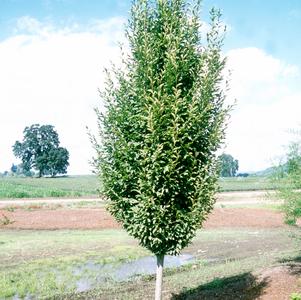
Carpinus betulus ‘Pyramidalis’
Price range: €280.00 through €300.00
Frequently Bought Together

Description
Quick Facts
– Botanical Name: Carpinus betulus ‘Pyramidalis’
– Common Name: Pyramidal Hornbeam
– Plant Type: Deciduous tree
– Mature Height: 8–12m
– Mature Spread: 4–6m
– Growth Rate: Moderate
– Foliage: Mid-green, ribbed, prominently veined leaves; turns coppery-gold in autumn, with dead leaves often retained through winter on young trees
– Habit: Naturally pyramidal — grown specifically in a neat pyramid shape
– Aspect: Full sun to partial shade
– Soil: Tolerant of most soils, including chalk and clay; happy in dry and wetter conditions once established
– Hardiness: Very hardy in Ireland & the UK
– Maintenance: Low
Description
Some gardens ask for softness and flow; others ask for structure — and Carpinus betulus ‘Pyramidalis’ is the tree for the gardener who prefers a little more order in their planting. Similar in character to the well-known Fastigiata, but grown specifically in a neat, formal pyramid shape, it forms a compact, columnar-to-pyramidal outline that brings genuine architectural structure to a garden without ever becoming heavy or demanding.
The hornbeam’s handsome mid-green foliage — cleanly ribbed and prominently veined — holds through summer before turning a pleasing coppery gold in autumn; on young trees, the dead leaves are often retained through winter, adding a further note of structure to the colder months. It is a formal, dependable, and wonderfully versatile tree: suitable for a structured garden, a formal avenue or boundary, or simply planted where an upright, pyramidal presence is wanted without the width of many other trees.
Structure, order, and quiet dignity — for the garden that values a clear line.
Caragh Garden Notebook
Planting:
Plant in autumn or early spring into well-prepared soil. ‘Pyramidalis’ is one of the most accommodating trees available — it is tolerant of most soil types, including chalk and clay, and of both drier and wetter conditions once established, which makes it genuinely reliable across a wide range of Irish and UK gardens. A position in full sun to partial shade suits it well. Choose the position with the mature form in mind — the neat, narrow pyramid makes it ideal for a formal garden, a boundary line, or a spot where a compact upright tree is wanted. Water in thoroughly after planting and stake young trees firmly for the first two to three years.
Watering:
Water consistently through the first two growing seasons while the root system establishes. Once settled, ‘Pyramidalis’ is impressively tolerant, managing well on natural rainfall in an Irish or UK garden and coping with both drier periods and reasonably wet conditions. During prolonged dry spells in the first summers, a weekly watering will support establishment and healthy growth.
Feeding:
A balanced fertiliser applied in early spring supports strong growth in the early years. Once established, an annual mulch of well-rotted compost or leafmould around the base in late winter or early spring feeds gently, retains moisture, and improves the soil over time. The tree is not demanding and performs well with minimal intervention.
Pruning:
‘Pyramidalis’ requires very little pruning — its naturally pyramidal form is the whole point of the tree, and it develops without intervention. If any shaping is desired, a light trim in late summer or early autumn will tidy the outline, but it should be modest and sympathetic to the natural form. Remove only dead, diseased, or crossing branches, and any lower growth that obstructs access or sight lines. The pyramid habit is self-forming — trust it.
Pests & Problems:
Generally very trouble-free. Carpinus is largely free of serious pests and diseases, which is another reason it is so dependable for formal planting. Mildew can occasionally affect the foliage in very dry conditions but rarely causes significant harm. In very exposed positions, young trees may need their stake maintained for a little longer while the canopy develops.
Design Notes:
The neat, pyramidal form of ‘Pyramidalis’ makes it one of the most useful trees for gardens that want structure and a clear line. Use it for a formal, structured scheme where its repeated shape creates order and rhythm; plant in a row for an avenue or boundary of upright green that softens a hard line without the dominance of a wall; or use a single tree as a formal anchor at the corner of a lawn, entrance, or terrace. The coppery autumn colour and the winter retention of leaves on young trees extend its contribution beyond the growing season. It pairs well with clipped evergreen structure — box, yew, or holly — and with the clean geometry of formal planting. For the gardener who prefers a little more structure, ‘Pyramidalis’ is a tree that delivers exactly that, elegantly and with very little demanded in return.
Additional information
| Pot Size |
|---|
Related products
-
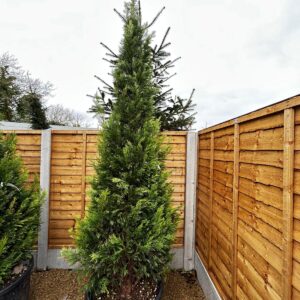
Cupressus Leylandii ‘pyramidalis’
€300.00 Select options This product has multiple variants. The options may be chosen on the product page -

Carpinus betulus Fastigiata / Upright Hornbeam Specimen
€2,800.00 Select options This product has multiple variants. The options may be chosen on the product page -

Carpinus betulus Bonsai
€3,500.00 Select options This product has multiple variants. The options may be chosen on the product page -
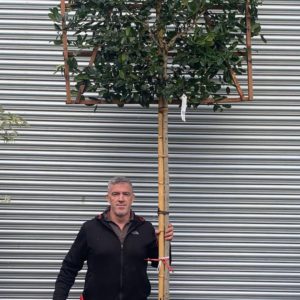
Ilex Nellie Stevens Standard Espalier
€1,150.00 Select options This product has multiple variants. The options may be chosen on the product page