

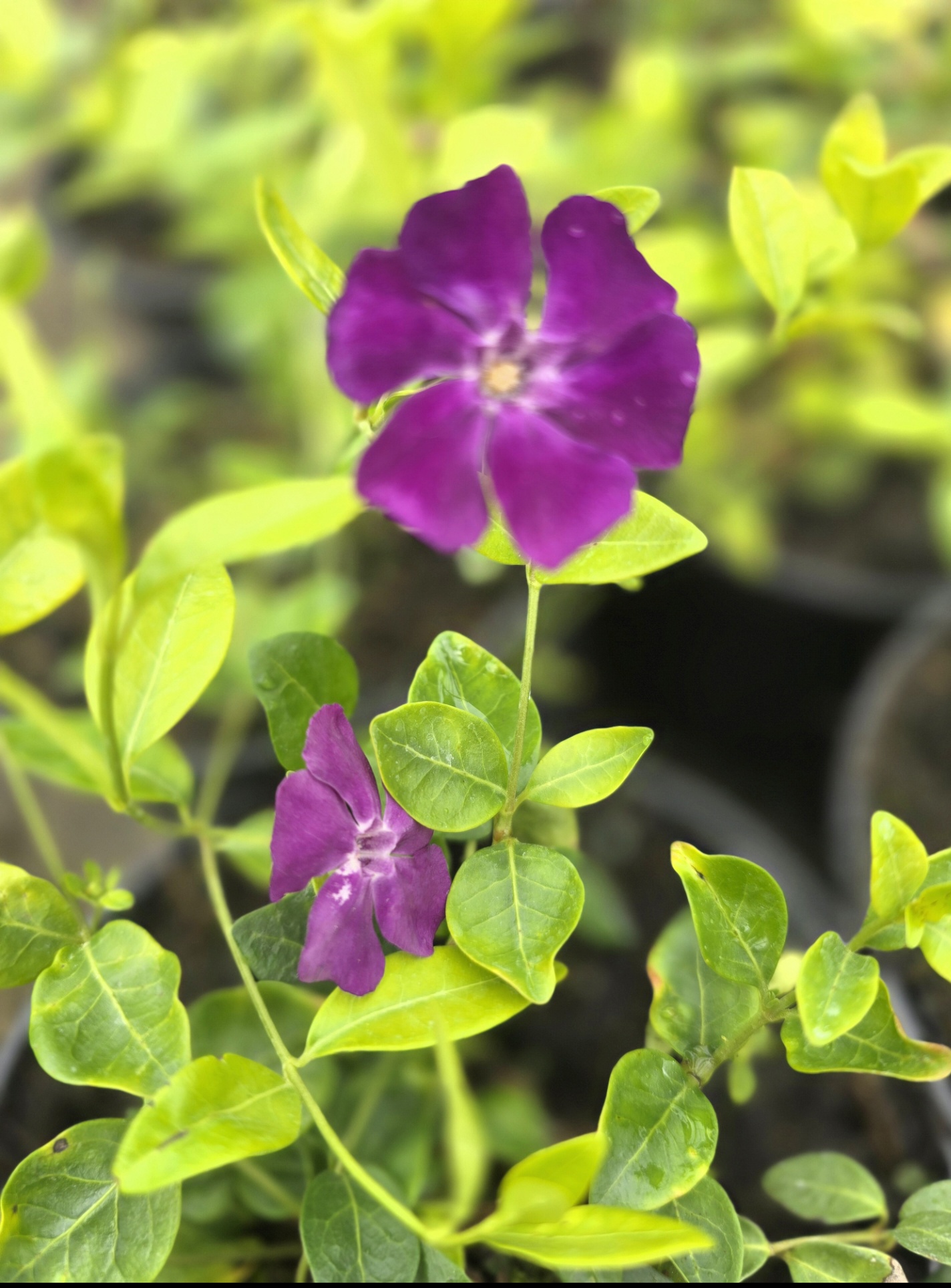
Vinca minor ‘Atropurpurea’
€9.50
Frequently Bought Together


Description
Quick Facts
Botanical Name: Vinca minor ‘Atropurpurea’
Common Name: Lesser Periwinkle ‘Atropurpurea’
Plant Type: Evergreen ground cover / trailing sub-shrub
Mature Height: 10–15cm
Mature Spread: 60–90cm+ (spreading)
Flowering Period: Spring (March–May), with sporadic blooms through summer
Flower Colour: Deep plum-purple
Foliage Colour: Dark glossy green
Hardiness: Very hardy in Ireland & the UK
Soil Requirements: Moist, well-drained soil — tolerates a wide range once established
Aspect: Part shade to full shade (tolerates sun if soil stays reasonably moist)
Maintenance: Low
Description
Vinca minor ‘Atropurpurea’ is the darker, moodier take on the classic periwinkle — and it’s all the better for it. The deep plum-purple flowers are richer and more striking than the standard blue forms, sitting beautifully against the glossy, dark green foliage that persists through the year. It spreads in the same reliable, steady way as other vincas, trailing along the ground and rooting as it goes to build a dense, weed-suppressing mat over time. A strong choice for shaded spots, woodland edges, and anywhere you want dependable evergreen cover with a bit of colour in spring.
Caragh Garden Notebook
Planting:
Plant in spring or autumn into reasonably prepared soil. Spacing plants around 40–50cm apart gives them room to spread and knit together without overcrowding. It establishes quickly and will get to work filling gaps in the first season. Works well in containers too, trailing over the sides for year-round interest.
Watering:
Water regularly through the first season while roots establish. Once settled it’s largely self-sufficient, though consistent moisture helps maintain the rich, glossy look of the foliage — particularly in sunnier positions.
Feeding:
A light mulch of compost in spring is sufficient for plants in the ground. In pots, a slow-release feed at the start of the season will keep growth strong and the flower colour at its best.
Seasonal Care & Tidy-Up:
Trim back after the main flush of spring flowers to keep plants bushy and compact, and to encourage a second round of blooms later in the season. If plants become bare and straggly in the centre over time, a harder cut back in early spring will bring them back into shape quickly.
Division (to keep plants vigorous):
Easy to divide or propagate — simply cut away rooted stems from the parent plant in spring or autumn and replant directly. They establish with very little fuss and it’s a simple way to spread plants through the garden for free.
Pests & Problems:
Very low maintenance and largely trouble-free. Avoid waterlogged or heavily compacted soil, which can cause die-back over winter. Slugs will sometimes shelter in the dense mat of foliage but rarely cause real damage to the plant itself.
Design Notes:
Excellent under trees and large shrubs, on shaded banks, or in any spot where ground cover needs to work hard with minimal input. The deep purple flowers pair particularly well with golden-foliaged plants, cream-flowered shade perennials, and ferns. Try combining with hostas, astilbes, or epimediums for a layered, textured planting in part shade. Also looks striking in a container alongside silver or chartreuse foliage plants for year-round contrast.
Related products
-

Prunus cerasifera ‘Pissardii’
Price range: €150.00 through €450.00 Select options This product has multiple variants. The options may be chosen on the product page -

Camellia japonica Rosso – 1/2 Standard
€550.00 Select options This product has multiple variants. The options may be chosen on the product page -
Magnolia stellata Standard Tree
€350.00 Select options This product has multiple variants. The options may be chosen on the product page -
Juglans nigra / Black Walnut
€750.00 Select options This product has multiple variants. The options may be chosen on the product page