

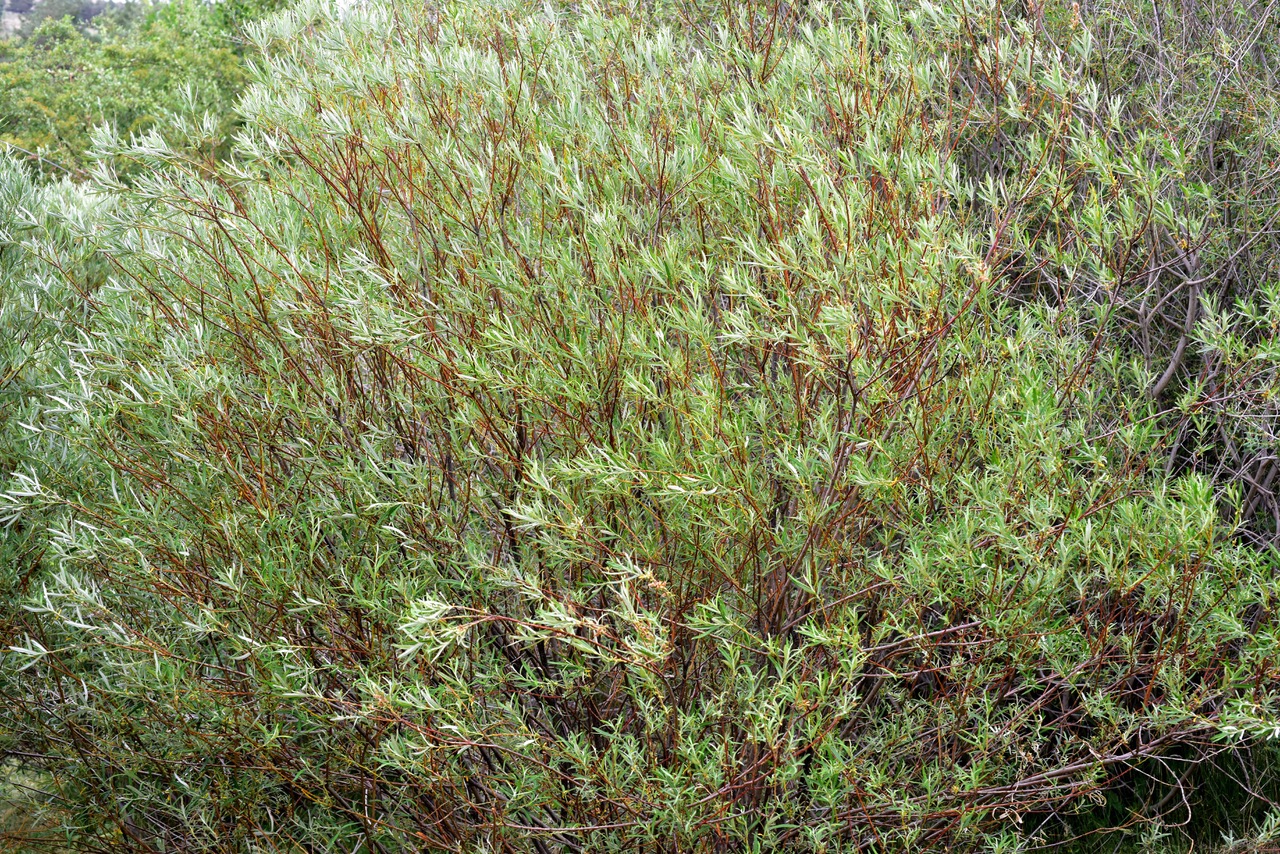
Salix purpurea
Price range: €500.00 through €550.00
Description
Quick Facts
– Botanical Name: Salix purpurea
– Common Name: Purple Willow / Purple Osier
– Plant Type: Deciduous large shrub
– Mature Height: Approx. 3-4m (easily kept lower with pruning)
– Mature Spread: Approx. 2-3m
– Flowering Period: March to April
– Flower Colour: Slender purple-tinged catkins, appearing before the leaves
– Foliage Colour: Narrow, blue-green leaves on slender, arching stems; soft yellow in autumn
– Stem Colour: Slim, flexible purple-tinted stems that colour well in winter
– Habit: Dense, bushy and gracefully arching
– Hardiness: Fully hardy
– Soil Requirements: Moist to wet, fertile; tolerates clay and heavy ground
– Aspect: Full sun to partial shade
– Maintenance: Low to moderate: annual or biennial cutting back for the best stem colour
Description
Salix purpurea is a graceful, easy-going willow with a lovely airy feel. Slender, purple-tinged stems arch gently under narrow blue-green leaves, forming a soft, billowing shrub that moves beautifully in a breeze. In early spring, silky purple-tinted catkins appear before the leaves, providing a welcome early source of pollen and nectar for bees.
In winter the bare stems take centre stage, with their purple tones glowing against frost, snow or a dark backdrop. It is a lovely plant for wetter spots where little else is happy, and it is also a favourite for weaving, hedging and wildlife planting.
Soft, supple and endlessly useful, Salix purpurea is a willow that earns its place.
Caragh Garden Notebook
Planting:
Plant in autumn or spring in moist to wet, fertile soil, adding well-rotted compost to the planting hole. Choose a sunny or lightly shaded position, ideally near water or in a damp border where the soil does not dry out. For a hedge or screen, space plants at around 60-90cm apart. Plant at the same depth as the pot, firm in gently and water in thoroughly.
Watering:
Water regularly through the first two growing seasons, especially in dry spells. Willows love moisture and dislike drying out, so a deep water in hot weather is worthwhile. Once established in damp soil, it is largely self-sufficient.
Feeding:
Apply a balanced general fertiliser or a mulch of well-rotted compost in spring. Established plants in fertile, moist ground need very little extra feeding.
Seasonal Care & Tidy-Up:
For the best stem colour and a tidy shape, cut back hard in late winter or early spring, to within a few buds of the base (coppicing) or to a low framework (pollarding). Willows regrow strongly. Lightly trim in summer if needed to keep the arching habit neat.
Pests & Problems:
Generally healthy. Willow aphids, leaf beetles and rust can appear in some seasons, and canker may affect weakened plants. Good air circulation, moisture at the roots and regular pruning keep plants healthy. Keep away from drains, foundations and pipes, as willow roots are vigorous in search of water.
Design Notes:
Salix purpurea is perfect for pond edges, rain gardens, wet corners and informal boundaries. Its slim, flexible stems are ideal for living willow structures, weaving and informal hedging, and the early catkins support wildlife. In a mixed border, pair it with dogwoods, ornamental grasses and winter-flowering heathers for good winter colour. It also makes a soft, airy backdrop for perennials in summer.
Propagation:
Take hardwood cuttings in autumn or winter and push them straight into moist soil. They root very readily.
Additional information
| Pot Size | 20-25cm girth, 5-6m tall, Rootballed, 25-30cm girth, 5-6m tall, Rootballed |
|---|
Related products
-
Chamaecyparis lawsoniana ‘Yvonne’
€95.00 Select options This product has multiple variants. The options may be chosen on the product page -
Picea glauca ‘Conica’ (Dwarf Alberta Spruce)
€25.00 Select options This product has multiple variants. The options may be chosen on the product page -

Acer Princeton Gold / Maple Princeton Gold
Price range: €120.00 through €180.00 Select options This product has multiple variants. The options may be chosen on the product page -
Eucalyptus gunnii ‘Azura’
€49.50 Select options This product has multiple variants. The options may be chosen on the product page