

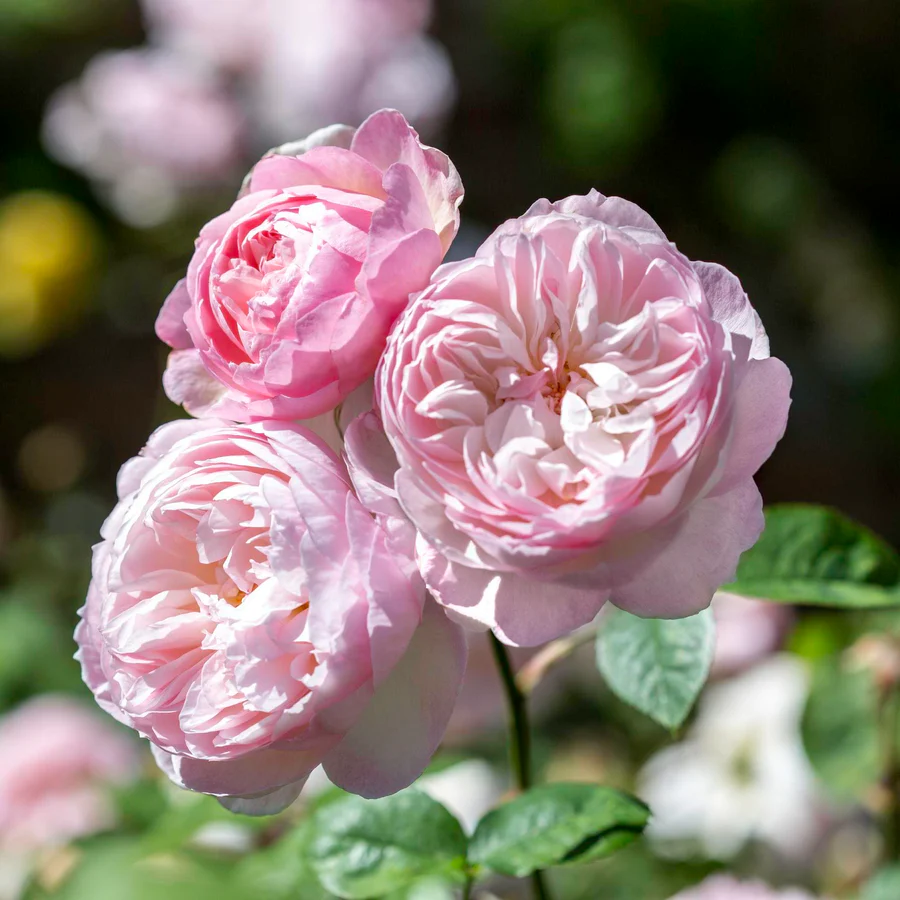
Rosa ‘Gentle Hermione’ – David Austin English Rose
€30.00
Frequently Bought Together

Description
There is a softness to Gentle Hermione that stops you mid-step. Her blooms are deeply cupped, densely petalled rosettes in the most delicate blush pink — the colour of early morning light on pale stone — opening from neat, scrolled buds into something that feels almost impossibly romantic. She is named for Shakespeare’s Hermione, and the name could not be more fitting: graceful, quietly dignified, and possessed of a beauty that only reveals itself fully when you take the time to look.
The fragrance is extraordinary. A rich, warm myrrh with gentle hints of heliotrope — complex, lingering, and unmistakably David Austin. Cut a stem and bring it indoors, and the whole room knows about it.
Repeat flowering from early summer through to autumn, reliably healthy, and generous with her blooms throughout the season, Gentle Hermione is one of those roses that rewards you more the better you know her. A rose for the long term. A rose for the keeper.
Quick Facts:
Common Name: Gentle Hermione
Botanical Name: Rosa ‘Gentle Hermione’
Type: English Shrub Rose
Flower: Deeply cupped rosette — softest blush pink
Fragrance: Strong — warm myrrh with hints of heliotrope
Flowering: Repeat flowering — early summer through autumn
Mature Height: 90cm–1.2m
Mature Spread: 60–90cm
Disease Resistance: Good
Award: RHS Award of Garden Merit
Best For: Borders, cottage gardens, cut flowers, containers
Caragh Garden Notebook
Planting: Plant in a sunny, open position with at least six hours of direct sun daily — roses planted in shade will flower less freely and become more susceptible to disease. Dig a generous planting hole and enrich the soil well with compost and a handful of bone meal or specialist rose fertiliser. If planting in a container, choose a deep pot with good drainage and use a quality loam-based compost.
Soil: Prefers a fertile, moist but well-drained soil. Gentle Hermione will tolerate heavier clay soils if drainage is improved at planting. In light, sandy soils, mulch generously to retain moisture.
Watering: Water regularly through the growing season, particularly during dry spells. Water at the base of the plant rather than over the foliage to reduce the risk of disease. A deep, thorough watering twice a week is preferable to light, frequent watering.
Feeding: Feed with a specialist rose fertiliser in spring as new growth emerges, and again after the first flush of flowers to encourage strong repeat blooming. A generous mulch of well-rotted compost in late winter feeds the soil and suppresses weeds simultaneously.
Pruning: Prune in late winter or early spring — reduce the overall size of the plant by roughly one third, removing any dead, weak, or crossing stems. Deadhead spent flowers throughout the season to encourage continuous repeat flowering. A light tidy in midsummer after the first flush will promote the strongest second bloom.
Disease Resistance: Gentle Hermione has good natural disease resistance. As with all roses, good air circulation, correct feeding, and watering at the base rather than overhead will keep her performing at her best. Remove any fallen leaves from around the base of the plant to reduce disease pressure.
Cut Flowers: One of the finest David Austin roses for cutting. Harvest stems when the bud is just beginning to open — they will continue to unfurl beautifully in the vase, filling a room with their warm myrrh fragrance for days.
Styling Notes: Gentle Hermione is the heart of a romantic, cottage-garden planting scheme — pair with Salvias in soft purple and blue, Alchemilla mollis, Geranium ‘Rozanne’, and white Astrantia for a border that looks as though it has been growing together for decades. She sits beautifully alongside other David Austin roses in complementary blush, cream, and warm apricot tones. In a garden with a contemporary edge, a single well-grown Hermione in the IronOre Napoli pot creates a striking, unexpected contrast between the romantic bloom and the dark, architectural vessel.
Additional information
| Size | 5L |
|---|
Related products
-
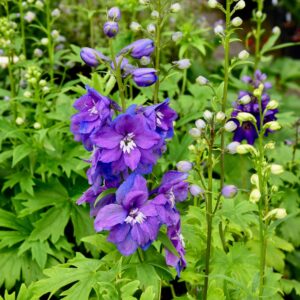
Delphinium Dark Blue White Bee
€8.50 Select options This product has multiple variants. The options may be chosen on the product page -
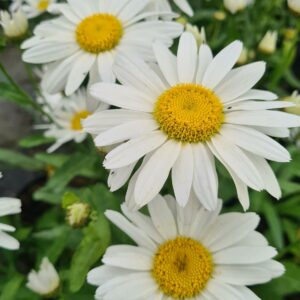
Leucanthemum ‘Snow Lady’
€8.50 Select options This product has multiple variants. The options may be chosen on the product page -
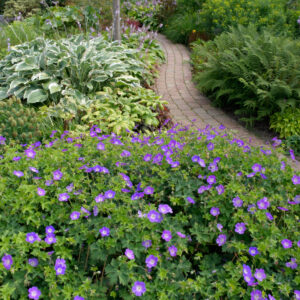
Geranium ‘Rozanne’
€10.50 Select options This product has multiple variants. The options may be chosen on the product page -
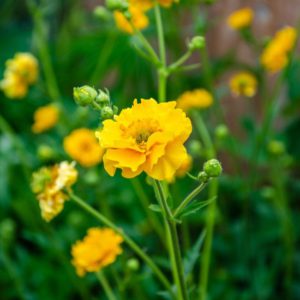
Geum Lady Strathden
€8.50 Select options This product has multiple variants. The options may be chosen on the product page