


Prunus ‘Accolade’
Price range: €130.00 through €650.00
Frequently Bought Together


Description
Quick Facts
– Botanical Name: Prunus ‘Accolade’
– Common Name: Accolade Flowering Cherry
– Plant Type: Deciduous ornamental flowering tree
– Mature Height: Approx. 6m in 20 years
– Mature Spread: Approx. 4m in 20 years
– Growth Rate: Moderate — gracefully spreading as it matures
– Flowering Period: April to May — one of the earliest and most attractive flowering cherries
– Flower Colour: Rose-pink, large semi-double, blousy blooms up to 4cm across, opening from deep pink buds in pendulous clusters
– Foliage: Mid-green, turning attractive orange in autumn before falling
– Habit: Gracefully spreading, open, and elegant
– Aspect: Full sun
– Soil: Most soils, except very wet or chalky, shallow ground — tolerant of pollution
– Hardiness: Very hardy in Ireland & the UK
– Awards: RHS Award of Garden Merit (AGM)
– Maintenance: Low
Description
There is a moment in April when the flowering cherries begin, and Prunus ‘Accolade’ is one of the finest and earliest of them. From deep pink buds, clouds of rose-pink, semi-double flowers emerge in pendulous clusters — large, blousy blooms up to 4cm across, opening with a soft, generous abundance that covers the bare branches and makes the whole tree look as though it has burst into colour. Against the clean early-spring sky, the effect is simply breathtaking — one of the great ornamental displays of the gardening year.
As the blossom fades, the tree settles into a canopy of mid-green foliage that turns an attractive orange in autumn before falling — a second, quieter season of colour to close the year. With its gracefully spreading habit, reaching around 6 x 4 metres in 20 years, it is a tree of real presence that earns its place in any garden large enough to hold it. It is also, reassuringly, one of the most resilient of the ornamental cherries: tolerant of pollution and of most soils and conditions — only very wet or chalky, shallow ground will defeat it — which makes it a particularly good choice for town and city gardens.
Caragh Garden Notebook
Planting:
Plant in autumn or early spring into a sunny position in well-prepared soil. ‘Accolade’ is tolerant of most soils and conditions and grows well in almost any reasonable ground — the main exclusions being very wet or waterlogged sites and chalky, shallow soils. Incorporate organic matter at planting to give it a strong start, and plant the root ball at the same depth it was grown at the nursery. Stake young trees firmly for the first two or three years to anchor them while roots establish. Choose the position with the mature spread in mind — at 6 x 4 metres in 20 years it will need room to develop its graceful, spreading form without crowding.
Watering:
Water consistently through the first two growing seasons while the root system establishes — this is the single most important period for a new tree. Once settled, ‘Accolade’ is reasonably self-sufficient and requires little supplementary watering in an Irish or UK garden beyond natural rainfall. During prolonged dry spells in the first summers, a thorough weekly watering will support establishment and healthy growth. Avoid waterlogged conditions, which the tree does not tolerate.
Feeding:
An application of a balanced fertiliser in early spring, as growth begins, will support strong growth and a fine flowering display. In the first few years, feeding the young tree in spring is worthwhile while it establishes. Once established, an annual mulch of well-rotted compost or manure around the base in late winter or early spring feeds gently, retains moisture, and improves the soil over time.
Pruning:
Prunus ‘Accolade’ requires very little pruning and the natural, graceful, spreading form is its greatest asset — resist the temptation to shape it. Remove only the dead, diseased, or crossing branches, and do so in late summer or early autumn when the tree is actively growing; pruning in winter risks silver leaf infection, which cherries are susceptible to. Avoid all hard or renovation pruning, which an ornamental cherry will not recover from gracefully.
Pests & Problems:
Generally trouble-free and one of the more resilient flowering cherries, with good tolerance of pollution. The most common concern in cherries is silver leaf disease, to which the family is susceptible — this is largely prevented by avoiding winter pruning and by promptly removing any affected branches in summer. Bacterial canker and aphids can occasionally occur but rarely cause serious problems on a well-grown, healthy tree. Ensure good drainage at planting, as waterlogged ground is the principal site condition the tree will not tolerate.
Design Notes:
‘Accolade’ is a tree for the position where its spring display can be properly seen and appreciated — over a lawn, framing the approach to a house or entrance, at the edge of a large border, or in a prominent position from which the blossom can be viewed against the sky. The rose-pink, blousy flowers are one of the earliest of the cherry displays and are particularly effective when the tree is seen against a clear, bright April sky or above the fresh greens and bulbs of early spring. Underplant with early spring bulbs — narcissi, scillas, and early tulips — for a layered spring composition that extends the season of interest beneath the blossom. In autumn, the orange foliage provides a second season of colour, and even in winter the bare, spreading branch structure is graceful in its own right — a tree that gives something in every season. In a town or city garden, its tolerance of pollution makes it a particularly dependable choice for a beautiful flowering cherry where some others would struggle.
Related products
-
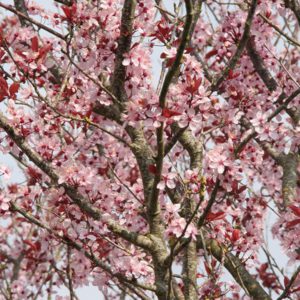
Prunus pissardi Nigra
€750.00 Select options This product has multiple variants. The options may be chosen on the product page -
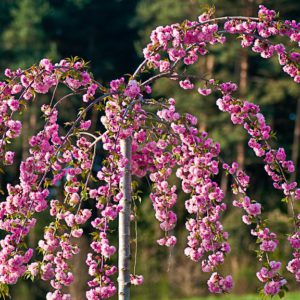
Prunus Kiku-shidare-zakura Half Standard
€75.00 Select options This product has multiple variants. The options may be chosen on the product page -
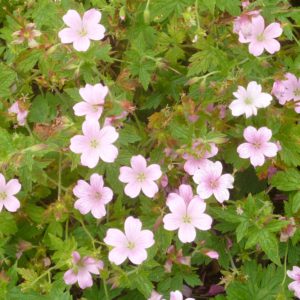
Geranium Wargrave Pink
€8.50 Select options This product has multiple variants. The options may be chosen on the product page -
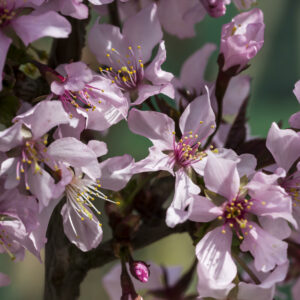
Prunus nipponica Ruby
€130.00 Select options This product has multiple variants. The options may be chosen on the product page