
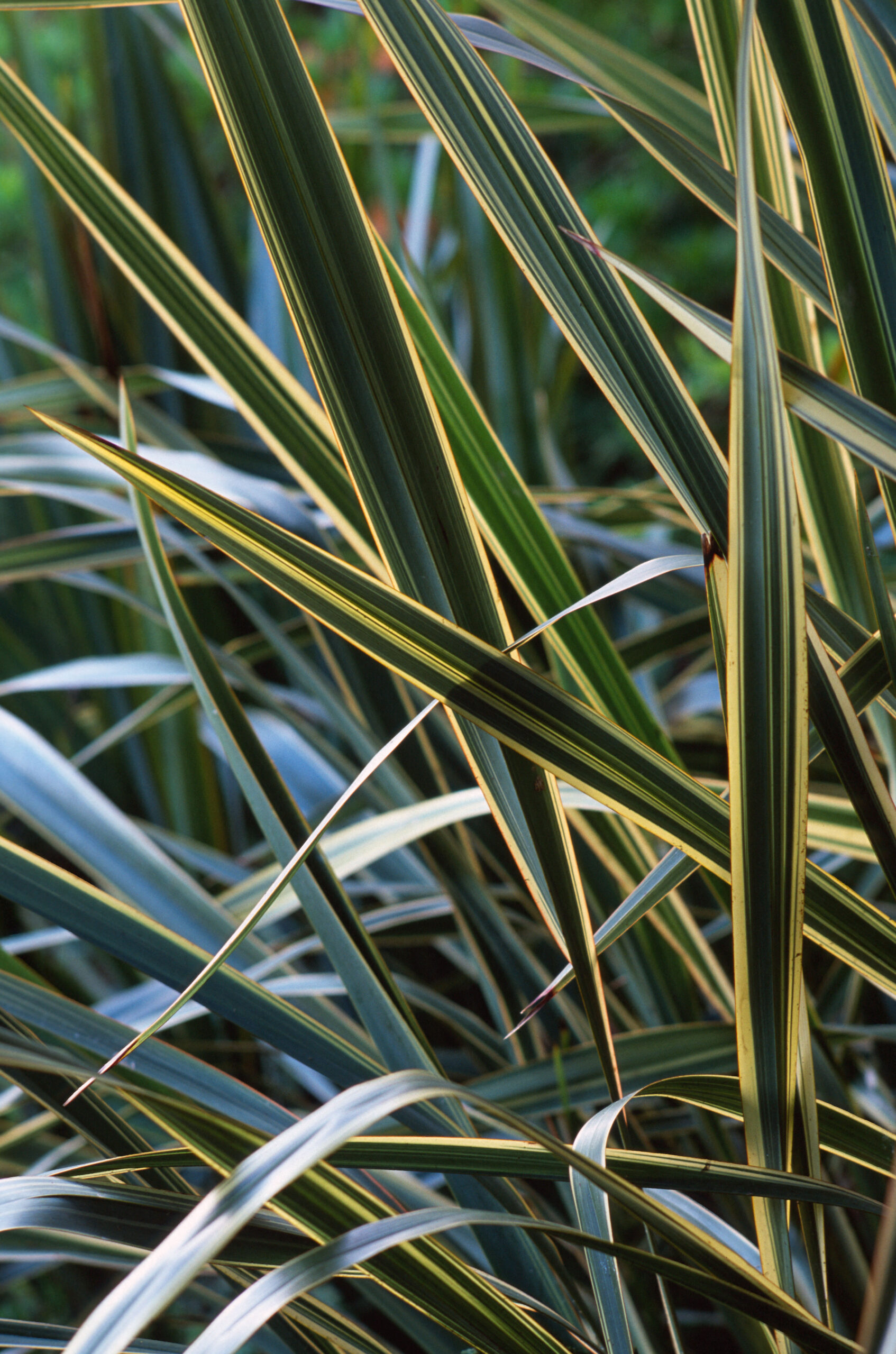
Phormium tenax ‘variegatum’
€150.00
Description
Quick Facts
- Common Name: Variegated New Zealand Flax
- Botanical Name: Phormium tenax ‘Variegatum’
- Plant Type: Evergreen perennial
- Mature Height: 1.2–2m
- Mature Spread: 1–1.5m
- Foliage: Bold, sword-shaped leaves striped green and creamy-yellow; upright, architectural habit
- Flowering Period: July to August (occasionally in UK & Ireland)
- Flower Colour: Reddish-bronze flower spikes on mature plants
- Hardiness: RHS H4 (hardy in mild UK & Irish gardens; may need protection in colder spots)
- Soil Requirements: Moist, well-drained, moderately fertile; tolerates coastal and poor soils
- Aspect: Full sun to partial shade (best colour in sun)
- Maintenance: Low
Description
Phormium tenax ‘Variegatum’ is a striking, evergreen perennial that brings bold structure and year-round colour to the garden. Its long, sword-like leaves are beautifully striped with green and creamy-yellow, creating a dramatic, upright clump that instantly adds a touch of the exotic to borders, gravel gardens, and modern planting schemes.
Valued for its architectural presence, this variegated New Zealand flax is perfect for making a statement—whether as a specimen in the lawn, a focal point in mixed borders, or as part of a contemporary coastal design. In mild summers, mature plants may produce tall spikes of reddish-bronze flowers, adding extra drama and attracting pollinators.
Phormium tenax ‘Variegatum’ is tough and adaptable, thriving in full sun or light shade and tolerating wind, salt, and poor soils. It’s also a great choice for large containers, where its upright form and evergreen foliage provide year-round interest on patios and terraces.
Caragh Garden Notebook
Planting:
Space plants 1–1.5m apart to allow for their mature spread. Plant container-grown specimens in spring (March–May) or early autumn (September–October). Choose a sunny, sheltered position for the best leaf colour and growth, but it will tolerate some light shade. Dig a generous hole, loosen the soil well, and incorporate compost or well-rotted manure to support establishment. Plant at the same depth as in the pot, firm in gently, water thoroughly, and mulch.
Space plants 1–1.5m apart to allow for their mature spread. Plant container-grown specimens in spring (March–May) or early autumn (September–October). Choose a sunny, sheltered position for the best leaf colour and growth, but it will tolerate some light shade. Dig a generous hole, loosen the soil well, and incorporate compost or well-rotted manure to support establishment. Plant at the same depth as in the pot, firm in gently, water thoroughly, and mulch.
Soil Preparation:
Prefers moist, well-drained soil but is highly tolerant of poor, sandy, or coastal soils. Avoid waterlogged ground, especially in winter. Improve heavy clay with grit and organic matter to aid drainage. Mulch annually to conserve moisture and feed the soil.
Prefers moist, well-drained soil but is highly tolerant of poor, sandy, or coastal soils. Avoid waterlogged ground, especially in winter. Improve heavy clay with grit and organic matter to aid drainage. Mulch annually to conserve moisture and feed the soil.
Seasonal Care:
Very low maintenance. Remove any damaged or dead leaves at the base as needed. Water during long dry spells, especially in the first year or in containers. In colder gardens, protect the crown with a dry mulch over winter or wrap in fleece during severe frosts.
Very low maintenance. Remove any damaged or dead leaves at the base as needed. Water during long dry spells, especially in the first year or in containers. In colder gardens, protect the crown with a dry mulch over winter or wrap in fleece during severe frosts.
Container Growing:
Excellent in large pots. Use a free-draining compost and ensure containers have plenty of drainage holes. Water regularly in summer, but do not let the compost become waterlogged in winter.
Excellent in large pots. Use a free-draining compost and ensure containers have plenty of drainage holes. Water regularly in summer, but do not let the compost become waterlogged in winter.
Pests & Problems:
Generally trouble-free. Occasionally watch for snails, particularly on young leaves. Good drainage is the key to winter survival.
Generally trouble-free. Occasionally watch for snails, particularly on young leaves. Good drainage is the key to winter survival.
Design Notes:
Superb as a statement plant in borders, gravel gardens, and coastal planting. Pairs beautifully with grasses, agapanthus, salvias, and other sun-loving perennials. Also excellent for adding vertical interest to modern planting schemes.
Superb as a statement plant in borders, gravel gardens, and coastal planting. Pairs beautifully with grasses, agapanthus, salvias, and other sun-loving perennials. Also excellent for adding vertical interest to modern planting schemes.
Propagation:
Propagate by division in spring.
Propagate by division in spring.
Related products
-
Thymus pulegioides ‘foxley’
€12.50 Select options This product has multiple variants. The options may be chosen on the product page -
Phormium Black Adder
€20.00 Select options This product has multiple variants. The options may be chosen on the product page -

Armeria maritima Nifty Thrifty
€8.50 Select options This product has multiple variants. The options may be chosen on the product page -

Phormium Evening Glow
€15.00 Select options This product has multiple variants. The options may be chosen on the product page