

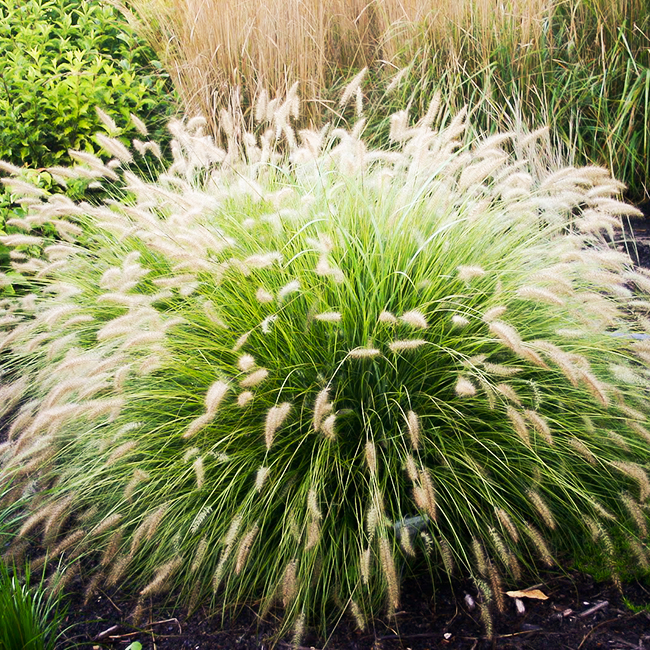
Pennisetum alopecuroides ‘Little Bunny’
€8.50
Frequently Bought Together


Description
Quick Facts
– **Botanical Name: Pennisetum alopecuroides ‘Little Bunny’
– Common Name: Little Bunny Fountain Grass / Dwarf Fountain Grass
– Plant Type: Ornamental grass (often grown as a perennial)
– Mature Height: 25–35cm
– Mature Spread: 30–45cm
– Flowering Period: Mid to late summer
– Flower Colour: Large numbers of small, buff-coloured, fuzzy flowerheads — resembling little rabbit tails, which give the plant its name
– Foliage: Fine green foliage forming a neat, small hummock
– Habit: Compact, dense, rounded clump
– Aspect: Full sun to partial shade
– Soil: Moist, well-drained; tolerant of most soils once established
– Hardiness: Hardy; may be cut back by a hard winter and reshoot from the base in spring
– Maintenance: Very low
Description
Pennisetum ‘Little Bunny’ is a fountain grass in miniature — and all the more charming for it. It quickly forms a small, neat hummock of fine green foliage, and from mid to late summer that hummock is topped with a large number of small, buff-coloured, fuzzy flowerheads that move and sway with the lightest breeze. As the name so delightfully suggests, they look rather like small rabbit tails — soft, rounded, and gently animated — and it is impossible to pass one on a summer afternoon without noticing or wishing to touch it.
At just 25–35cm it is one of the smallest ornamental grasses available, which makes it genuinely useful in the places larger grasses cannot go — the front of a border, a rockery, a container, or a low drift along a path. It brings movement, soft texture, and a naturalistic charm out of all proportion to its size, and it asks for almost nothing in return.
Caragh Garden Notebook
Planting:
Plant in spring or early autumn into moist, well-drained soil. ‘Little Bunny’ is tolerant of most reasonable garden soils once established and performs well in full sun to partial shade; full sun produces the most flowerheads and the neatest, densest hummock. Its small size makes it ideal for the front of a border, along the edge of a path, in a rockery, or in a container, where its scale and movement can be properly appreciated. Water in thoroughly after planting and space to allow the hummock to develop its natural rounded form without crowding neighbouring plants.
Watering:
Water consistently through the first growing season while roots establish. Once settled, ‘Little Bunny’ is reasonably tolerant of drier conditions and requires little supplementary watering in an Irish or UK garden beyond natural rainfall. During prolonged dry spells, a thorough watering will keep the foliage fresh and the flowerheads at their best. In containers, water regularly through the growing season and ensure the compost never dries out completely.
Feeding:
Feed sparingly. A light application of a balanced slow-release fertiliser in spring supports healthy growth and good flowerhead production; in reasonably fertile soil, little further feeding is needed. Avoid rich, high-nitrogen feeding, which produces soft, lush foliage at the expense of the neat, compact hummock form and the profusion of flowerheads the variety is known for.
Seasonal Care & Tidy-Up:
The buff flowerheads should be left to stand through autumn and early winter — they move and sway in the breeze and catch the low light beautifully, extending the decorative season long after most plants have finished. In late winter or early spring, cut the whole plant back to the base as new growth begins to emerge — this annual tidy removes the previous season’s tired growth and clears the way for the new hummock. ‘Little Bunny’ reshoots reliably from the base in spring, so a hard annual cut is entirely appropriate for this grass, unlike some that dislike heavy pruning.
Division:
Divide established clumps every three to four years in spring to maintain vigour and to spread the plant through the garden. Lift the clump, divide into sections each with healthy roots and shoots, and replant immediately into well-prepared, well-drained soil. Water in thoroughly and keep consistently moist through the first season. Division is also the simplest method of propagation for creating the low drifts this grass excels at.
Pests & Problems:
Generally trouble-free. The most common issue is winter wet or very poorly drained soil, which can cause the crown to rot; good drainage at planting is the most reliable prevention. In very hard winters the plant may die back to the base, but this is normal and it reshoots reliably in spring. In deep shade or very dry positions, the hummock will be looser and the flowerhead production reduced — full sun with reasonable moisture gives the best display.
Design Notes:
The miniature scale of ‘Little Bunny’ makes it one of the most versatile ornamental grasses for detailed, low planting. Use it at the front of a border in a low drift to create a soft, naturalistic edge that moves with every breeze; tuck it into a rockery or along the top of a retaining wall where the small rabbit-tail flowerheads can be seen at close range; or plant it in a container on a terrace or doorstep, where its compact hummock and animated flowerheads bring gentle movement to a still spot. Repeat it in groups rather than as a single specimen — the effect multiplies — and combine it with low perennials and other small grasses for a textural ground-level planting. The buff, fuzzy flowerheads read beautifully against darker foliage, and the way they catch the low light in late summer and autumn is one of the quiet delights of the small garden.
Additional information
| Pot Size |
|---|
Related products
-
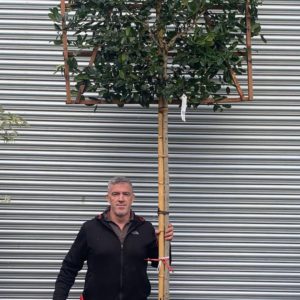
Ilex Nellie Stevens Standard Espalier
€1,150.00 Select options This product has multiple variants. The options may be chosen on the product page -
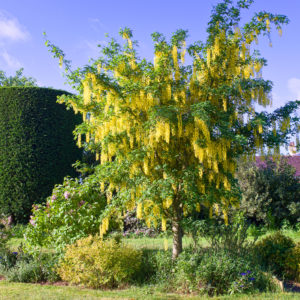
Laburnum x watereri Vossii / Golden Rain Tree
Price range: €245.00 through €580.00 Select options This product has multiple variants. The options may be chosen on the product page -
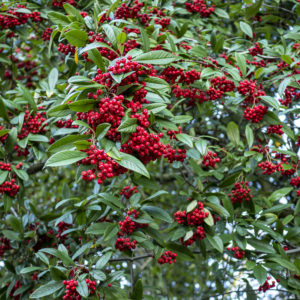
Cotoneaster ‘Cornubia’
Price range: €220.00 through €320.00 Select options This product has multiple variants. The options may be chosen on the product page -
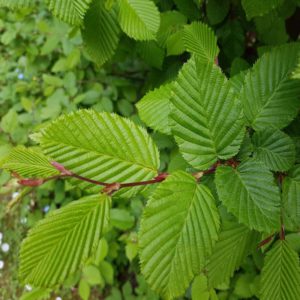
Carpinus betulus / Hornbeam
Price range: €320.00 through €750.00 Select options This product has multiple variants. The options may be chosen on the product page