

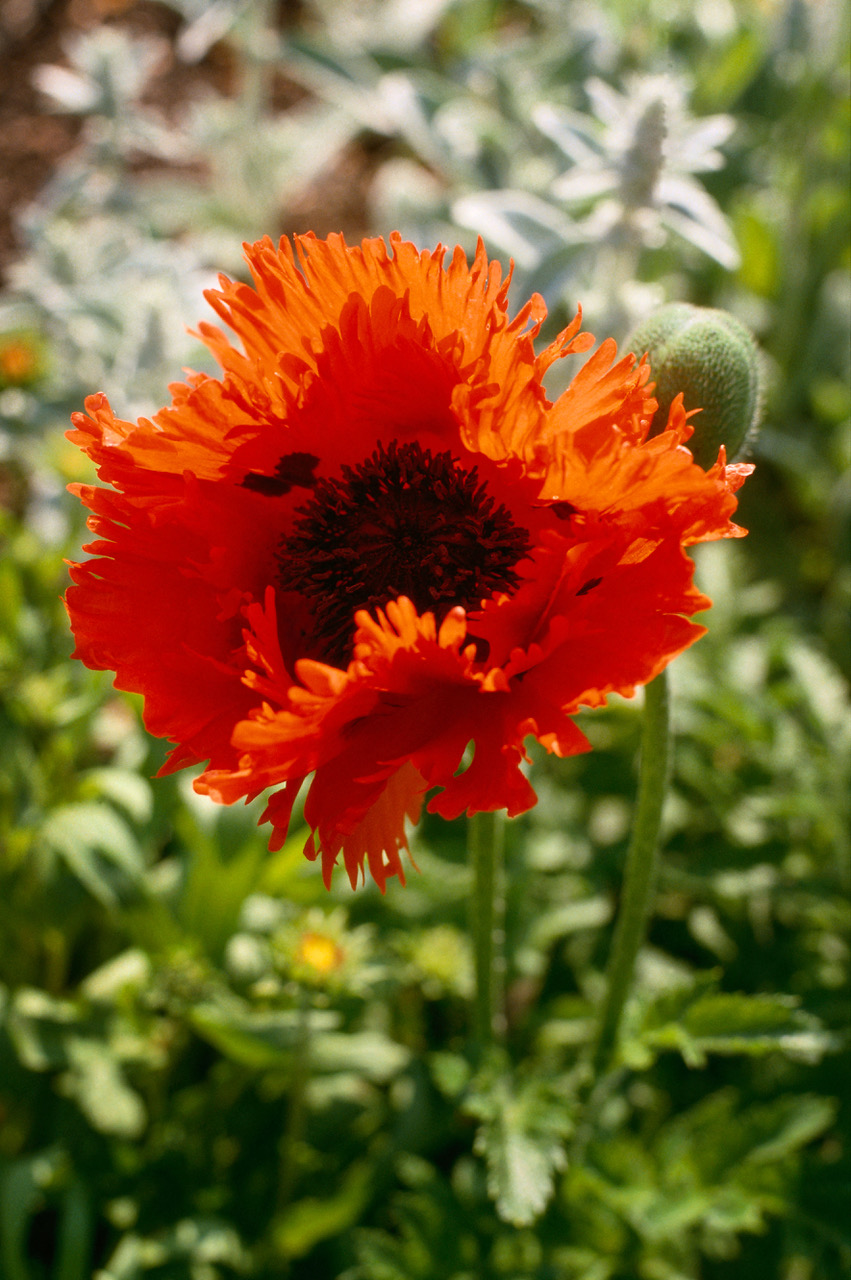
Papaver orientale ‘Brilliant’
€9.50
Frequently Bought Together


Description
Quick Facts
Botanical Name: Papaver orientale ‘Brilliant’
Common Name: Oriental Poppy ‘Brilliant’
Plant Type: Herbaceous perennial
Mature Height: 60–90cm
Mature Spread: 45–60cm
Flowering Period: Late spring to early summer (May–June)
Flower Colour: Vivid scarlet-red with bold black basal blotches
Foliage Colour: Coarse, bristly, mid-green — dies back after flowering
Hardiness: Very hardy in Ireland & the UK
Soil Requirements: Well-drained, average to poor soil
Aspect: Full sun
Maintenance: Low
Description
Papaver orientale ‘Brilliant’ does exactly what the name suggests. The flowers are enormous — vivid scarlet-red with dramatic black markings at the base of each crinkled petal — and they stop you in your tracks when they’re at their peak in late spring. It’s a short but spectacular show, and one of the most striking things you can grow in a sunny border. After flowering the foliage dies back completely, which is worth planning around, but the payoff in May and June is absolutely worth it. A bold, unfussy perennial that comes back stronger every year.
Caragh Garden Notebook
Planting:
Plant in autumn or early spring into well-drained soil in full sun. Oriental poppies dislike waterlogged conditions, especially in winter, so good drainage is essential. They have deep taproots and don’t love being moved once established, so take a bit of time to choose the right spot from the start.
Watering:
Water in well after planting. Once established, minimal watering is needed — these are drought-tolerant plants that cope well in dry summers. Overwatering or sitting in wet soil is far more of a problem than drought.
Feeding:
A light dressing of balanced fertiliser or well-rotted compost in spring is sufficient. Avoid over-feeding, which produces lush foliage at the expense of flowers.
Seasonal Care & Tidy-Up:
After flowering, the foliage will yellow and die back — this is completely normal. Cut it back once it looks untidy and allow neighbouring plants to fill the gap. New foliage will re-emerge in late summer or autumn and overwinter as a low rosette. Avoid disturbing the roots when tidying up surrounding plants.
Division (to keep plants vigorous):
Divide every 4–5 years in late summer or early autumn when plants are dormant. Take care with the deep taproot — thick root sections can also be taken as root cuttings in autumn, which is a reliable way to propagate more plants.
Pests & Problems:
Generally trouble-free. The main concern is poor drainage in winter, which can cause root rot. Aphids occasionally appear on stems and flower buds in spring but rarely cause lasting damage. Downy mildew can affect foliage in damp conditions but usually only after flowering when the plant is dying back anyway.
Design Notes:
Plant alongside late-emerging perennials that will fill the gap left when the poppy dies back — grasses, dahlias, and asters are all good neighbours for this reason. The scarlet flowers make a bold statement paired with deep purples and blues, and the black markings add a graphic quality that works well in contemporary planting schemes. Plant in groups of three or more for maximum impact, repeated through a sunny border for a strong early summer display.
Additional information
| Pot Size |
|---|
Related products
-

Euonymus japonicus ‘Green Spire’
Price range: €7.50 through €20.00 Select options This product has multiple variants. The options may be chosen on the product page -

Photinia Red Robin Cones
Price range: €360.00 through €575.00 Select options This product has multiple variants. The options may be chosen on the product page -

Cornus alba ‘Sibirica’
Price range: €30.00 through €50.00 Select options This product has multiple variants. The options may be chosen on the product page -

Phormium Pink Stripe
Price range: €20.00 through €45.00 Select options This product has multiple variants. The options may be chosen on the product page