


Olive Tree / Olea Europaea 50-60cm girth Mature/Gnarled Trunk
€950.00
Frequently Bought Together

Description
Every olive tree has character. These ones have stories.
Selected specifically for the extraordinary quality of their mature, gnarled bark, these 50–60cm girth specimens represent something beyond the standard measure of size and height. The trunk is the feature here — twisted, textured, ancient-looking in the very best sense — the kind of bark that stops people mid-sentence and makes them want to reach out and touch it. This is what decades of slow, patient growing produces, and it simply cannot be replicated or rushed.
These trees come in two distinct forms, each remarkable in its own way. The more compact specimens carry a trunk of around 60cm and an overall height of approximately 175–200cm — powerful, grounded, and full of presence. Others have grown taller, with trunks reaching 1–1.1 metres topped by a full, bushy head standing 2–2.5 metres overall — more expansive, more dramatic, with a canopy that moves beautifully in the lightest breeze.
Every single specimen is different. That is not a disclaimer — it is the entire point. Ask us for individual photographs, or come and choose your tree in person. At this level of character, you want to see exactly what you are bringing home.
Quick Facts:
Common Name: Olive Tree – Mature Gnarled Trunk
Botanical Name: Olea europaea
Girth: 50–60cm
Defining Feature: Mature, highly characterful gnarled bark
Form A — Compact: Trunk ~60cm, overall height ~175–200cm
Form B — Tall: Trunk ~1–1.1m, bushy head, overall height ~2–2.5m
Foliage: Silvery grey-green — full, natural head
Flowers: Small, creamy-white — summer
Fruit: Possible in warm, sheltered outdoor positions
Growth Rate: Slow — substantial maturity already established
Sun: Full sun — essential
Soil: Free-draining; tolerates dry conditions once established
Hardiness: RHS H4 (hardy to approximately -10°C)
Drought Tolerant: Yes — once established
Origin: Italy — certified Xylella-free
Certification: Pre-export tested and certified free from Xylella fastidiosa
Best For: Large containers, ground planting, raised beds, statement focal points
Caragh Garden Notebook
Choosing Your Tree: The variation between individual specimens in this selection is significant — not just in height and form, but in the particular character of each trunk. The way the bark has twisted and developed over decades is unique to each tree; no two will ever look alike. We strongly encourage you to ask us for individual photographs before purchasing, or to visit the nursery and choose your tree in person. Our team are always delighted to help match the right specimen to your space and vision.
The Trunk: The gnarled trunk is the story of this tree’s entire life — every twist, every texture, every darkened hollow in the bark is the record of decades of slow, patient growing. It is what makes olive trees genuinely irreplaceable in the garden; you cannot buy this quality in a young plant, you cannot grow it in a few years, and you cannot find it in anything that hasn’t lived long enough to earn it.
Planting: Full sun is essential — choose the most important, most visible position available. In a large container, use a loam-based compost mixed with horticultural grit and ensure excellent drainage. In the ground or a raised bed, prepare the planting hole generously with compost, add grit if drainage is a concern, and firm in well. For the taller specimens at 2–2.5m, initial staking in an exposed position supports strong early establishment.
Raised Beds: The gnarled trunk specimens work particularly beautifully in raised bed planting — elevated slightly above ground level, the trunk character is displayed at its very best, and the combination of the architectural trunk with surrounding planting creates something genuinely exceptional.
Watering: Water consistently and generously through the first season to support the root system as it establishes in its new position. Once settled, olive trees are remarkably drought-tolerant in the ground. Container-grown specimens need regular monitoring through summer — check frequently and water when the top few centimetres of compost are dry.
Feeding: Balanced slow-release fertiliser in spring. Container specimens benefit from a monthly liquid feed through the growing season, switching to a high-potassium formula from midsummer.
Pruning: Minimal. The gnarled, mature trunk requires nothing from you — simply keep the clear stem free of new shoots and lightly shape the foliage head in late spring if preferred. These are trees that have been growing far longer than any of us have been gardening; they deserve a respectful, light touch.
Winter Care: Hardy to -10°C in free-draining soil. Protect container root zones with fleece during prolonged hard frost and move to a sheltered position where possible. A generous mulch layer around ground-planted specimens insulates the root zone through the coldest months.
Xylella Certification: All our olive trees are tested and certified free from Xylella fastidiosa prior to leaving Italy. Certification is available on request.
Styling Notes: The gnarled trunk olive demands to be seen. Place it where the trunk itself is visible — not buried in surrounding planting, but positioned so that the bark character can be appreciated from multiple angles. Against pale rendered walls or natural stone, the texture is extraordinary. In a large, generous pot on a terrace, it becomes a living sculpture. In a raised bed at the centre of a Mediterranean scheme, surrounded by lavender, Rosmarinus, and ornamental grasses, it is the piece the entire garden has been waiting for.
Related products
-
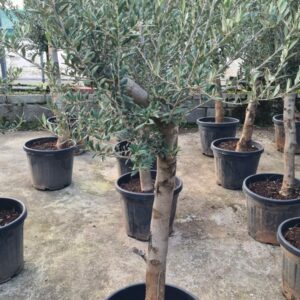
Olea Europaea / Olive trees – 20-30cm girth
€350.00 Read more -
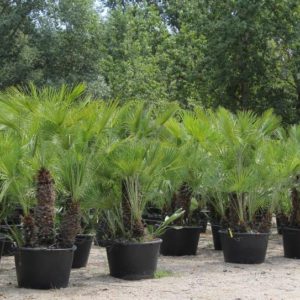
Chamaerops humilis / Mediterranean Fan Palm
€350.00 Select options This product has multiple variants. The options may be chosen on the product page -
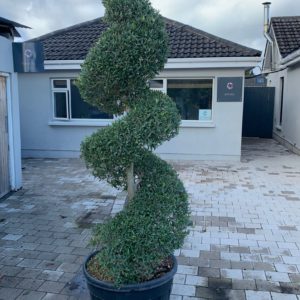
Olea europaea / Olive Spirals
€750.00 Select options This product has multiple variants. The options may be chosen on the product page -

Olive Tree Feed
€12.50 Select options This product has multiple variants. The options may be chosen on the product page