

Olive / Olea europaea 1/2 Standard Espalier
Price range: €420.00 through €450.00
Frequently Bought Together


Description
You know the olive by now — that gorgeous silver-grey-green foliage, the gnarled character, the Mediterranean soul. But this one is different. Quite different.
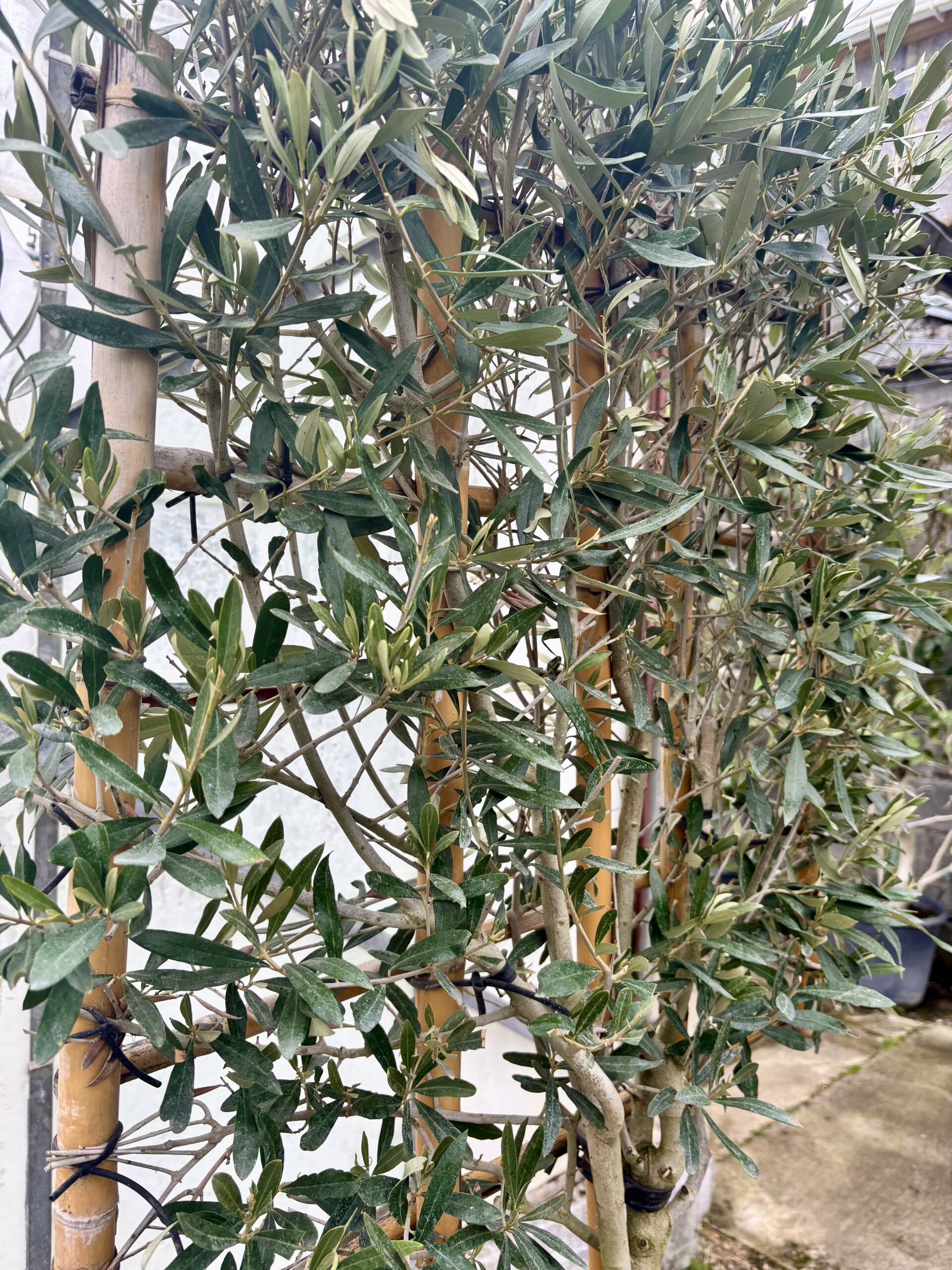
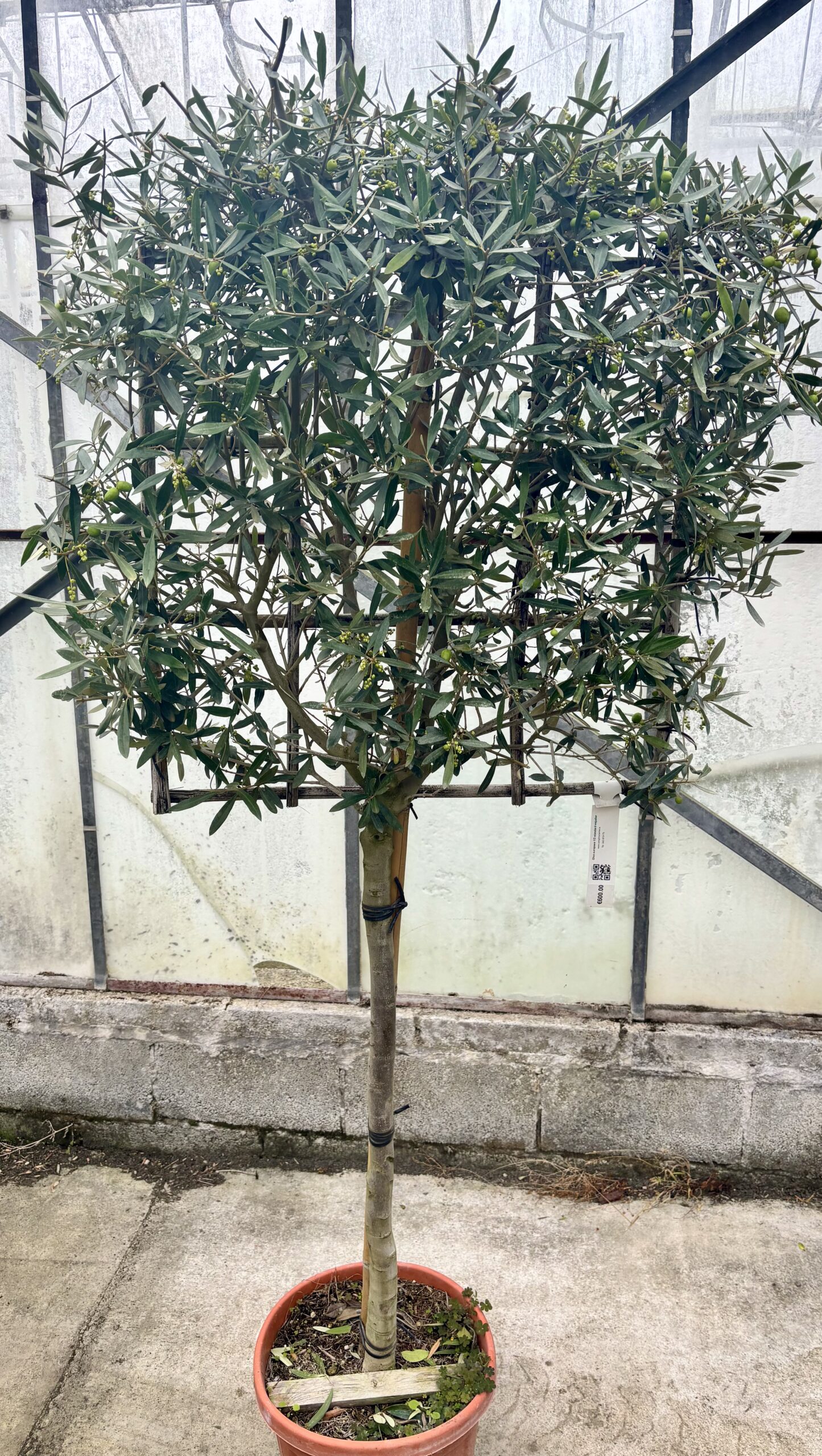
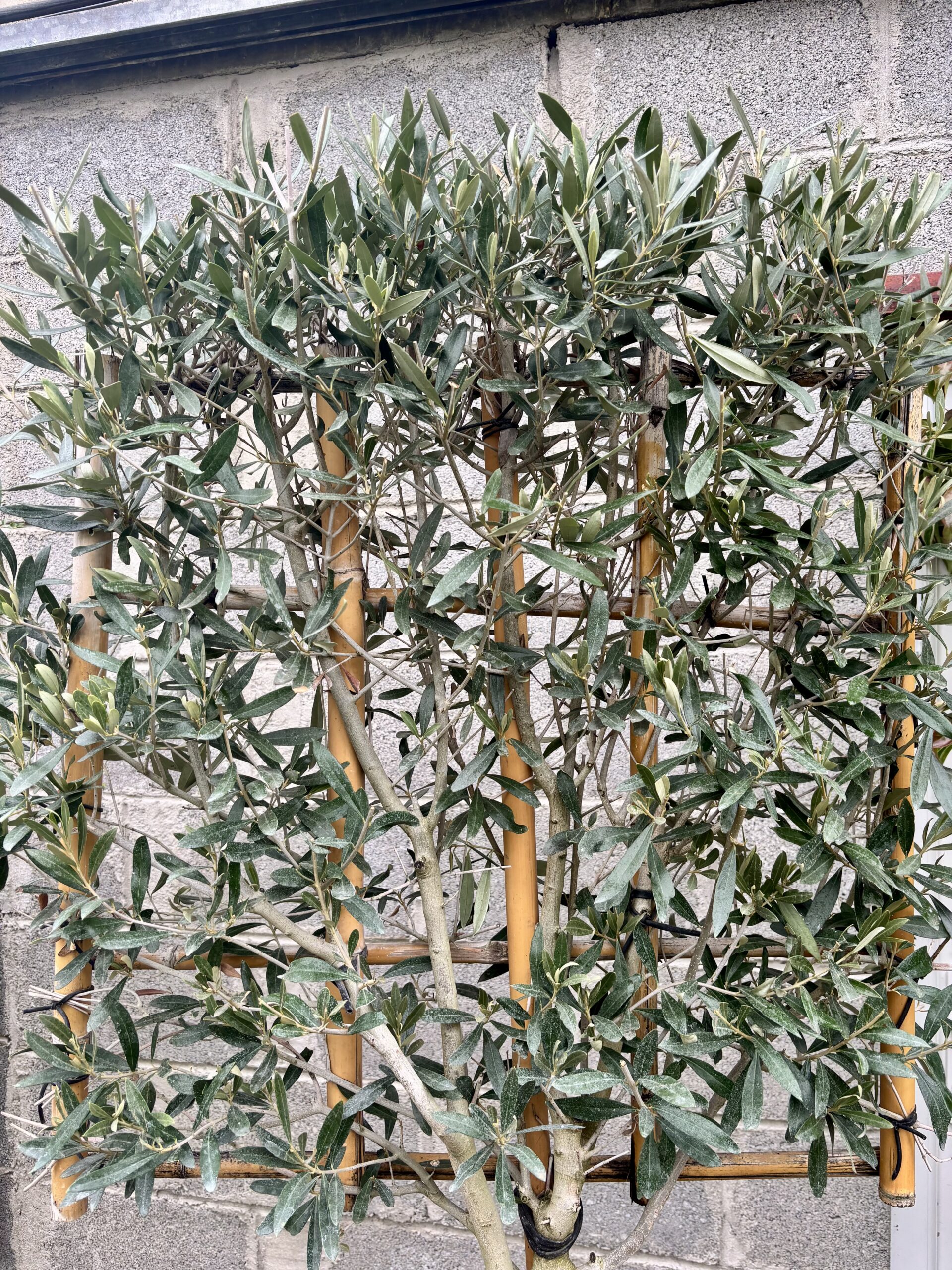
Trained as a half standard espalier, this is an olive tree that has been shaped into something genuinely architectural — a 1.2 metre clear stem rising to a perfectly formed 100cm square frame of layered, horizontal branches, all clothed in that beautiful silvery foliage we love. The effect is at once contemporary and ancient — a living, breathing structure that brings order, elegance, and real personality to any space it occupies.
Plant one against a south-facing wall and you are doing something quietly exciting — because in a good Irish summer, with the warmth of a wall behind it, you might just get olives. Actual olives. We make no promises, but wouldn’t that be something?
Beyond the thrill of potential fruit, the espalier olive is a seriously useful garden plant — outstanding for lower-level screening with full light and sky above, a natural divider in a contemporary courtyard, or a smart, repeating screen along a boundary that feels a world away from the usual options.
Quick Facts:
Common Name: Olive Tree – Espalier Half Standard
Botanical Name: Olea europaea
Form: Half standard espalier — trained flat frame
Clear Stem Height: 1.2m
Frame Size: 100cm x 100cm square
Foliage: Silvery grey-green — narrow, light-reflecting leaves
Flowers: Small, creamy-white — summer
Fruit: Possible in sheltered, south-facing positions — particularly in warm years
Growth Rate: Slow to moderate
Sun: Full sun — essential; south-facing wall ideal
Soil: Free-draining; tolerates dry, poor soils once established
Hardiness: RHS H4 (hardy to approximately -10°C)
Drought Tolerant: Yes — once established
Best For: Contemporary screening, courtyard dividers, south-facing walls, architectural focal points
Caragh Garden Notebook
Planting: A south or west-facing wall is the ideal home for an espalier olive — the reflected warmth and shelter create the best possible conditions for growth, foliage health, and the tantalising possibility of fruit in a good summer. Plant in free-draining soil, incorporating grit if your ground holds moisture. Set the root ball at least 40–50cm from the wall base to avoid the rain shadow and allow roots room to establish comfortably.
As a Screen: The 1.2m clear stem means full light passes beneath the frame while the 100cm square canopy provides elegant, semi-transparent screening at eye level — ideal where you want to divide a space without closing it off. Planted in a row at regular intervals, espalier olives create a contemporary colonnade effect that is both practical and beautiful.
Against a Wall: Fixed to a south-facing wall with simple vine eyes and horizontal wires, the espalier frame lies flat and flush — maximising the warmth absorbed from the wall and creating a living, architectural feature. Maintain the frame shape with light, selective pruning in late spring, tying in any new growth to preserve the square outline.
Fruiting: Against a warm south-facing wall in a good Irish summer, fruit production is genuinely possible — and deeply satisfying. Two espalier olives planted nearby will improve pollination. Fruit will be small and requires curing before eating, but the experience of harvesting olives from your own Irish garden is something entirely worth having.
Watering: Water consistently through the first season to support establishment, then reduce as the tree settles in. Container-grown specimens need regular moisture monitoring through summer. Always water at the base — overhead watering on trained wall specimens can encourage fungal issues.
Pruning & Maintenance: The espalier frame requires light, regular maintenance to retain its clean square outline — remove any shoots that break outward from the frame plane in late spring. Avoid heavy pruning into old wood. The clear stem should be kept clean of any new shoots that develop along its length throughout the growing season.
Winter Care: Hardy to approximately -10°C. The shelter of a south-facing wall offers significant frost protection for wall-trained specimens. In containers, protect the root zone with fleece during prolonged hard frost. *(Confirm if container specimens should be moved indoors during extreme cold.)*
Styling Notes: The espalier olive is one of the most architecturally sophisticated plants we offer — it brings structure, movement, and that unmistakable silvery Mediterranean quality to contemporary gardens, roof terraces, and courtyard spaces. Plant in a row for a modern take on the formal allée. Use as a divider between a dining terrace and a lawn for a boundary that breathes. Pair with the Sydney Aluminium Planter, MAT Granite Slabs, and clean-lined outdoor furniture for a garden that feels like it was designed by someone who really knows what they are doing.
Additional information
| Pot Size | 25L 10-12cm girth, half standard, 45L 1.2m stem with 100cm2 head, 35L 1/2 std 10-12cm girth, frame 120cm wide x 100cm high |
|---|
Related products
-
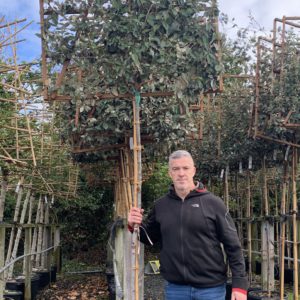
Elaeagnus ebbengei Standard Espalier
Price range: €480.00 through €600.00 Select options This product has multiple variants. The options may be chosen on the product page -
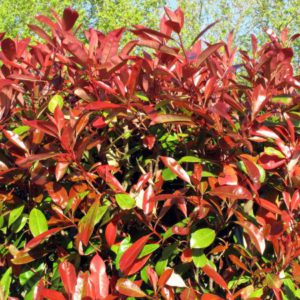
Photinia Red Robin 3/4 Standard Espalier
Price range: €390.00 through €475.00 Select options This product has multiple variants. The options may be chosen on the product page -
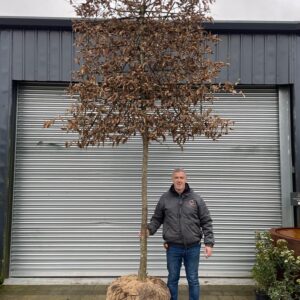
Carpinus betulus Mature Espalier
Price range: €1,350.00 through €1,500.00 Select options This product has multiple variants. The options may be chosen on the product page -

Photinia × fraseri Compacta 1/2 Standard Espalier
€450.00 Select options This product has multiple variants. The options may be chosen on the product page