

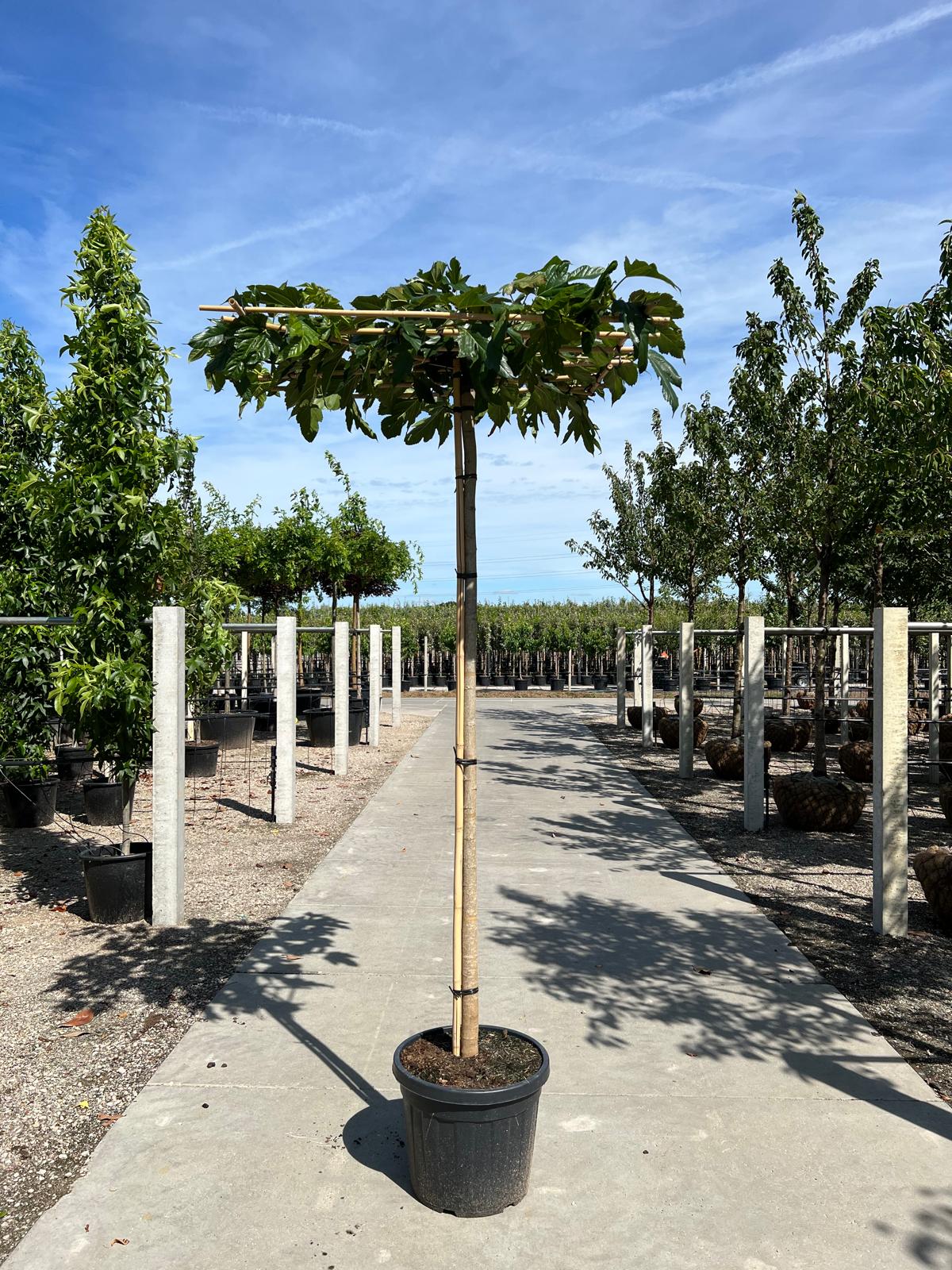
Morus alba ‘Fruitless’ — Roof Form
€500.00
Description
Quick Facts
– Botanical Name: Morus alba ‘Fruitless’
– Common Name: Fruitless Mulberry — Roof Form
– Plant Type: Deciduous tree, trained roof form
– Mature Height: Variable depending on clear stem height; canopy trained flat and wide
– Mature Spread: Approx. 3m–5m (canopy frame, expanding with age)
– Flowering Period: Spring — flowers are inconspicuous
– Flower Colour: Inconspicuous
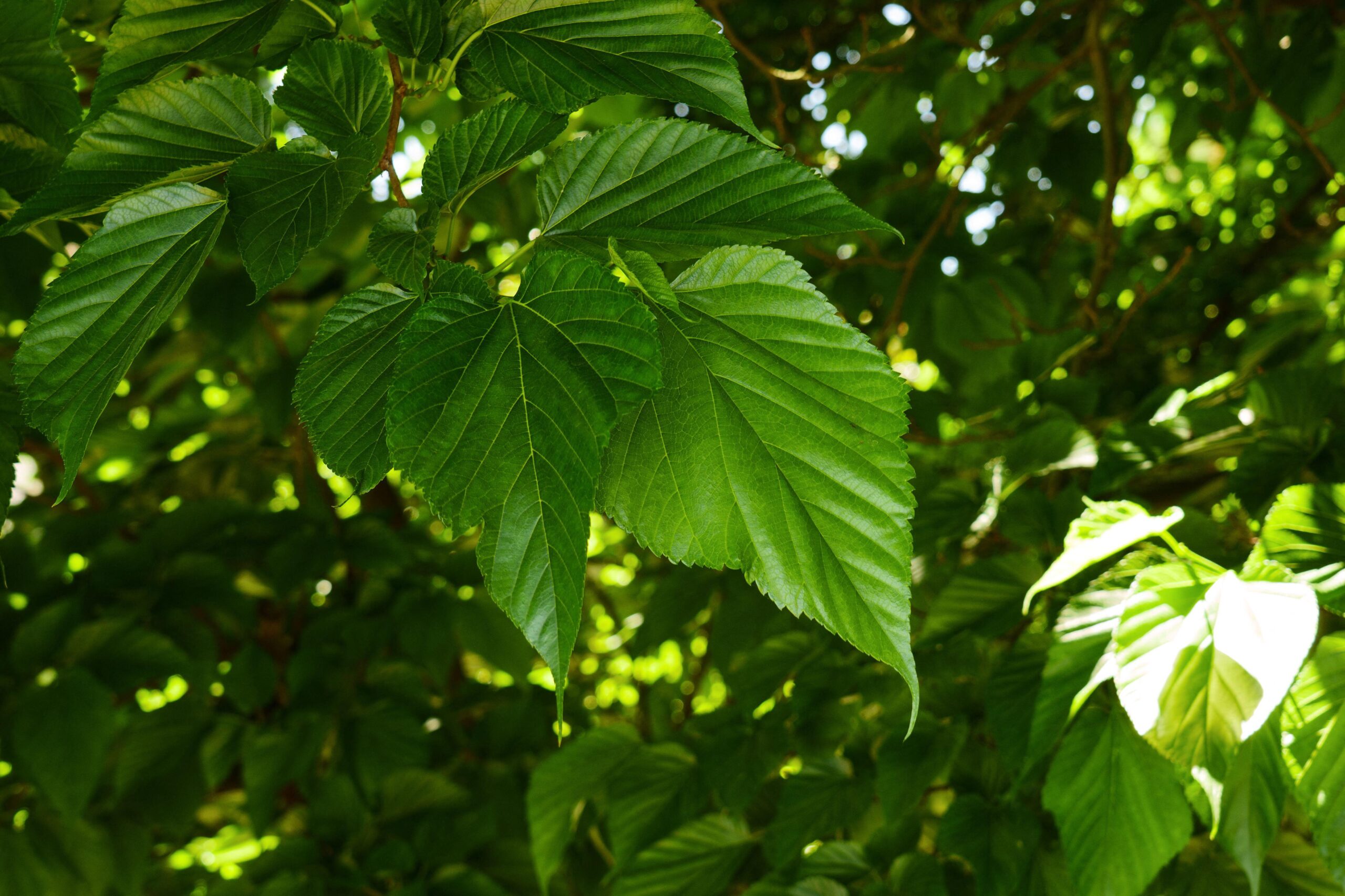
– Foliage Colour: Fresh green, turning soft yellow in autumn
– Hardiness: Hardy
– Soil Requirements: Well-drained, fertile soil
– Aspect: Full sun
– Maintenance: Low to moderate — annual formative pruning to maintain the roof canopy
Description
Morus alba ‘Fruitless’ in its roof form is a genuinely spectacular trained specimen — grown on a clear stem with branches trained outward and flat to create a broad, horizontal canopy that acts as a living canopy or architectural ceiling of foliage. As the name suggests, it produces no fruit, keeping the space beneath clean and practical. The large, fresh green leaves cast beautiful dappled shade through summer, and the structured canopy brings an unmistakable sense of order and elegance to any setting. Autumn adds a final flourish as the foliage turns a warm soft yellow before falling cleanly.
Caragh Garden Notebook
Planting:
Plant in spring or autumn in well-prepared, well-drained soil in a sunny, open position. Allow adequate space for the canopy to spread freely without obstruction. Support wires or a frame may be needed in the early years to maintain the horizontal structure.
Watering:
Water well after planting and during dry spells for the first two to three growing seasons. Once established, the tree is relatively drought tolerant, though deep watering in prolonged dry periods will help sustain the canopy’s vigour.
Feeding:
Apply a balanced general fertiliser or a generous mulch of well-rotted compost in early spring to support healthy canopy growth and strong foliage.
Seasonal Care & Tidy-Up:
Prune annually in late winter or early spring before buds break, removing any shoots that break upward or outward from the flat plane of the canopy. Tie in any lateral growth along the framework to preserve the clean, horizontal roof form. The more consistently it is maintained, the more refined and impressive the canopy becomes with each passing season.
Division (to keep plants vigorous):
Not applicable. Remove any vigorous upright water shoots promptly — these are common on trained forms and, if left unchecked, will disrupt the canopy’s flat, architectural profile.
Pests & Problems:
Generally trouble-free and resilient. Mulberries are not prone to serious pest or disease issues. Occasionally scale insects may appear on the stems — treat with a winter wash if needed.
Design Notes:
The roof form Mulberry is one of the most striking choices for creating an outdoor room effect — providing living shade and architectural structure above a seating area, terrace, or walkway. Its clean lines suit both contemporary and formal garden settings, and the absence of fruit makes it practical as well as beautiful. Underplant with low planting, gravel, or natural stone to emphasise the sculptural stem and canopy form.
Propagation:
Grafted trained form — propagation is not recommended at home. Always source named grafted stock to preserve the roof form and the fruitless characteristic.
Related products
-
Camellia Japonica Rosso
Price range: €195.00 through €240.00 Select options This product has multiple variants. The options may be chosen on the product page -
Magnolia kobus
Price range: €65.00 through €500.00 Select options This product has multiple variants. The options may be chosen on the product page -

Malus sylvestris / Crab Apple Tree
€320.00 Select options This product has multiple variants. The options may be chosen on the product page -
Aesculus Pavia
€150.00 Select options This product has multiple variants. The options may be chosen on the product page