

Magnolia Susan Multi-Stem
Price range: €145.00 through €350.00
Frequently Bought Together


Description
Quick Facts
- Common Name: Magnolia ‘Susan’
- Botanical Name: Magnolia ‘Susan’
- Plant Type: Deciduous flowering shrub / small tree (multi-stem form)
- Mature Height: 2.5–4m
- Mature Spread: 2–3m
- Flowering Period: April to May (often with a lighter repeat in summer)
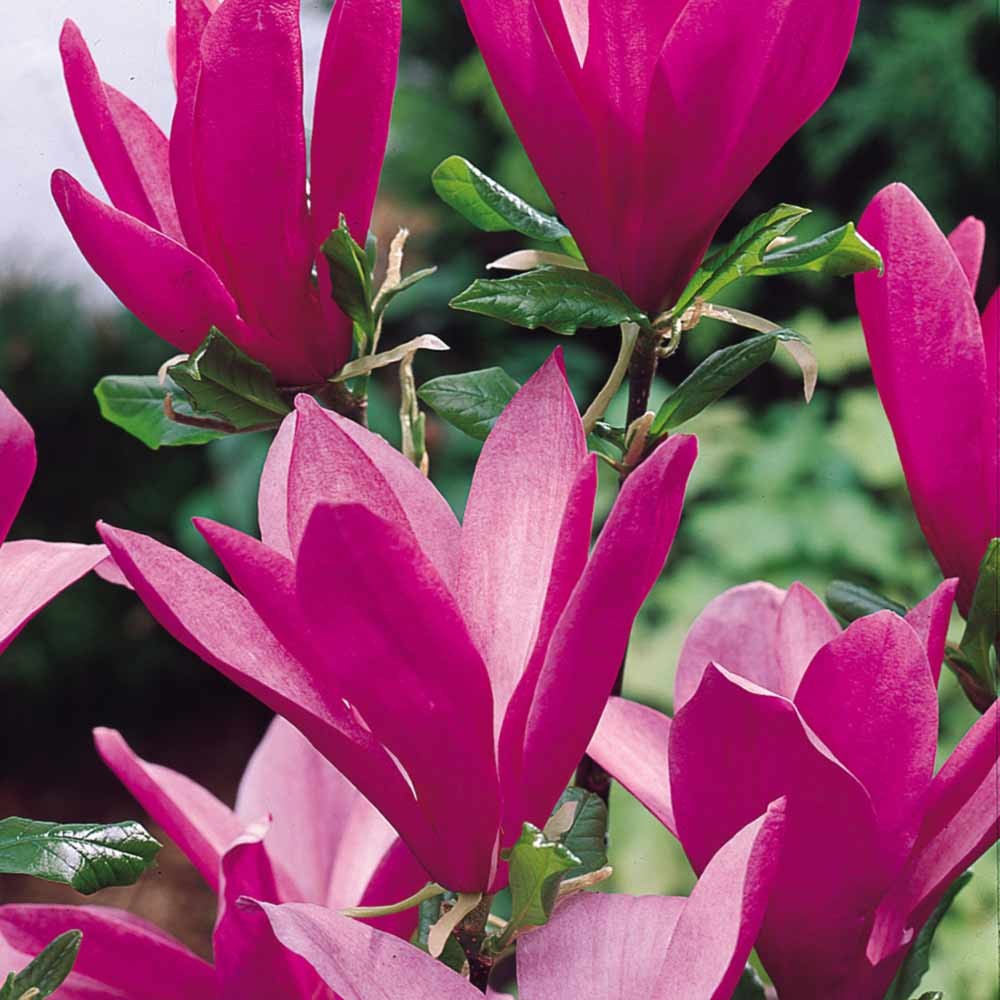
- Flower Colour: Deep reddish-purple buds opening to rich pink-purple, goblet-shaped blooms
- Fragrance: Light, sweet scent
- Foliage: Mid-green leaves; fresh, leafy canopy after flowering
- Hardiness: Hardy in most UK & Ireland gardens; late frosts can damage early blooms
- Soil Requirements: Moist, well-drained, humus-rich soil; slightly acidic to neutral
- Aspect: Full sun to part shade (shelter helps protect flowers)
- Maintenance: Low
Description
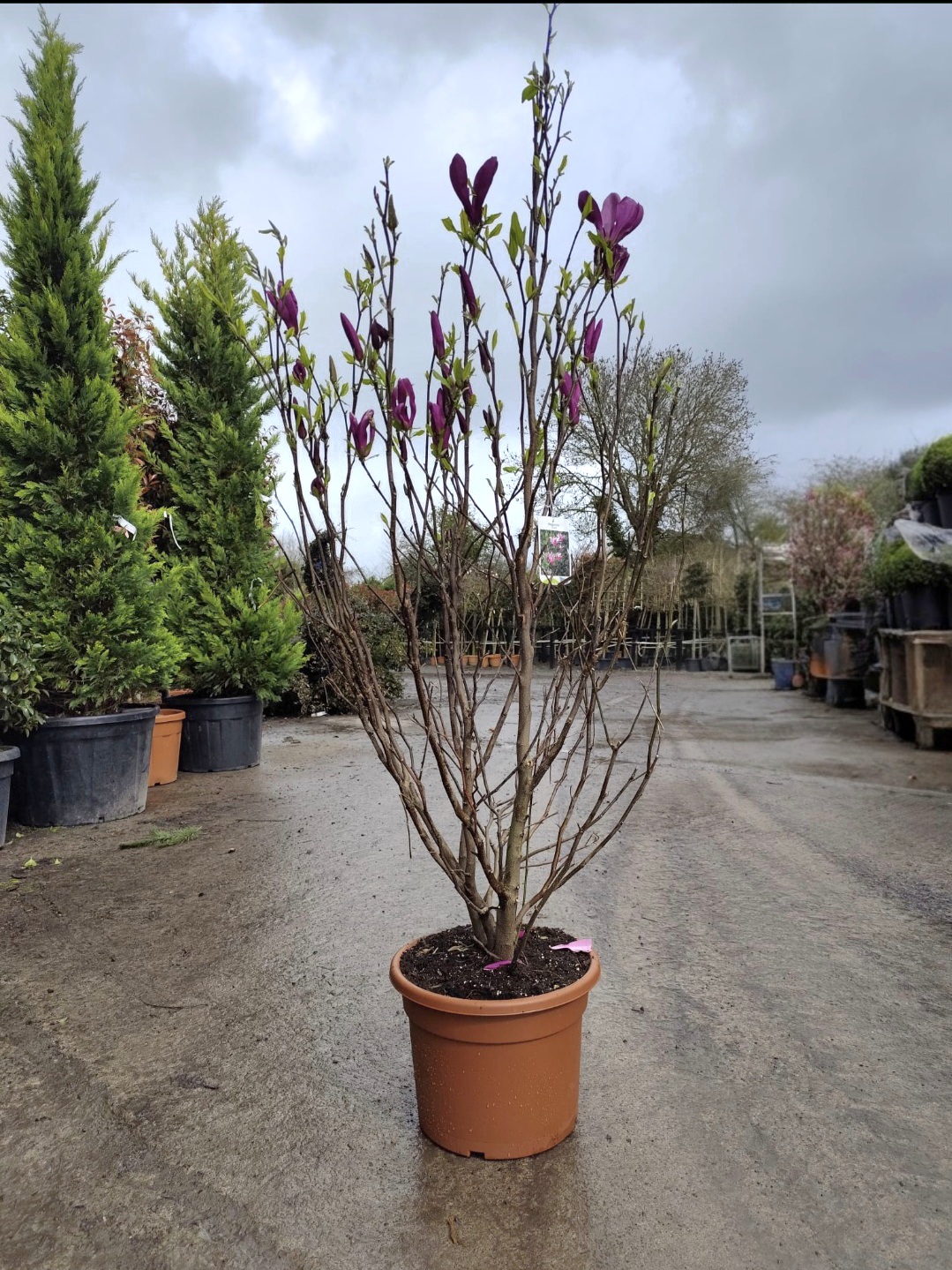
Magnolia ‘Susan’ is one of those plants that makes spring feel generous. On a multi-stem framework, it becomes a beautiful, branching feature—covered in deep, velvety buds that open into rich pink-purple, goblet-shaped flowers just as the garden is beginning to stir.
It’s especially loved because it tends to flower a little later than some magnolias, which can help it dodge the worst of late frosts. The blooms are held upright along the stems, creating a strong, sculptural silhouette in flower, and there’s often a lighter encore later in summer too.
Once flowering finishes, fresh green leaves unfurl to form a leafy canopy, giving you a handsome shrub/small tree for the rest of the season. Planted as a specimen, ‘Susan’ brings structure, colour and that unmistakable magnolia “moment” without needing a huge garden.
Caragh Garden Notebook
Planting:
Plant in spring or autumn. Choose a sheltered spot in sun or light shade—protection from cold winds helps keep flowers looking their best. Dig a generous hole and improve the soil with leaf mould or well-rotted compost. If your soil is alkaline, add ericaceous compost to help keep conditions slightly acidic. Plant at the same depth as in the pot, firm in gently, water well, and mulch to keep roots cool.
Plant in spring or autumn. Choose a sheltered spot in sun or light shade—protection from cold winds helps keep flowers looking their best. Dig a generous hole and improve the soil with leaf mould or well-rotted compost. If your soil is alkaline, add ericaceous compost to help keep conditions slightly acidic. Plant at the same depth as in the pot, firm in gently, water well, and mulch to keep roots cool.
Soil Preparation:
Magnolias love humus-rich, moist but free-draining soil. They dislike drying out and they dislike waterlogging—so aim for steady moisture with good drainage. Mulch annually to feed the soil and protect shallow roots.
Magnolias love humus-rich, moist but free-draining soil. They dislike drying out and they dislike waterlogging—so aim for steady moisture with good drainage. Mulch annually to feed the soil and protect shallow roots.
Watering:
Water regularly in the first year, especially during dry spells. In spring and early summer (when buds and new growth are forming), consistent moisture makes a noticeable difference.
Water regularly in the first year, especially during dry spells. In spring and early summer (when buds and new growth are forming), consistent moisture makes a noticeable difference.
Pruning:
Keep pruning minimal. Remove only dead, damaged, or crossing branches, ideally in mid-summer after flowering. Heavy pruning can reduce flowering.
Keep pruning minimal. Remove only dead, damaged, or crossing branches, ideally in mid-summer after flowering. Heavy pruning can reduce flowering.
Pests & Problems:
Generally trouble-free. The main issue is late frost on open blooms—planting in a sheltered position helps. In very windy spots, petals can brown at the edges.
Generally trouble-free. The main issue is late frost on open blooms—planting in a sheltered position helps. In very windy spots, petals can brown at the edges.
Design Notes:
A perfect specimen for lawns, mixed borders, and near patios where you can enjoy the flowers up close. Underplant with spring bulbs, hellebores, brunnera, ferns, or soft evergreen structure for a layered, woodland feel.
A perfect specimen for lawns, mixed borders, and near patios where you can enjoy the flowers up close. Underplant with spring bulbs, hellebores, brunnera, ferns, or soft evergreen structure for a layered, woodland feel.
Related products
-

Pinus nigra nigra
Price range: €30.00 through €350.00 Select options This product has multiple variants. The options may be chosen on the product page -
Abies nordmanniana / Nordmann Fir
€550.00 Select options This product has multiple variants. The options may be chosen on the product page -

Cedrus libani Pendula
€2,200.00 Select options This product has multiple variants. The options may be chosen on the product page -
Acer campestre / Field Maple
€450.00 Select options This product has multiple variants. The options may be chosen on the product page