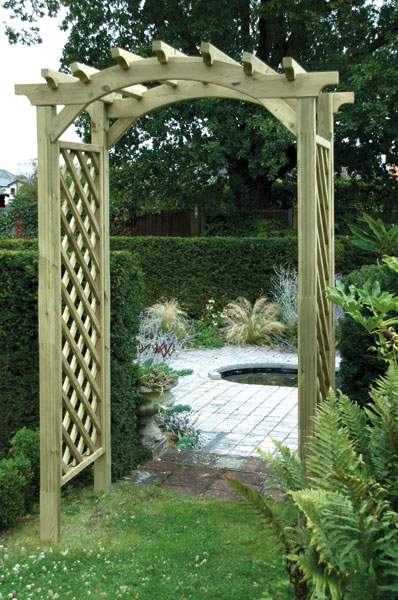
Lattice Garden Arch
€265.00
Description
Quick Facts
Product Name: Lattice Garden Arch
Material: Pressure-treated timber
Structure Type: Freestanding garden arch with curved omega top (elite heavy-duty construction)
Dimensions: 130cm wide × 75cm deep × 260cm high
Side Panels: Diamond lattice pattern (70mm apertures)
Frame: Heavy-duty planed timber construction with substantial posts
Top Design: Elegant curved omega arch
Finish: Natural pressure-treated timber (can be painted or stained)
Durability: Pressure-treated for long-lasting outdoor use
Assembly: Flat-pack for easy transport; straightforward assembly required
Fixings: Ground spikes or concreting recommended (fixings not included)
Material: Pressure-treated timber
Structure Type: Freestanding garden arch with curved omega top (elite heavy-duty construction)
Dimensions: 130cm wide × 75cm deep × 260cm high
Side Panels: Diamond lattice pattern (70mm apertures)
Frame: Heavy-duty planed timber construction with substantial posts
Top Design: Elegant curved omega arch
Finish: Natural pressure-treated timber (can be painted or stained)
Durability: Pressure-treated for long-lasting outdoor use
Assembly: Flat-pack for easy transport; straightforward assembly required
Fixings: Ground spikes or concreting recommended (fixings not included)
Description
The Lattice Garden Arch is the kind of garden structure that commands attention without trying. The curved top gives it that softer, more elegant profile, but the “elite” construction—heavier timber, more substantial posts, deeper frame—means this is an arch built to handle serious climbers and stand up to exposed sites where a standard arch would struggle.
At 260cm tall and 130cm wide, it has real presence. But it’s the 75cm depth that sets it apart—that extra 15cm over a standard arch makes a noticeable difference. It gives climbers room to grow thick and lush on both the front and back, creating a proper tunnel effect when plants mature. Walk through it when roses or wisteria are in full growth, and you’re surrounded by foliage and flowers, not just passing under them.
The diamond lattice side panels aren’t just decorative—they’re built to support weight. The 70mm apertures give climbers plenty to grip, and the heavier frame means vigorous plants like rambling roses, mature wisteria, or climbing hydrangea won’t pull the structure out of shape or cause it to sag over time.
The pressure-treated timber is built for the long haul, and the planed finish looks smart from day one. Left natural, it weathers to a soft silver-grey that sits quietly behind the planting. Painted or stained, it becomes a statement—a bold, elegant frame for whatever you’re growing.
This is an arch for gardeners who want something that will last, support substantial climbers, and create that real sense of arrival or transition in the garden. It’s not just marking a threshold—it’s creating a moment.
Caragh Garden Notebook
Installation
Site Selection:
Choose a location where the arch will frame something worth looking at—a garden view, a seating area, or the transition between two distinct spaces (lawn to border, patio to vegetable garden, formal to informal). The elite construction and 75cm depth make this arch particularly suited to:
Choose a location where the arch will frame something worth looking at—a garden view, a seating area, or the transition between two distinct spaces (lawn to border, patio to vegetable garden, formal to informal). The elite construction and 75cm depth make this arch particularly suited to:
- Exposed or windy sites where a standard arch would be too light
- Supporting heavy or vigorous climbers (wisteria, rambling roses, mature honeysuckle)
- Creating a substantial “tunnel” effect with deep, lush planting on both sides
Ground Preparation:
The elite arch is heavier and designed for more demanding conditions. Secure anchoring is essential. You have two main options:
The elite arch is heavier and designed for more demanding conditions. Secure anchoring is essential. You have two main options:
Option 1: Ground Spikes (Quick Installation)
- Use heavy-duty metal ground spikes (minimum 75cm long, rated for the weight of the elite arch plus mature climbers)
- Mark out the four corner positions accurately (130cm × 75cm rectangle)
- Drive spikes into firm, level ground using a sledgehammer and protective block
- Check level and alignment before inserting arch posts into spikes
- Best for lawns or firm soil; not suitable for loose or stony ground
- Given the elite construction and potential climber weight, concrete footings are recommended over spikes for long-term stability
Option 2: Concrete Footings (Most Secure—Recommended )
- Dig four holes, one at each corner position: 35cm × 35cm × 75cm deep (larger and deeper than standard arch footings due to the heavier construction)
- Add 10–15cm of compacted hardcore or gravel at the base for drainage
- Position the arch posts in the holes, checking they’re level and square
- Use temporary bracing (timber offcuts) to hold the arch upright and aligned—the elite arch is heavier, so ensure bracing is secure
- Mix postcrete or standard concrete and fill around each post
- Tamp down to remove air pockets and ensure good contact
- Allow 48–72 hours to cure fully before removing bracing or planting climbers
- This method is essential for exposed sites, heavy climbers (wisteria, mature roses), soft ground, or anywhere you want maximum longevity and stability
Assembly Tips:
- Assemble on a flat surface first to check all parts fit correctly
- Use galvanised screws throughout (supplied screws may need upgrading to heavier-duty fixings for the elite construction)
- Pre-drill all screw holes to prevent splitting, especially near timber ends
- Have a second person help with positioning and holding the arch upright during installation—the elite arch is noticeably heavier than standard models
- Check the arch is level in both directions before securing permanently
- Take your time—the heavier construction means adjustments are harder once the arch is in place
Positioning for Paths:
If placing over a path, ensure the internal clearance (approximately 115cm wide × 70cm deep) is sufficient for comfortable passage, wheelbarrows, or garden equipment. The 75cm depth is generous—allow an extra 10–15cm on each side once climbers are established and growing inward. Even with mature planting, this arch maintains good passage width.
If placing over a path, ensure the internal clearance (approximately 115cm wide × 70cm deep) is sufficient for comfortable passage, wheelbarrows, or garden equipment. The 75cm depth is generous—allow an extra 10–15cm on each side once climbers are established and growing inward. Even with mature planting, this arch maintains good passage width.
Maintenance
Initial Treatment:
The arch arrives pressure-treated and ready to install. For enhanced protection and appearance:
The arch arrives pressure-treated and ready to install. For enhanced protection and appearance:
- Allow the timber to weather for 6–12 months before applying paint or stain (this lets treatment chemicals stabilise)
- Clean the timber with a stiff brush to remove any surface dirt or algae
- Apply an exterior-grade timber preservative, decking oil, or wood stain
- Pay particular attention to cut ends, joints, and any areas where water might collect
- The heavier timber takes stain and paint particularly well—coverage is more even and finishes last longer
Annual Maintenance:
- Spring check: Inspect all fixings and tighten any screws that have loosened over winter (timber expands and contracts seasonally). The elite construction uses more and heavier fixings—check them all.
- Treatment: Apply a fresh coat of preservative, oil, or stain annually to maintain colour and protection. The larger surface area means this takes a bit longer, but the investment is worth it.
- Cleaning: Remove debris, fallen leaves, or moss from joints and the top of the arch where water can pool
- Ground contact: Check that posts aren’t sitting in waterlogged soil or mulch piled against them—this accelerates rot even on treated timber
Climber Management:
- Trim back vigorous climbers annually to prevent them overwhelming the structure. The elite arch can handle more weight than standard models, but even heavy-duty construction has limits.
- Check ties and supports; replace any that are cutting into stems
- Remove dead or diseased growth promptly to maintain airflow and reduce weight on the arch
- The 75cm depth means climbers can grow thick and lush—manage growth to maintain passage width and prevent the arch feeling overgrown or dark inside
Longevity:
With proper installation (especially concrete footings) and annual treatment, expect many years of solid service from the elite arch—significantly longer than standard models. The heavier construction is more resistant to warping, twisting, and weather damage.
With proper installation (especially concrete footings) and annual treatment, expect many years of solid service from the elite arch—significantly longer than standard models. The heavier construction is more resistant to warping, twisting, and weather damage.
Repairs:
- Touch up any scratches, splits, or damaged areas with matching stain or preservative
- Replace screws if they show signs of rust (upgrade to stainless steel for coastal or very wet sites)
- If a post base begins to rot, the arch can be lifted and the damaged section cut away and replaced with a treated timber extension bolted or screwed in place
- The heavier construction makes individual component replacement easier—the structure holds its shape better during repairs
Planting & Training Climbers
Best Climbers for your new Arch:
The arch’s height, depth, heavy-duty construction, lattice sides, and curved top make it ideal for a wide range of climbers—including vigorous or heavy varieties that would overwhelm a standard arch. The 75cm depth is perfect for creating a true “tunnel” of planting.
Classic Choices:
-
Climbing Roses: ‘New Dawn’ (soft pink, repeat-flowering, vigorous), ‘Compassion’ (apricot-pink, heavily scented), ‘Albertine’ (coppery-pink, one flush but spectacular), ‘Gertrude Jekyll’ (deep pink, rich fragrance), ‘Rambling Rector’ (white, vigorous rambler, masses of small flowers). Roses need tying in initially and annual pruning, but the reward is unmatched. The elite arch can support even the most vigorous ramblers.
-
Clematis: ‘Jackmanii’ (deep purple, reliable, flowers on new wood), ‘Nelly Moser’ (pink with darker stripes, flowers twice), ‘Henryi’ (large white flowers), montana varieties (vigorous, masses of small flowers in spring—prune after flowering). Clematis weave through lattice beautifully and prefer their roots shaded, tops in sun. The 75cm depth allows you to plant clematis on both sides for maximum coverage.
Scented & Romantic:
-
Honeysuckle (Lonicera): ‘Serotina’ (purple-red buds, creamy flowers, evening scent), ‘Graham Thomas’ (yellow, long flowering season), ‘Belgica’ (early Dutch honeysuckle, pink and cream). Fast-growing, fragrant, excellent for quick coverage. The elite arch can handle honeysuckle’s vigorous growth without sagging.
-
Jasmine: Star jasmine (Trachelospermum jasminoides—evergreen, white flowers, intense scent, slightly tender but hardy in most of the UK), common jasmine (Jasminum officinale—deciduous, white flowers, summer scent), winter jasmine (Jasminum nudiflorum—yellow flowers in winter, no scent but invaluable for off-season interest).
Vigorous & Dramatic:
-
Wisteria: Wisteria sinensis or floribunda (spectacular hanging racemes of purple, white, or pink flowers in late spring). This is where the elite arch really shines—it’s built to handle wisteria’s weight and vigour. The curved omega top shows off the hanging flowers beautifully. Needs annual pruning (twice a year for best flowering) and strong support. Plant on one side only; wisteria will dominate, but the elite arch can take it.
-
Climbing Hydrangea (Hydrangea petiolaris): Slow to establish (2–3 years) but then vigorous and heavy. White lacecap flowers in summer, beautiful peeling bark in winter. Self-clinging but benefits from initial tying in. Tolerates shade. The elite arch’s depth and strength make it ideal for mature climbing hydrangea.
-
Rambling Roses: Varieties like ‘Rambling Rector’, ‘Bobbie James’, ‘Paul’s Himalayan Musk’—these are vigorous, heavy, and spectacular. They need the kind of robust support the elite arch provides.
-
Grape Vines: Ornamental or fruiting varieties. The elite arch can support the weight of mature vines with foliage and fruit. The 75cm depth creates a lovely shaded tunnel when vines are in full leaf.
Annual Climbers (for Quick Colour or Seasonal Change):
- Sweet Peas (Lathyrus odoratus): Sow in spring for summer flowers; unbeatable scent and cut flowers. Needs regular deadheading.
- Morning Glory (Ipomoea): Fast-growing, blue/purple/pink trumpet flowers, loves sun.
- Black-Eyed Susan (Thunbergia alata): Orange flowers with dark centres, cheerful and easy.
- Nasturtiums (Tropaeolum majus): Edible flowers, fast coverage, tolerates poor soil.
Planting Tips:
-
Spacing: Plant climbers 30–40cm away from the arch posts to avoid root competition and allow access for watering. With the 75cm depth, you can plant on both the front and back of the arch for maximum coverage. Angle plants toward the arch and tie in initial growth.
-
Soil preparation: Dig a generous planting hole (twice the width of the pot), mix in compost or well-rotted manure, and ensure good drainage. Climbers are long-term plants—give them the best start, especially if you’re planting vigorous varieties.
-
Watering: Water deeply and regularly in the first year, especially in dry spells. Established climbers are more drought-tolerant but still appreciate consistent moisture during flowering.
-
Mulching: Apply a 5–7cm layer of mulch (compost, bark, or well-rotted manure) around the base of climbers, keeping it clear of stems. This conserves moisture, suppresses weeds, and feeds the soil.
-
Feeding: Apply a balanced slow-release fertiliser in early spring, or a rose/flowering shrub feed for repeat-flowering climbers. Vigorous climbers (wisteria, rambling roses) benefit from an annual feed to support their growth. A spring mulch of compost often provides enough nutrition.
Training Tips:
-
Tie in early growth: Use soft garden twine or plant ties to guide young stems onto the lattice. Tie loosely to allow for stem thickening.
-
Encourage horizontal growth: Train stems horizontally as well as vertically for better coverage and more flowers (especially important for roses and clematis). The curved omega top is perfect for guiding stems up and over in a natural arc.
-
Prune according to type: Roses and clematis have different pruning needs depending on variety. Check specific requirements and prune at the right time to avoid losing flowers. Vigorous climbers need regular pruning to keep them in bounds and maintain the arch’s shape.
-
Manage vigour: Don’t let one climber dominate unless that’s the effect you want. If planting multiple varieties, choose compatible vigour levels or be prepared to prune the stronger one back. The elite arch can handle vigorous growth, but balanced planting creates a better overall effect.
-
Use the depth: With 75cm to work with, plant climbers on both the front and back of the arch. This creates a true tunnel effect—you’re surrounded by planting as you walk through, not just passing under a single layer.
Planting Combinations:
-
Classic pairing: A climbing rose on one side, a clematis on the other (choose varieties that flower at different times for extended interest, or together for maximum impact).
-
Scented tunnel: Honeysuckle and jasmine together for fragrance from spring through autumn. Plant on both sides of the arch for an immersive scented experience.
-
Year-round interest: Winter jasmine (flowers December–February) with a summer-flowering clematis or rose. Add an evergreen climber (ivy, star jasmine) for year-round structure.
-
Single statement: One vigorous climber (wisteria, rambling rose, or climbing hydrangea) for maximum drama and simplicity. The elite arch is built for this—let one spectacular plant take over.
-
Layered planting: Plant on both the front and back of the arch with different climbers—roses on the outside, clematis on the inside, for example. The 75cm depth makes this work beautifully.
Design Ideas
Framing a View:
Position the arch to frame a focal point—a sculpture, a seating area, a particularly beautiful tree, or simply a well-planted border. The omega top draws the eye upward and creates a natural “picture frame” for whatever lies beyond. The elite construction means it holds its shape beautifully, even in exposed positions.
Position the arch to frame a focal point—a sculpture, a seating area, a particularly beautiful tree, or simply a well-planted border. The omega top draws the eye upward and creates a natural “picture frame” for whatever lies beyond. The elite construction means it holds its shape beautifully, even in exposed positions.
Creating Garden Rooms:
Use the arch as a threshold between different garden areas: lawn to border, formal to informal, vegetable garden to ornamental. It signals a transition and adds a sense of journey, even in a small garden. The 75cm depth makes the transition feel more substantial—you’re passing through something, not just under it.
Use the arch as a threshold between different garden areas: lawn to border, formal to informal, vegetable garden to ornamental. It signals a transition and adds a sense of journey, even in a small garden. The 75cm depth makes the transition feel more substantial—you’re passing through something, not just under it.
Path Marker:
Place the arch at the start, middle, or end of a path to add height and structure. It works particularly well on straight paths where it creates a focal point and encourages you to walk toward it. The elite construction means it can handle exposed positions at the end of long sightlines.
Place the arch at the start, middle, or end of a path to add height and structure. It works particularly well on straight paths where it creates a focal point and encourages you to walk toward it. The elite construction means it can handle exposed positions at the end of long sightlines.
Standalone Feature:
In a lawn or gravel area, the arch can stand alone as a sculptural element, especially when covered in climbers. It adds vertical interest and breaks up flat, open spaces. The heavier construction gives it presence even before planting matures.
In a lawn or gravel area, the arch can stand alone as a sculptural element, especially when covered in climbers. It adds vertical interest and breaks up flat, open spaces. The heavier construction gives it presence even before planting matures.
Additional information
| Size | 130cm wide × 75cm deep × 260cm high |
|---|