

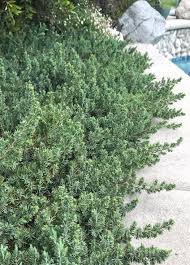
Juniperus conferta ‘Blue Pacific’
€25.00
Frequently Bought Together

Description
Quick Facts
- Botanical name: Juniperus conferta ‘Blue Pacific’ (also listed as Juniperus rigida subsp. conferta)
- Common name: Shore juniper
- Type: Evergreen, ground-hugging coniferous shrub
- Mature height and spread: Around 20–30cm tall and 1.5–2m wide after 10 years. Slow to moderate growth.
- Flowering period and colour: Insignificant. Conifers carry small cones, not showy flowers.
- Foliage: Dense, soft-looking needles in blue-green, with a silvery-blue tone that holds through winter, sometimes taking a slight purple tint in the cold.
- Hardiness: Fully hardy in Ireland and the UK (around RHS H7, to about -20°C).
- Soil: Well-drained soil, including sandy, poor and chalky ground. Dislikes waterlogging.
- Aspect: Full sun for the best colour and density. Tolerates light shade but may thin out.
- Maintenance: Very low.
Description
A low, spreading evergreen with a dense carpet of blue-green foliage that hugs the ground and softly trails over edges and walls. It keeps its colour all year, and is tough and dependable in tricky spots, including dry, sunny sites and coastal gardens. Excellent for ground cover, slopes, gravel gardens, rockeries and cascading over a raised bed.
Caragh Garden Notebook
Planting Plant in autumn or spring in full sun and free-draining soil. Dig a hole about twice the width of the pot, keep the rootball level with the surface, firm in gently and water well. Space plants 1–1.5m apart for ground cover. On heavy clay, improve the drainage or plant on a slight mound.
Watering Water regularly through the first season to establish. Once settled it is notably drought tolerant. Avoid constantly wet soil.
Feeding Little feeding is needed. A light slow-release fertiliser in spring suits pots and poor soils.
Seasonal Care and Tidy-Up Spring: Check for any winter damage and trim any unwanted shoots. Summer: Keep container plants watered. Autumn: Brush fallen leaves off the foliage so the plant stays healthy and airy. Winter: Generally trouble-free. Keep it clear of heavy, wet leaf litter.
Division Not applicable. Pruning is minimal. Trim lightly to control spread, cutting back to green growth in spring or late summer. Junipers don’t reliably regrow from bare, brown wood, so never cut into it.
Pests and Problems
- Tip blight (phomopsis or kabatina): A fungal disease causing browning and dieback of shoot tips, mainly in damp conditions. Remove affected tips, improve airflow, and avoid overhead watering.
- Juniper scale and aphids: Small sap-feeding insects that cause yellowing patches. Check regularly.
- Waterlogging: The most common cause of loss.
- Handling: The foliage can irritate sensitive skin, so wear gloves and long sleeves when planting and pruning.
- Coastal tolerance: Good tolerance of salt-laden wind, though young plants benefit from some shelter.
Design Notes A strong choice for sunny banks, slopes, gravel gardens and the edges of raised beds, where it spills over softly. Blue-green foliage pairs well with lavender, sedum, heathers, ornamental grasses and pink or purple flowers. Plant in drifts for a weed-suppressing carpet, or use in large containers to trail over the edge.
Propagation Nurseries propagate named junipers from cuttings, usually in late summer to autumn. This is slow and unreliable for home gardeners. Seed won’t reliably produce the same plant.
Related products
-

Vinca minor
€8.50 Select options This product has multiple variants. The options may be chosen on the product page -

Juniperus Virginiana ‘Skyrocket’
€160.00 Select options This product has multiple variants. The options may be chosen on the product page -

Juniperus x media ‘Pfitzeriana Aurea’
€22.00 Select options This product has multiple variants. The options may be chosen on the product page -

Juniper x media Mint Julep Specimen Bonsai
€2,200.00 Select options This product has multiple variants. The options may be chosen on the product page