

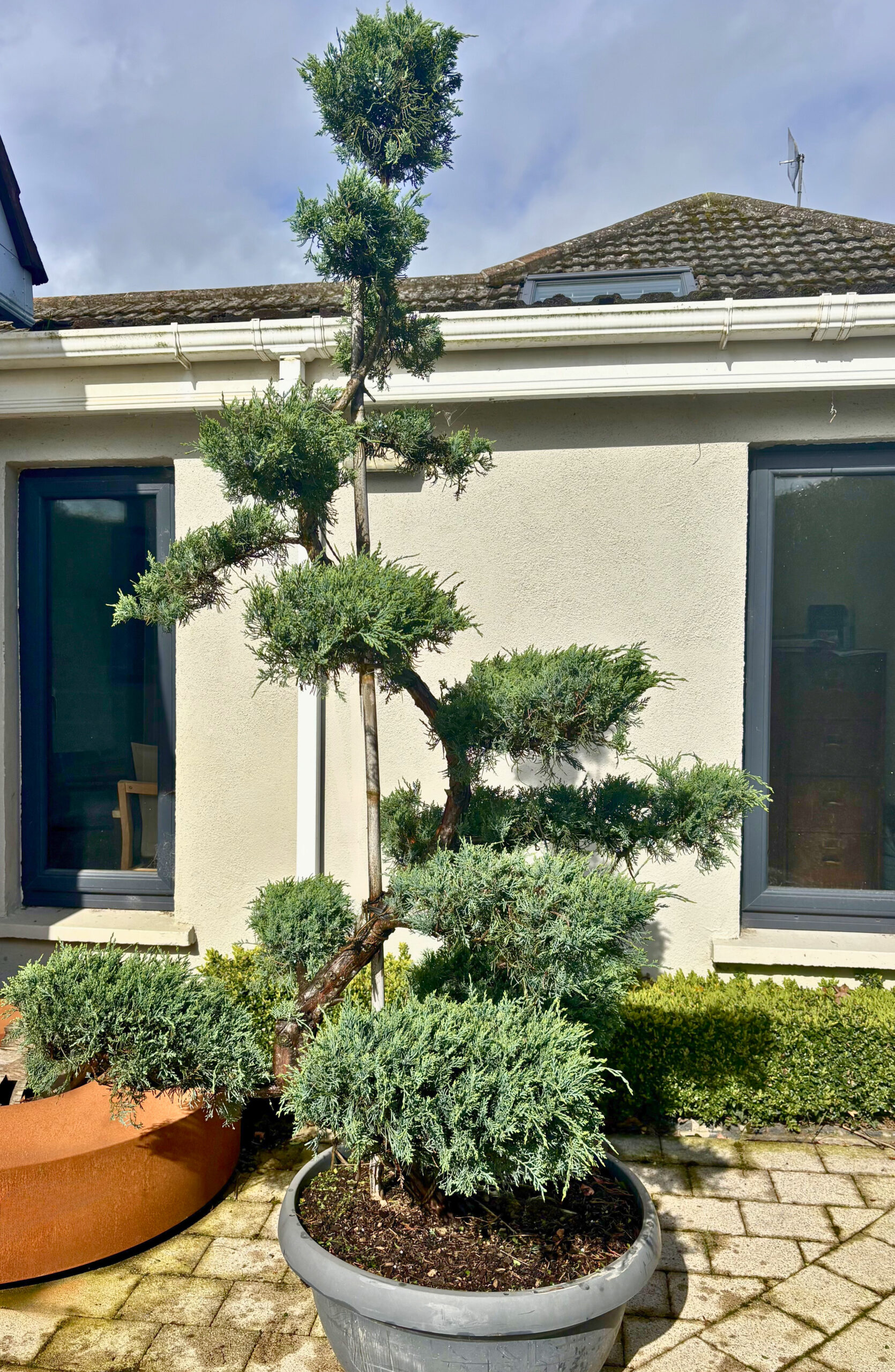
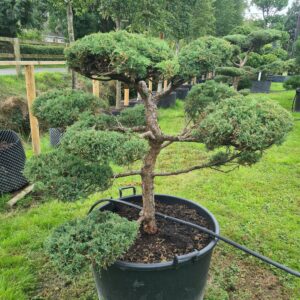
Juniper Grey Owl Specimen Bonsai
Price range: €2,800.00 through €3,200.00
Frequently Bought Together

Description
Quick Facts
- Common Name: Grey Owl Juniper (Specimen Bonsai)
- Botanical Name: Juniperus virginiana ‘Grey Owl’
- Plant Type: Evergreen conifer, specimen “bonsai-style” (cloud-pruned / niwaki look)
- Height at Sale: Up to 2.5m (specimen size)
- Mature Height: 2–3m+ (can be maintained at a chosen height with pruning)
- Mature Spread: 1.5–3m (managed by training and clipping)
- Foliage Colour: Soft silver-grey to blue-grey
- Foliage Texture: Fine, feathery sprays; aromatic when brushed
- Hardiness: Very hardy (UK & Ireland)
- Soil Requirements: Well-drained soil; drought-tolerant once established
- Aspect: Full sun (best colour and density) to light shade
- Maintenance: Low–moderate (seasonal shaping to hold the bonsai form)
Description
Juniperus ‘Grey Owl’ trained as a specimen bonsai is pure garden sculpture—an evergreen with a calm, windswept character and a soft silver-grey colour that makes everything around it feel more considered. Each plant is shaped to create that “bonsai in the landscape” look: layered pads of foliage, a strong framework of trunk and branches, and a silhouette that feels both natural and intentional.
At up to 2.5 metres tall, these are proper statement specimens—ideal as a focal point in gravel gardens, contemporary borders, courtyard planting, or anywhere you want year-round structure without heaviness. The foliage is fine and feathery, with a cool blue-grey tone that pairs beautifully with stone, dark evergreens, ornamental grasses, and warm-toned planting.
And because it’s a juniper, it’s wonderfully resilient: hardy, wind-tolerant, and drought-tough once established (as long as it isn’t sitting wet). It’s a plant that looks high-design, but behaves like a workhorse.
Caragh Garden Notebook
Planting:
Plant in spring or autumn. Choose a sunny, open position for the best colour and a dense finish. Dig a generous hole and ensure the plant sits at the same depth as in the pot. Backfill with the excavated soil mixed with compost, firm in well, water thoroughly, and mulch lightly (keep mulch away from the trunk).
Plant in spring or autumn. Choose a sunny, open position for the best colour and a dense finish. Dig a generous hole and ensure the plant sits at the same depth as in the pot. Backfill with the excavated soil mixed with compost, firm in well, water thoroughly, and mulch lightly (keep mulch away from the trunk).
Soil Preparation:
Junipers need excellent drainage. They dislike sitting wet, especially in winter.
Junipers need excellent drainage. They dislike sitting wet, especially in winter.
- In heavy soils, improve drainage with grit and organic matter, or plant slightly proud on a gentle mound.
- In pots, use a gritty, free-draining compost mix and ensure drainage holes are clear.
Watering:
Water regularly in the first year while roots establish. Once settled, ‘Grey Owl’ is drought-tolerant, but specimen plants still appreciate a deep soak during prolonged dry spells—especially in summer.
Water regularly in the first year while roots establish. Once settled, ‘Grey Owl’ is drought-tolerant, but specimen plants still appreciate a deep soak during prolonged dry spells—especially in summer.
Shaping & Maintenance (keeping the bonsai look):
- Lightly trim once or twice a year to maintain the layered “cloud” pads and clean lines.
- Best times: late spring/early summer, and again in late summer if needed.
- Step back as you clip—small snips make the most natural, sculptural finish.
- Avoid hard cutting into old, bare wood; maintain shape with regular, gentle pruning.
Feeding:
Generally low feeding needs. A light spring feed (slow-release) supports fresh, healthy growth—especially for container-grown specimens.
Generally low feeding needs. A light spring feed (slow-release) supports fresh, healthy growth—especially for container-grown specimens.
Pests & Problems:
Generally trouble-free. The biggest risk is poor drainage (leading to stress and browning). In very dry summers, occasional spider mite can appear—steady watering and good air movement help.
Generally trouble-free. The biggest risk is poor drainage (leading to stress and browning). In very dry summers, occasional spider mite can appear—steady watering and good air movement help.
Design Notes:
A perfect focal point for gravel gardens, modern courtyards, and architectural borders. Looks stunning with boulders, slate, corten steel, ornamental grasses, lavender, rosemary, and dark green evergreens that make the silver foliage glow.
A perfect focal point for gravel gardens, modern courtyards, and architectural borders. Looks stunning with boulders, slate, corten steel, ornamental grasses, lavender, rosemary, and dark green evergreens that make the silver foliage glow.
Related products
-
Euonymus japonicus Bravo
€320.00 Select options This product has multiple variants. The options may be chosen on the product page -
Euonymus Emerald ‘n’ Gold
€8.50 Select options This product has multiple variants. The options may be chosen on the product page -
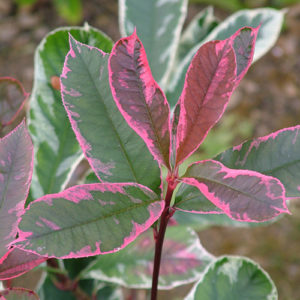
Photinia Pink Marble Parachute
Price range: €320.00 through €350.00 Select options This product has multiple variants. The options may be chosen on the product page -

Choisya ternata – Mexican Orange Blossom
Price range: €9.50 through €22.00 Select options This product has multiple variants. The options may be chosen on the product page