

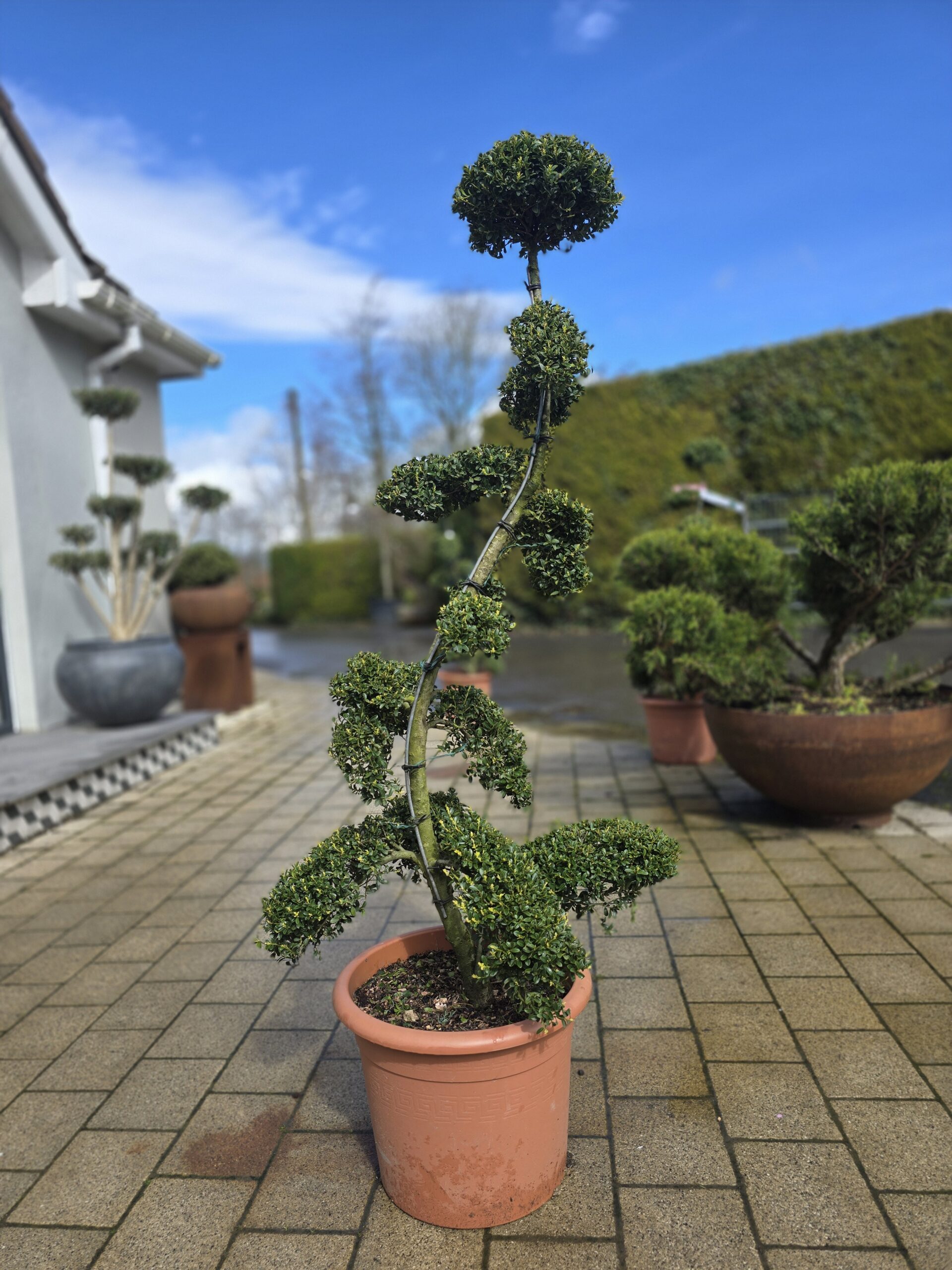
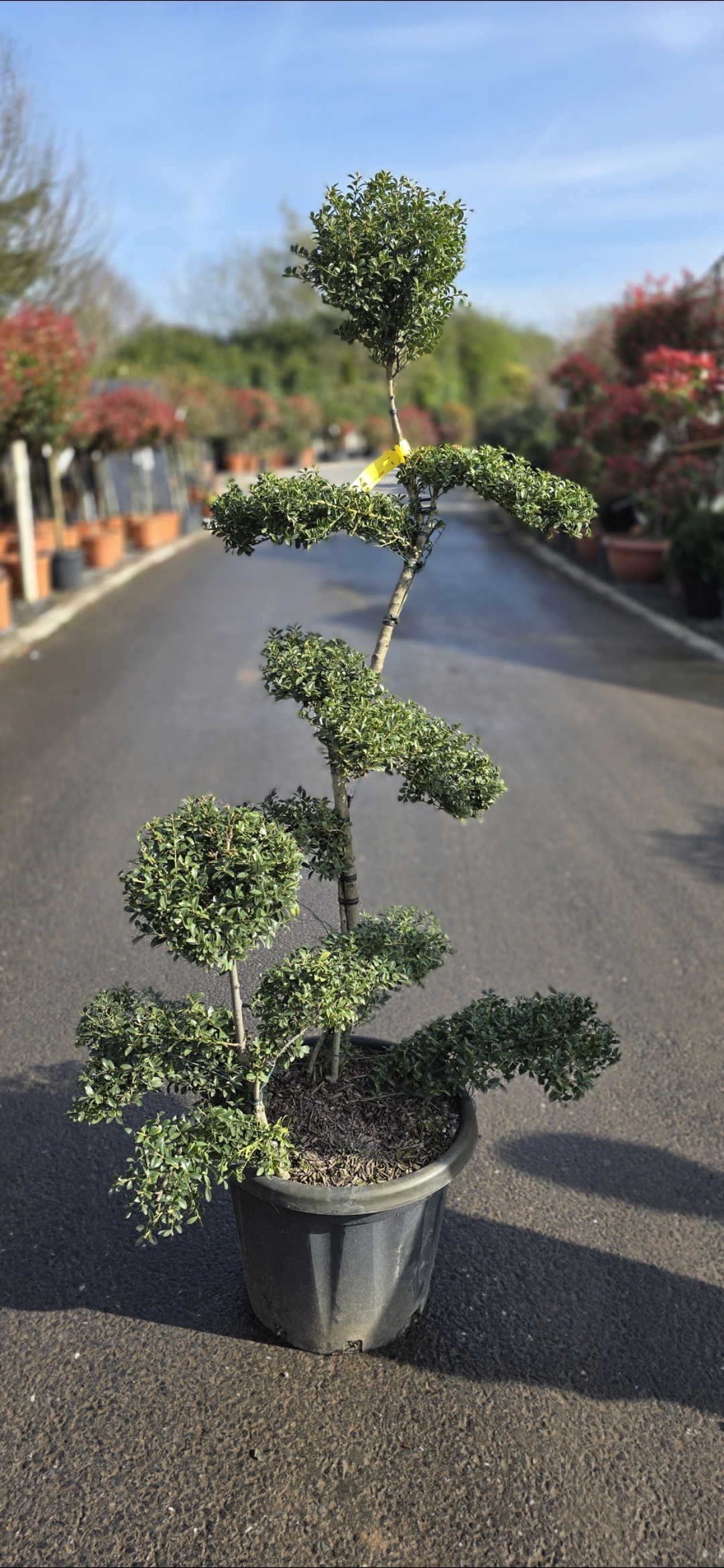
Ilex crenata ‘Kinme’ Bonsai
€270.00
Frequently Bought Together

Description
Quick Facts
- Common Name: Japanese Holly ‘Kinme’ (Bonsai / Niwaki-style specimen)
- Botanical Name: Ilex crenata ‘Kinme’
- Plant Type: Evergreen shrub, trained specimen (bonsai look / cloud-pruned form)
- Height at Sale: Approx. 120cm
- Mature Height: 1.5–2.5m+ (can be maintained smaller with pruning)
- Mature Spread: 80cm–1.5m (managed by shaping)
- Foliage: Small, glossy leaves; dense, box-like look
- Stem/Branch Character: Strong framework, shaped to create layered pads
- Hardiness: Very hardy (UK & Ireland)
- Soil Requirements: Moist, well-drained soil; prefers slightly acidic to neutral
- Aspect: Full sun to part shade
- Maintenance: Low–moderate (occasional shaping to hold the form)
Description
Ilex crenata ‘Kinme’ trained as a bonsai-style specimen brings that calm, sculptural “Japanese garden” feel into everyday planting. With its small, glossy leaves and naturally dense growth, it holds a clipped, cloud-pruned shape beautifully—layered pads of foliage on a strong framework, giving you structure that looks intentional all year round.
At around 120cm tall, these are ideal statement plants for patios, courtyards, entrances, and gravel gardens—big enough to feel like a feature, but still easy to place. They’re also a brilliant alternative to box (Buxus) for customers who want that neat, evergreen look without the same worries around blight and caterpillar.
Whether you use one as a focal point, or plant a pair for symmetry, ‘Kinme’ brings instant maturity and a sense of quiet design—like the garden has been there longer than it has.
Caragh Garden Notebook
Planting:
Plant in spring or autumn. Choose a spot in sun or part shade. Dig a generous hole and improve the soil with compost to help establishment. Plant at the same depth as in the pot, firm in gently, water well, and mulch to conserve moisture (keep mulch away from the trunk). In pots, choose a sturdy container with excellent drainage.
Plant in spring or autumn. Choose a spot in sun or part shade. Dig a generous hole and improve the soil with compost to help establishment. Plant at the same depth as in the pot, firm in gently, water well, and mulch to conserve moisture (keep mulch away from the trunk). In pots, choose a sturdy container with excellent drainage.
Soil Preparation:
Best in moist, well-drained soil. It prefers slightly acidic to neutral conditions. If your soil is very alkaline, mix in ericaceous compost when planting and top-dress with it each spring to keep foliage rich and healthy.
Best in moist, well-drained soil. It prefers slightly acidic to neutral conditions. If your soil is very alkaline, mix in ericaceous compost when planting and top-dress with it each spring to keep foliage rich and healthy.
Watering:
Water regularly in the first year, especially in dry spells. Specimens in pots need consistent watering in spring and summer—don’t let them dry out completely. In winter, avoid waterlogging.
Water regularly in the first year, especially in dry spells. Specimens in pots need consistent watering in spring and summer—don’t let them dry out completely. In winter, avoid waterlogging.
Shaping & Maintenance (keeping the bonsai look):
- Lightly trim 1–2 times a year to keep the pads crisp and the outline clean.
- Best times: late spring/early summer, and again in late summer if needed.
- Snip out any fast, upright shoots that break the silhouette—small, regular trims keep it looking “finished”.
- Rotate container plants every few weeks for even growth.
Feeding:
A spring feed with a balanced slow-release fertiliser supports steady, dense growth. Container plants benefit from an occasional liquid feed in summer.
A spring feed with a balanced slow-release fertiliser supports steady, dense growth. Container plants benefit from an occasional liquid feed in summer.
Pests & Problems:
Generally trouble-free. Yellowing leaves can indicate stress from poor drainage or very alkaline soil—improving drainage and adjusting compost usually solves it.
Generally trouble-free. Yellowing leaves can indicate stress from poor drainage or very alkaline soil—improving drainage and adjusting compost usually solves it.
Design Notes:
Perfect for gravel gardens, contemporary courtyards, and formal entrances. Looks stunning with stone, slate, boulders, grasses, and dark evergreens. Underplant with low, soft planting to make the sculptural form stand out.
Perfect for gravel gardens, contemporary courtyards, and formal entrances. Looks stunning with stone, slate, boulders, grasses, and dark evergreens. Underplant with low, soft planting to make the sculptural form stand out.
Related products
-
Cupressus Arizonica Fastigiata Balls
Price range: €110.00 through €520.00 Select options This product has multiple variants. The options may be chosen on the product page -
Ligustrum jonandrum 1/2 standard
€185.00 Select options This product has multiple variants. The options may be chosen on the product page -
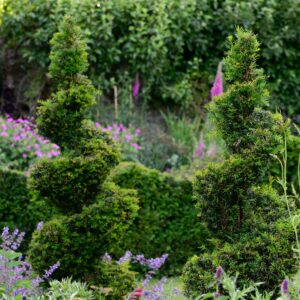
Taxus baccata / Yew Spiral
€1,500.00 Select options This product has multiple variants. The options may be chosen on the product page -

Taxus baccata Aurea / Golden Yew Pom Pom
€2,200.00 Select options This product has multiple variants. The options may be chosen on the product page